Consider the humble student discount. A sandwich costs a little less. A customer feels clever. The shopkeeper hopes the customer comes back. Usually, that is the whole transaction. The Movement looks at the same exchange and sees the beginning of a social economy. Its proposition starts with shops near college campuses, then stretches toward a marketplace, a social network and a currency. The interesting question is how those two scales connect: the small saving at the counter and the very large ambition attached to it.
- For students: find participating businesses and scan a QR code to save.
- For merchants: offer discounts and join a local promotional network.
- For operators: build a territory business around a campus community.
That makes this San Diego company an unusual hybrid. It combines consumer software with local sales work, and attaches a social mission to both. Its LinkedIn description puts income inequality, climate change and small businesses at the center. The practical entrance, however, is a purchase.
A network with an entrance fee of usefulness
The iPhone app, The Movement - Social, is free to download. Its listing describes a sequence: citizens, the company’s term for users, discover nearby merchants, redeem savings and invite others. Social media is supposed to unlock when a geographical area reaches sufficient engagement. The listing calls this “critical mass.”
That sequence matters. A new social network asks people to move somewhere their friends may not yet be. A discount offers a reason to arrive before the crowd does. In this model, everyday spending is the recruitment mechanism. The campus supplies a boundary within which repeated encounters might become useful.
The alternatives are familiar: a merchant can buy digital advertising, run a loyalty program or offer a student deal directly. A student can use existing social networks and marketplaces. The Movement’s proposed difference is to join those activities together locally, then let participation support a broader economy.
The people between the app and the shop
Territory owners are the bridge. The company recruits them to introduce the platform to local communities; campus account executives approach merchants and student organizations. Its booking calendar offers territory discussions, onboarding and office hours. Behind the language of global change sits a recognizable sales operation.
A product-management recruitment posting describes three products: a social app, a marketplace app and a web CRM for territory owners. It also says operators pay for their territory opportunity and share in its revenue. That places them in two roles at once: they distribute the platform, and they are customers of the business opportunity.
The same posting describes C# back ends and React or React Native interfaces. The expertise being assembled is therefore quite specific: mobile products, transaction software and tools for managing a distributed sales organization. Local relationships have to do work that software alone cannot.
A coupon becomes an advertising budget
A July 2026 merchant pitch from Old Dominion University territory operator Hakeem Ali-Bocas Alexander makes the economics tangible. It describes a free program that turns a student’s $10 saving into $10 of promotional advertising credit. A paid program offers $100 of credit for the same saving, with a monthly execution budget of $500 to $5,000.
Those are that operator’s advertised terms. Advertising credits are an internal promotional allowance, rather than cash returned to the till. Their commercial value depends on whether the promotion brings enough additional business to justify the discount and any fees.
His materials also advertise a $1 activation step and describe his revenue as tied to a 2% transaction model. The proposed promotional channels include in-app placements, push notifications, text messages, digital receipts and a printed directory. It is a strikingly physical plan for a digital economy: somebody still has to put the sign in the window.
The big idea has a long memory
Co-founder Mike Pousti’s connection to transaction technology predates the current app. A patent application published in 2006 names Michael Pousti as inventor of a billing system for micro-transactions and identifies SMS AC Inc. as the original assignee. The company links to this record in explaining its technical roots.
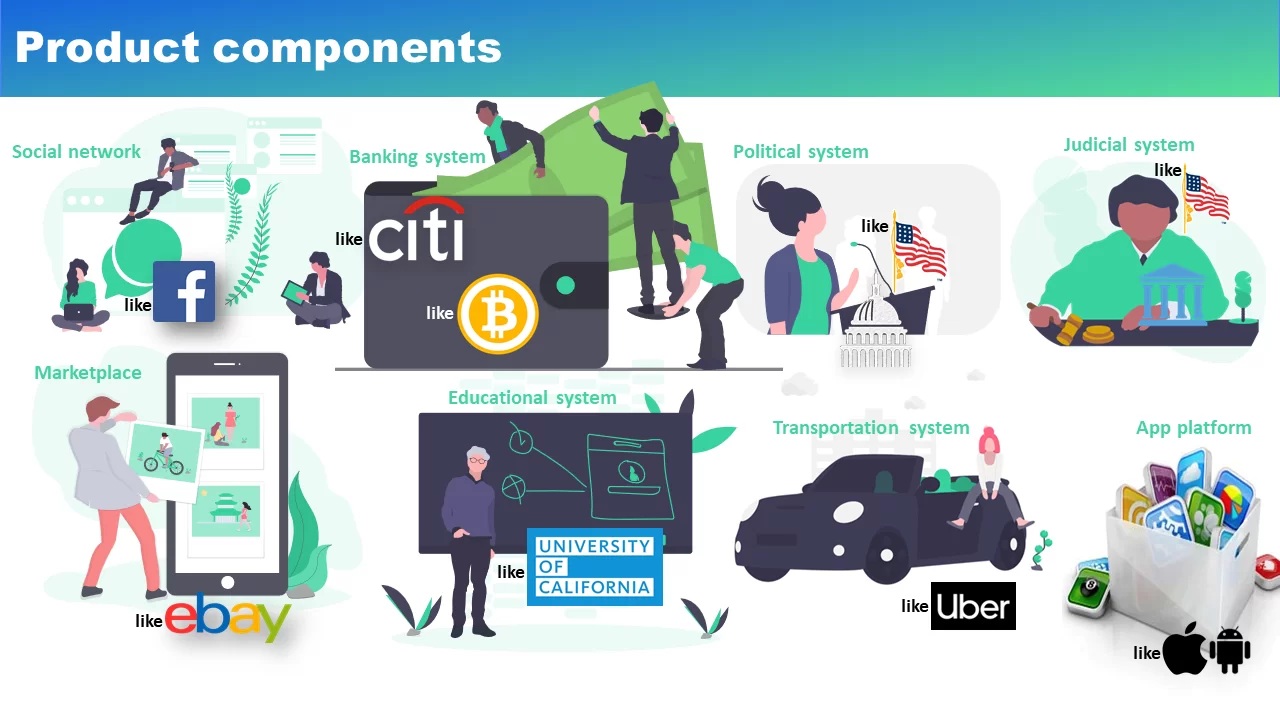
Its broader platform presentation describes earning through posts, selling, sharing belongings, providing services and transporting purchases. It proposes paying participants in a platform currency. Its climate argument follows from sharing: greater use of existing possessions could reduce the need to buy replacements.
The presentation also set an ambitious goal of helping half the planet earn an average $25 a day by 2025. That belongs in the story as a dated objective. A target describes what a company wants to accomplish; a discount redeemed at a shop describes an action someone can actually take.
“Our mission is to empower people by enabling opportunity, hope, influence, and unity.”
The Movement’s public company description
Trust has to survive the transaction
The customer record contains friction as well as enthusiasm. An App Store reviewer praised campus savings in August 2024. A May 2025 reviewer identifying as a former territory owner alleged difficulty selling advertising and obtaining a refund. These are individual accounts, not findings about every operator’s experience.
They expose the model’s central dependency. Students need useful merchants. Merchants need purchasing students. Operators need transactions that justify their effort and expense. If one group joins faster than the others, a territory can look busy while producing too little value. Recruitment numbers alone cannot resolve that mismatch.
The product continues to change. Apple’s listing records version 4.9.4 in October 2026; earlier updates mention sign-up fixes and trust-building assistance. Those are small operational details, but this model depends on small operational details working repeatedly.
Copy the radius. Measure the return.
For another founder, the useful idea is the constrained launch area. Pick a community whose members already visit the same places. Give each participant a concrete reason to return. Measure completed purchases, repeat visits and merchant margins before counting invitations as success.
The conditions matter. A dispersed audience weakens the local loop. A merchant with little room to discount may find participation expensive. Promotional credit has limited use if the audience ignores the promotion. The Movement’s campus approach is worth examining because it makes these dependencies visible. Its larger economic ambition will be tested wherever a student opens the app and a shopkeeper asks whether the offer brought anyone through the door.