A view is a wonderfully agreeable thing to sell. It can sound like an audience, resemble an achievement and fit neatly into a report. Andrew Reis has spent much of his working life around the machinery that produces those reports. By August 2026, he was asking a pointed question about who gets to write the rules.
Responding to changes in how platforms count and distribute attention, he argued that businesses should question metrics whose definitions remain under a platform’s control. It is an unusually compact statement for an industry that can require three abbreviations to describe someone watching a screen. Reis put engaged attention, sales and customer data ahead of the platform’s preferred scoreboard.
That concern runs through a career spanning advertising networks, digital publishing and the newer business of selling through live video. He co-founded Tremor Media, became interim chief executive of Genesis Media at its formation, and built SamStella into an investment and operating firm. Read together, those ventures suggest a recurring commercial question: how does an audience become a business someone can actually measure?
“If a platform can redefine the metric, it shouldn’t be the metric you build your business around.”
Andrew Reis · August 2026
The business behind the banner
Reis’s early jobs placed him close to the buying and selling of online media. He worked in online media at Venture Direct Worldwide and in new business development at Nusign Media. A graduate of Hofstra University, he went on to found Quake Marketing, an interactive direct marketing agency whose work included media buying, marketing partnerships and outsourced business development.
He also co-founded ContextualNet, a contextual advertising representation network serving advertisers and agencies. ContextualNet was sold in December 2004; Quake Marketing followed in April 2006. These were businesses concerned with the practical arrangements behind an advertisement: finding an appropriate setting, assembling demand and making the commercial relationship work.
The titles are revealing. Founder and chief operating officer puts a person in the company’s construction department as well as its drawing room. Reis held both titles at Quake and ContextualNet. His subsequent career would keep returning to that combination of ownership and operations, even as the object being sold changed from advertising space to video audiences and, eventually, products in live shopping feeds.
Eight employees, then a public market
Tremor Media, which Reis co-founded in 2005, moved that work into online video. An early company presentation preserved in a 2007 entrepreneurship event’s materials lists Jason Glickman as chief executive, Jesse Chenard as chief technology officer and Reis as chief operating officer. Its staffing line is refreshingly small: eight full-time employees and three consultants.
The presentation describes an intermediary between advertisers and publishers, with plans to hire sales and marketing staff and expand the network. Its proposed routes to customers included a direct sales team serving advertisers and agencies in major American cities. Even at that scale, the business had to address both sides of the transaction. Publishers needed income from video; advertisers needed places to reach viewers.
Full-time employees and consultants in an early company presentation. A small staff behind a two-sided advertising business.
By August 2009, Tremor had roughly 100 employees. Reis and Chenard left their executive roles during a restructuring, while continuing as advisers. Glickman described the departures as a mutual decision, and the company said they were pursuing new startup opportunities. Reis’s operating responsibilities shifted to chief financial officer Mark Pinney.
The company Reis helped establish later reached the public market as Tremor Video. Its June 2013 prospectus priced 7.5 million shares at $10 each, a $75 million offering before underwriting discounts and expenses, with a New York Stock Exchange listing under TRMR. The dates matter: his departure from the COO job preceded the offering. A founder’s contribution and a company’s later milestones belong on the same timeline, with the intervals left visible.
Genesis and the invoice for attention
Reis’s next ventures stayed near the junction of advertising and consumer response. He founded Reis Media in September 2009 to work with young companies on business development and incubation. In July 2010, he joined AdGenesis Digital’s executive council. AdGenesis offered people incentives for sharing buying preferences and watching relevant advertising, making the consumer’s participation part of the proposed exchange.
Then came a merger with almost suspiciously compatible names. On November 29, 2011, AdGenesis and TVGenesis announced that they were combining as Genesis Media. Reis, a TVGenesis co-founder, was named interim CEO and would join the board. Richard Smullen and Joshua Feuer were among the executives joining him in the new company.
Genesis proposed a cost-per-verified-view model matching brand videos with people who opted in. At launch, the company reported five million registered users and monthly reach of 150 million viewers across its publishing network. Those figures describe the company’s announced scale, rather than a personal achievement to be pinned to Reis’s lapel.
His language at the time was transactional: advertisers should be able to reach customers and account for what happened. Distribution and activation were being brought together. The distinction is familiar to anyone who has paid for an advertisement: delivering it, holding someone’s attention and prompting a response are separate events, however cheerfully a sales presentation may place them in one sentence.
A reading guide to Reis’s work across video advertising and commerce, rather than a claim that every viewer becomes a buyer.
In 2012, SamStella joined Black Ocean in a $3 million Series A investment in Genesis. By that financing announcement, Mark Yackanich was CEO. The progression places Reis in several distinct relationships with the business: founder, interim executive, board member and participant through an investment firm. Compressing those into a permanent CEO title would lose the interesting part - how his involvement changed as the company developed.
Buying a stake in the audience
Digital publishing brought another perspective. Reis was an early investor and executive board member at Elite Daily, the publication aimed at younger readers. Here the audience gathered around a media brand itself. His involvement extended his work beyond the infrastructure that sold advertising into a business producing the material people came to read.
Elite Daily was acquired by dmg media on January 30, 2015. The acquisition announcement put its audience above 70 million unique browsers a month, with about 70 percent aged 18 to 34. It also reported $5 million in revenue for the preceding calendar year. Audience scale and revenue sat beside each other, measuring different aspects of the same publication.
Reis’s wider record also includes advisory work with Tapad and Reelio and a board role at Wing. These connections place him among founders, publishers, advertisers and consumer businesses rather than inside a single company for his entire career. They also help explain why the operator and investor descriptions coexist: the work involves both a stake in a business and a view on how it should reach customers.
The old colleagues in the new firm
Today, SamStella identifies Reis as its founder and CEO. The firm combines investment with operational support, business development and help bringing products to market. Its focus spans commerce, media, advertising and distribution. Capital is one part of the offer; the company also undertakes the work of building revenue channels and commercial partnerships.
Two names on its advisory roster connect the present firm to earlier chapters: Jason Glickman and Joshua Feuer. Glickman worked alongside Reis at Tremor; Feuer was part of Genesis Media’s formation. Their reappearance gives this career a human continuity that a list of company names can obscure. The businesses change, while some of the collaborators remain in the picture.
SamStella describes Reis’s working style as hands-on and collaborative, with an emphasis on measurable commercial outcomes. That is the firm’s own description. Its current approach supplies a concrete setting for it: work inside portfolio businesses, support distribution, and join investment decisions to execution. The ambition is to help companies turn a promising concept into something that can find customers and collect revenue.
The shopping channel has moved
The current ventures put those ideas into social commerce. Sellrly, founded in 2025 with Reis as founder and CEO, now offers managed media services to brands, creators, podcasters, social sellers and subscription businesses. It describes placing advertising across the open web and using first-party audience data to reach prospective customers.
Its process starts with a business goal, moves to media placement and tests a smaller campaign before expanding. That sequence is less theatrical than the promise of an instant audience, but it makes the commercial question legible. A business chooses what it wants to achieve, then judges the spending against that goal.
GetLive, another SamStella venture, focuses on live and affiliate infrastructure. SamStella’s broader commerce work includes live production, storefront operations and distribution across services such as TikTok Shop, Whatnot, Amazon Live and eBay Live. In this setting, the distance between watching and shopping can be very short. There is still work to do on either side of the buy button.
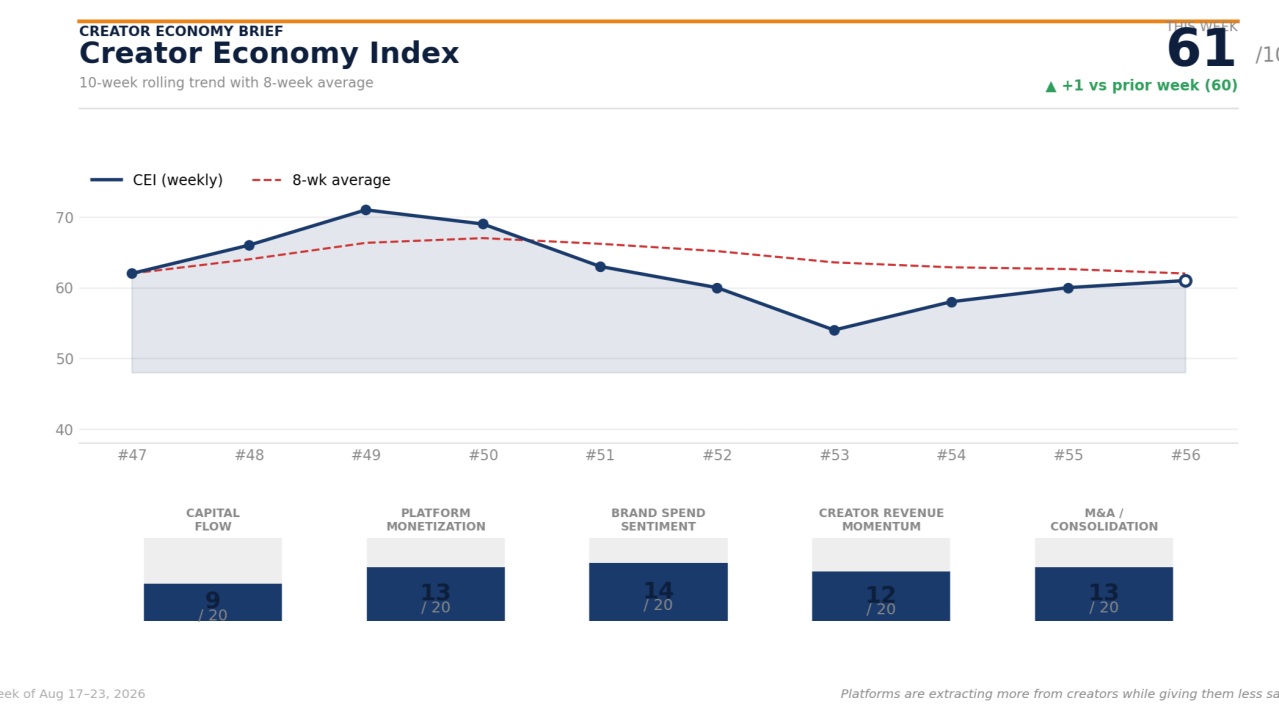
His August comments return to the question Genesis raised years earlier. The technology and storefronts have changed, but counting attention remains an argument about commercial value. Reis’s position is that a business should look beyond a platform’s adjustable definition of success toward engaged customers, measurable sales and data it can retain.
That leaves an appealingly practical portrait. An early video advertising founder is now working around live sellers and creator businesses, still asking what follows the view. The screen can host a clip, an advertisement or a shopping demonstration. Somewhere beyond it sits a customer. Reis’s career keeps coming back to the business of making that connection count.