A startup pitch from a dunk tank is a fairly literal way to test whether an idea sinks. At The LAB Miami’s expanded-campus opening in 2013, entrepreneurs did exactly that. It was a fitting introduction to a company whose central proposition was social: bring people together, make the encounter memorable, and see what they build afterward.
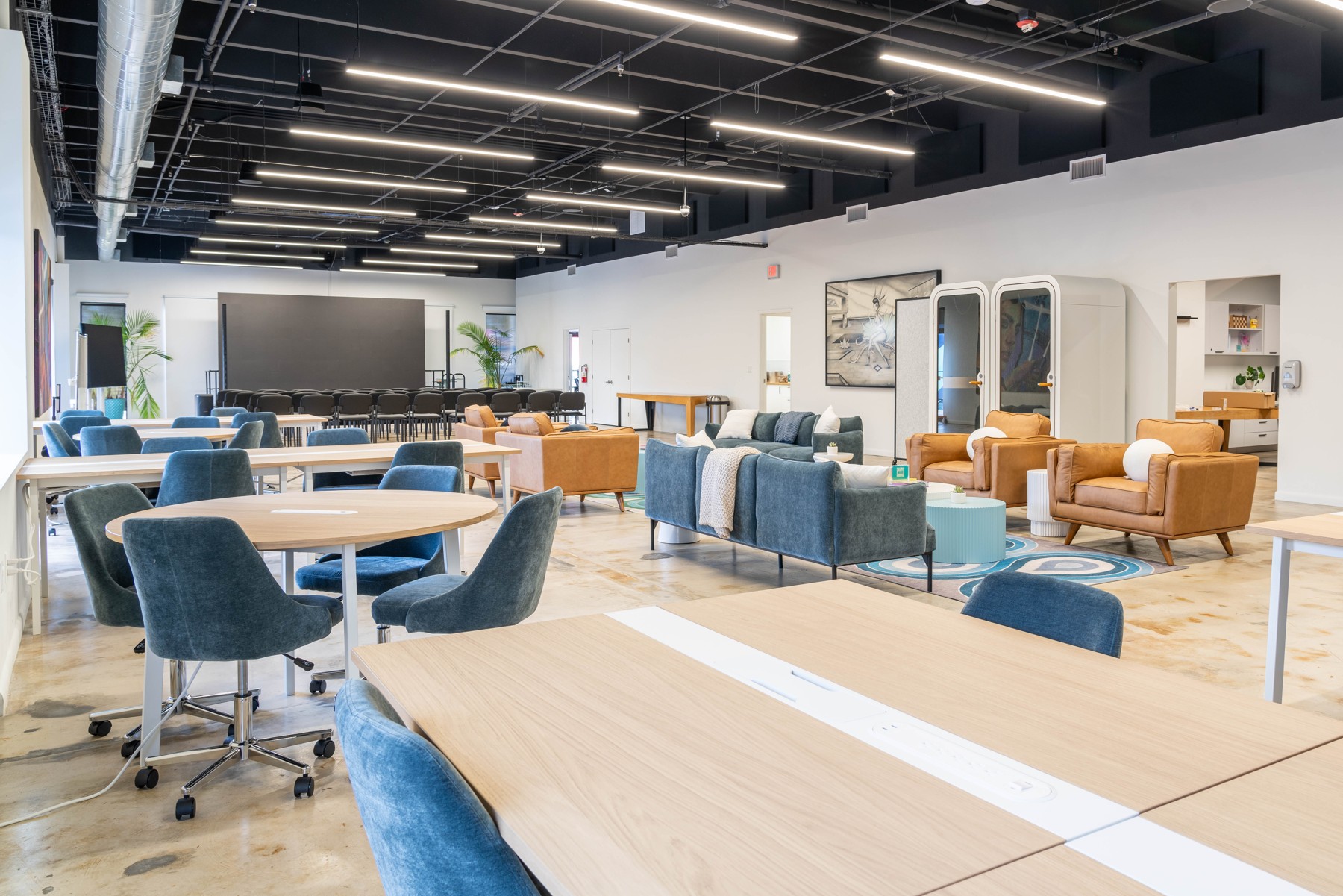
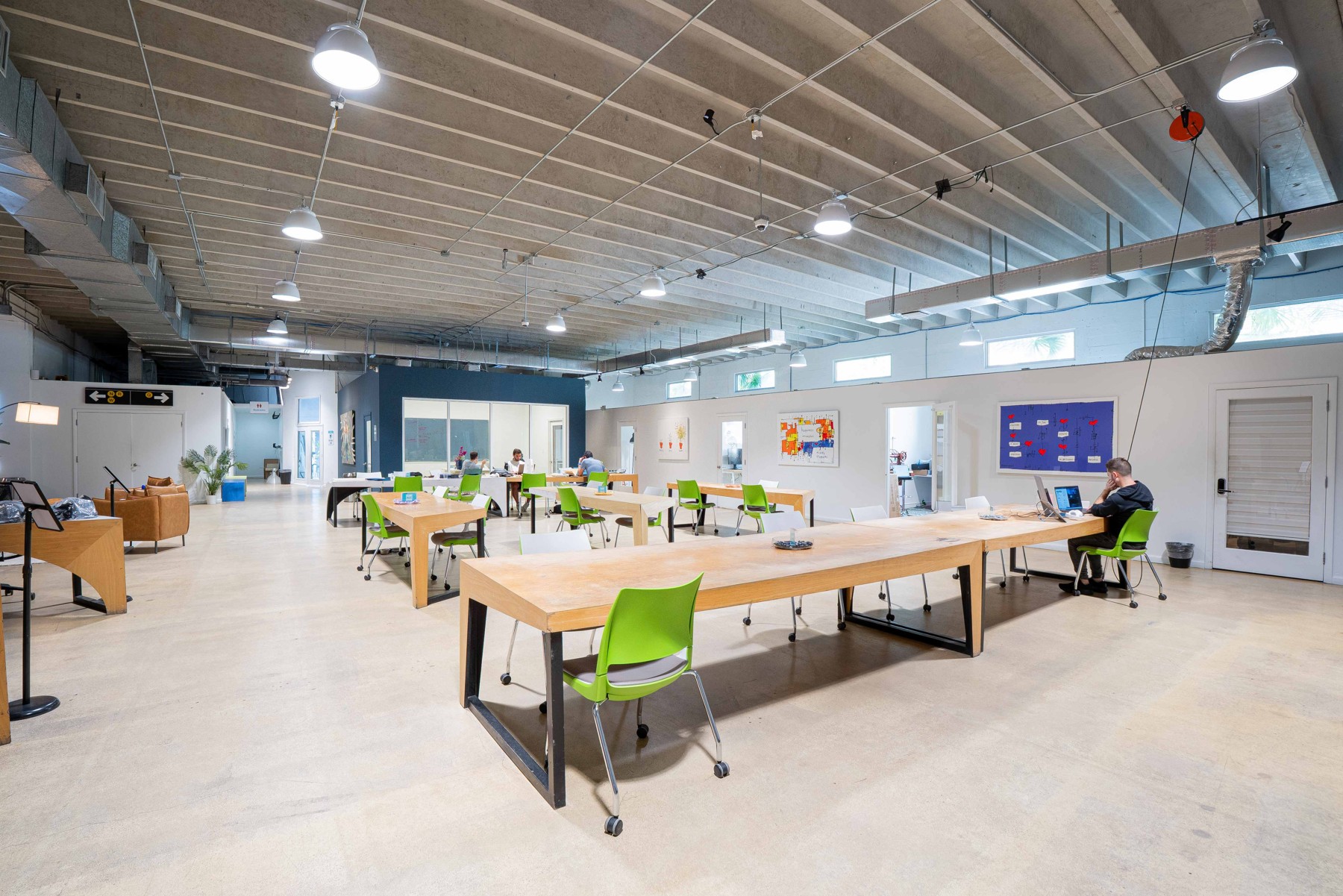
Today, the furniture is more polished and the offering more segmented. The LAB operates a founder clubhouse, an early-stage community called The DOCK, private offices and event venues in Miami’s Wynwood neighborhood. Its website advertises more than 16,000 square feet across the campus. The commercial bet is that working near useful people is worth paying for, even when your laptop works perfectly well at home.
That bet places The LAB somewhere between a flexible-office operator and a local institution. Members need somewhere to work. Founders need peers, introductions and honest feedback. Organizers need a room people will actually visit. The company earns its place by making those needs overlap.
Before the clubhouse, the wooden pallets
The idea developed in 2011 around Wifredo Fernandez and Daniel Lafuente; Elisa Rodriguez-Vila joined as a third co-founder, helping shape its identity. In his 2014 account of the beginnings, Fernandez described losing the Miami Herald Business Plan Challenge, then opening a small space with about a month’s financial cushion. The furniture came from $300 of wood and shipping pallets.
The 700-square-foot pilot opened in 2012. The larger ambition was to make Miami’s scattered entrepreneurial activity easier to find. “People didn’t share ideas,” Lafuente told WLRN in 2013. “We wanted to change the culture.” Lawyers, developers, public-relations practitioners and app designers were among the people eventually working under the same roof.
A December 2012 announcement put the financing for the next campus at $650,000, backed by Knight Foundation and private investors. That supported a move into 10,000 square feet. The larger location combined workspace with access to mentors, workshops and events. The $300 bought materials for furniture; the $650,000 financed a much bigger undertaking. Neither figure should be mistaken for a recipe that prices an entire coworking business.

The introduction is the product
The clearest explanation of the model involves an artist’s app. Jordan Melnick, who created Sktchy, met angel investor Mark Kingdon after Fernandez introduced them at The LAB. Their conversations led to seed investment, according to 2014 Miami Herald reporting. The workspace helped make the introduction possible. Melnick still needed an app, a team and an interested investor.
That distinction matters. The value of a founder community is partly the chance of an encounter that a conventional office would never arrange. It cannot promise what follows. A useful question, a prospective collaborator or a customer introduction can justify showing up; a room full of business cards can also produce very little.
The LAB’s early influences included General Assembly and the Hub coworking network, as Forbes reported in 2013. Learning was built into the concept. The mix of startups, nonprofits, designers and academics also made it broader than a room reserved for people preparing their next fundraising deck.
“We wanted to change the culture.”
Daniel Lafuente, speaking to WLRN in 2013
Two doors, different stages
The current membership menu makes a deliberate distinction. LAB membership serves established entrepreneurs, executives, investors and growth-stage startups. Access is by application, invitation or referral. The DOCK targets founders and engineers, with membership advertised from $250 a month. Private offices are available at both, with prices supplied on inquiry.
For a customer, the choice is about the working day as much as the address. An early-stage founder may want technically capable peers within asking distance. A larger team may need a door it can close. An executive may value a smaller circle of experienced operators. Selling each the same membership would blur the reason they came.
The alternative might be another workspace, a conventional office or a home desk supplemented by meetups. The LAB’s case rests on local participation and a specific mix of people. A buyer who needs only a quiet seat should compare the practical terms: access, privacy, meeting space and travel time. A community premium makes sense only when the community is useful to that buyer.
Founders and engineers
From $250 / month
Established operators
Application access
Meetings to conferences
Booking by inquiry
The calendar earns its keep
Space alone does not explain the operation. In 2016, Knight announced a $1.1 million investment supporting LAB.Ventures and LAB.ID, intended to help startups develop businesses and reach corporate customers. At the time, the foundation reported more than 50,000 event attendees and over 150 startups launched at The LAB. Those were historical activity figures, not a measure of startup survival.
LAB.ID’s proposed formats included workshops for corporate executives and reverse pitches, where companies presented problems for entrepreneurs to tackle. Brainfood, the entrepreneur speaker series, gave participants another way to learn from people further along. A 2019 episode featured ClassPass and MealPal co-founder Mary Biggins, with Endeavor Miami among the partners.
The subject matter has moved with the builders. A July 2025 AI Agents for Operators event listed three to five practical demonstrations followed by collaborative work. Friends of Figma Miami ran a free October Make-a-thon at The DOCK. These formats give a newcomer something more specific to do than “network”: bring a laptop, inspect a workflow, ask for help.
By August 2026, The LAB’s newsletter was advertising recurring Tuesday hack nights with short live demos. Repetition is the useful part. A person met once is a contact; someone who returns each week can become a collaborator. For anyone trying to assemble a local community, a dependable appointment is an operational choice worth copying.
Ten teams, and a reason to stay
The winter 2026 partnership with focal.vc intensified that approach. Ten early-stage teams came to work in person for more than three months. The LAB describes free office space, access to a network of more than 200 investors and over $1 million in vendor perks. Those perks are a stated package value, rather than cash handed to each company.
The original residency announcement specified six or more days a week in the office and relocation to Miami, with moving costs offset. That is a substantial commitment. It suits founders who can organize their lives around concentrated company-building; it is a poor match for someone seeking occasional desk access or a remote program.
There are recognizable customers behind the cohort language. Focal’s residency page lists past participants from Eclipse, Searcle AI, Maxed, Fallom and other startups. It now schedules the next residency for January 2027, with applications opening in October 2026. That makes the program a recurring proposition, although future cohorts still have to deliver their own results.
The LAB also hosted the May 2026 Miami Work-Up for Vetted’s fifth accelerator cohort. The ten-day stay concluded a ten-week program for companies founded by U.S. and Israeli combat veterans. Here, The LAB supplied the setting for another organization’s program, extending the campus’s reach through a partner with a defined audience.
*Commitment specified in focal’s launch announcement. Cohort size and duration reported by The LAB.
A shared name is not a shared balance sheet
One distinction is easy to miss: LAB Ventures and The LAB Miami are no longer the same operation. LAB Ventures’ own history says its founders became more interested in building and investing in companies than renting workspace. They launched a startup studio in 2017 and later moved toward a conventional venture-investment model.
Following a studio-company sale at the end of 2021, LAB Ventures formalized an early-stage fund and parted ways with the original coworking space. Fundraising ambitions attached to the investing business therefore should not be read as capital raised by today’s campus. The separation also illustrates a choice facing these hybrids: operating a place and selecting investments demand different kinds of attention.
A room has to keep proving itself
The campus has a straightforward property business underneath its social purpose. Memberships and private offices bring recurring fees; event bookings monetize rooms for shorter periods. The venue offering spans six spaces, including a 12-person boardroom and a LAB event hall advertised for 250 people, with coordination, audiovisual equipment and catering partnerships available.
The broader lesson is practical. Start with a gathering people need, test whether they return, then invest in the setting. The LAB’s small pilot, educational events and later specialist programs show successive ways to give attendance a purpose. Copying the sofas without doing the introductions would miss the labor that makes the place valuable.
There is also an ongoing tension to manage. A selective clubhouse offers focus; a city’s startup community needs new arrivals. The LAB and The DOCK put those audiences under a shared umbrella while partner events create additional entry points. The test is whether a founder leaves with useful work advanced and a reason to return. The chairs can only do so much.
Step into the room
Explore The LAB Miami, check its event calendar or follow the next focal residency. Read the weekly newsletter for current gatherings.
Listen: Brainfood with Mary Biggins of ClassPass and MealPal.