A desk is easy to understand. A startup ecosystem takes a little more explaining. In Baku, Lotfi Zadeh Technology Center puts both propositions at the same address: somewhere to open a laptop, meet a client, rent a private office and encounter people working on businesses of their own. The furniture gets you through the door. The company’s larger wager is that the people nearby give you a reason to stay.
LTC belongs to a familiar category with an unusually ambitious name. It is a coworking operator, serving freelancers, remote workers, startups and small teams. Its name honors Professor Lotfi Zadeh, associated with fuzzy logic. There is a pleasingly earthly detail in that tribute: the center’s history includes a coffee-and-wine venue called Fuzzy. Even a technological vision needs somewhere to put the cups.
The office, divided into useful pieces
The basic transaction is straightforward. A customer can buy access to working space without taking responsibility for an entire office. LTC’s published catalog stretches across hot desks, dedicated desks, cubicles, private offices and a virtual-office option. It also offers rooms for meetings, presentations and training. These are different purchases for different working days, rather than a single membership that every customer must use in the same way.
A freelancer may need a desk for a short assignment. A small team may want a room it can call its own. A consultant may care mainly about somewhere to meet clients. The distinction matters because an office bill buys much more than floor space: someone must organize access, furniture, cleaning and the small practical details that otherwise land on a founder’s to-do list.
The weekly dedicated-desk description gives that promise some substance. It lists an assigned desk, internet, a locker, printing and scanning, cleaning, security, refreshments and the opportunity to use meeting rooms. The center advertises round-the-clock access. For someone working with customers in another time zone, access hours can be more consequential than the color of the chairs.
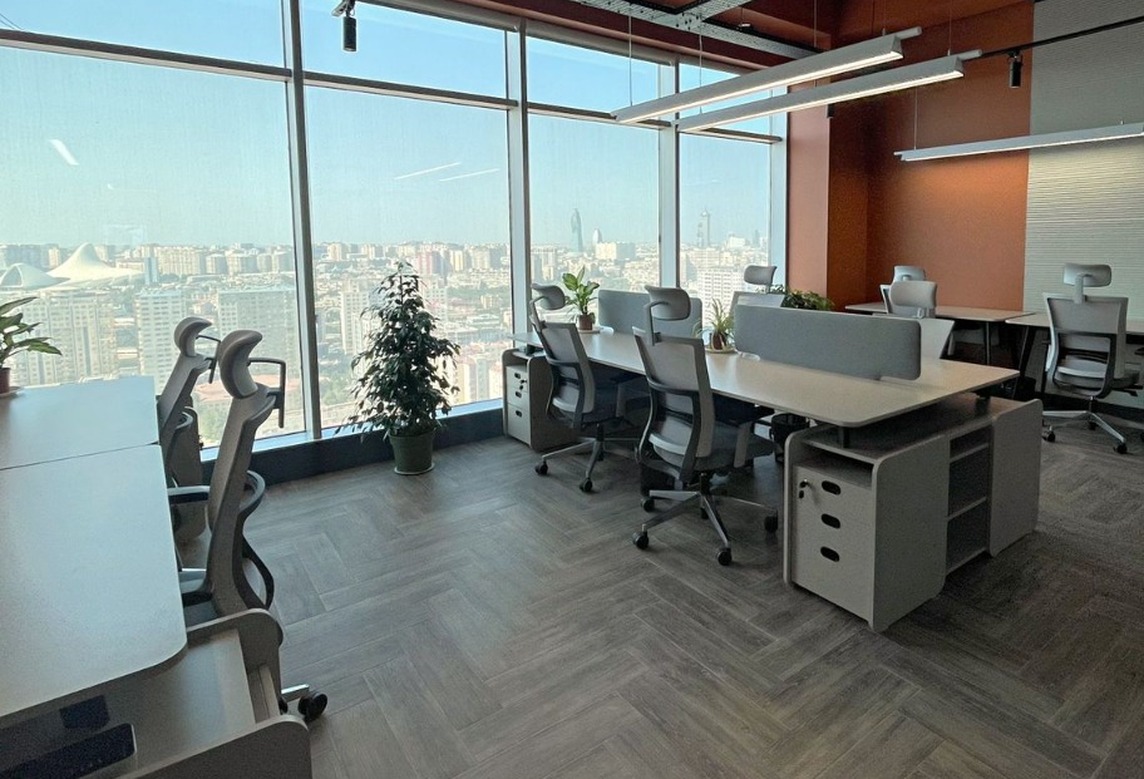
The business model follows those choices: charge for workspace and room use, with services bundled into the offer. The useful comparison for a customer is the full working arrangement. A cheaper empty room may become less cheap after furnishing it and managing it. Conversely, someone who rarely leaves home may get little value from paying for a month of facilities.
Privacy and a view, priced separately
One of LTC’s more revealing artifacts is a summer promotion. For July and August 2023, the company advertised a fixed desk with separation at 380 Azerbaijani manat per person per month, reduced from 450. A desk with a city view was 425 manat, down from 500. The announcement explicitly excluded VAT. These are historical campaign prices, useful for understanding the offer rather than booking today.
The same promotion put a place in a private office accommodating six to eight people at 450 manat per person, down from 600. A place in an office with a city view was 500, down from 650. That ladder makes the product unusually legible: location within the building and the degree of enclosure were things customers could pay more to obtain.
Monthly, per person. Historical promotion. VAT excluded. Current plans require a fresh quote.
For a buyer, the exercise is worth copying. Compare the same headcount and period, then ask which services are included and how meeting-room use is charged. A team that spends hours on confidential calls has a different calculation from a designer who mainly needs a reliable desk. The view may be lovely. The room’s suitability for Tuesday’s work is the better starting point.
A scientific name, a property business underneath
LTC dates its implementation to 2019 and names AGA Group and Imran Baghirov as co-founders. In a September 2020 interview, Baghirov described an operating coworking center at Caspian Plaza and an ambition to bring technology companies, service providers, programmers and freelancers together. The physical workspace was already part of the business; acceleration programs were part of the plan ahead.
“Coworking is the base level.”
Imran Baghirov, September 2020 interview
Translated from Azerbaijani
His account also captured the moment. The pandemic, he observed, had shown people that working from home was possible and a permanent office was not always necessary. LTC’s proposition gave businesses another arrangement to consider: people could work in a shared setting with infrastructure already in place. It was an argument about how work could be organized, made while that question was suddenly urgent.
The formal celebration came later. A ministry announcement on February 1, 2021 scheduled LTC’s official opening for February 4. It was part of Applied Science Week, organized by the center with the Ministry of Transport, Communications and High Technologies, PASHA Bank and ADA University. The timing honored the centenary of Zadeh’s birth.
The program included discussions about applying science and developing an ecosystem, alongside an art exhibition. That combination gave the new center a public introduction beyond desk rental. Universities, business and government appeared in the same event. For an organization trying to convene people who do not necessarily share an office, the guest list was part of the work.
A calendar gives the community something to do
“Community” can be a soft word in a property advertisement. LTC’s event record gives it harder edges. In December 2020, its free online Design Talks event brought together design and freelance perspectives, with Knyaz Yaqublu and Aqshin Rajabov as speakers. An online talk could reach people without requiring them to rent a desk first.
In March 2021, the center hosted a meeting involving an ASAN deputy chairman and organizations including NextStep, SUP VC, Yeni Fikir, Barama, New Space, Youth Inc and Tech.az. Participants discussed cooperation, shared resources and support for the innovation environment. It illustrates LTC’s role as a meeting place among organizations whose activities extend well beyond office rental.
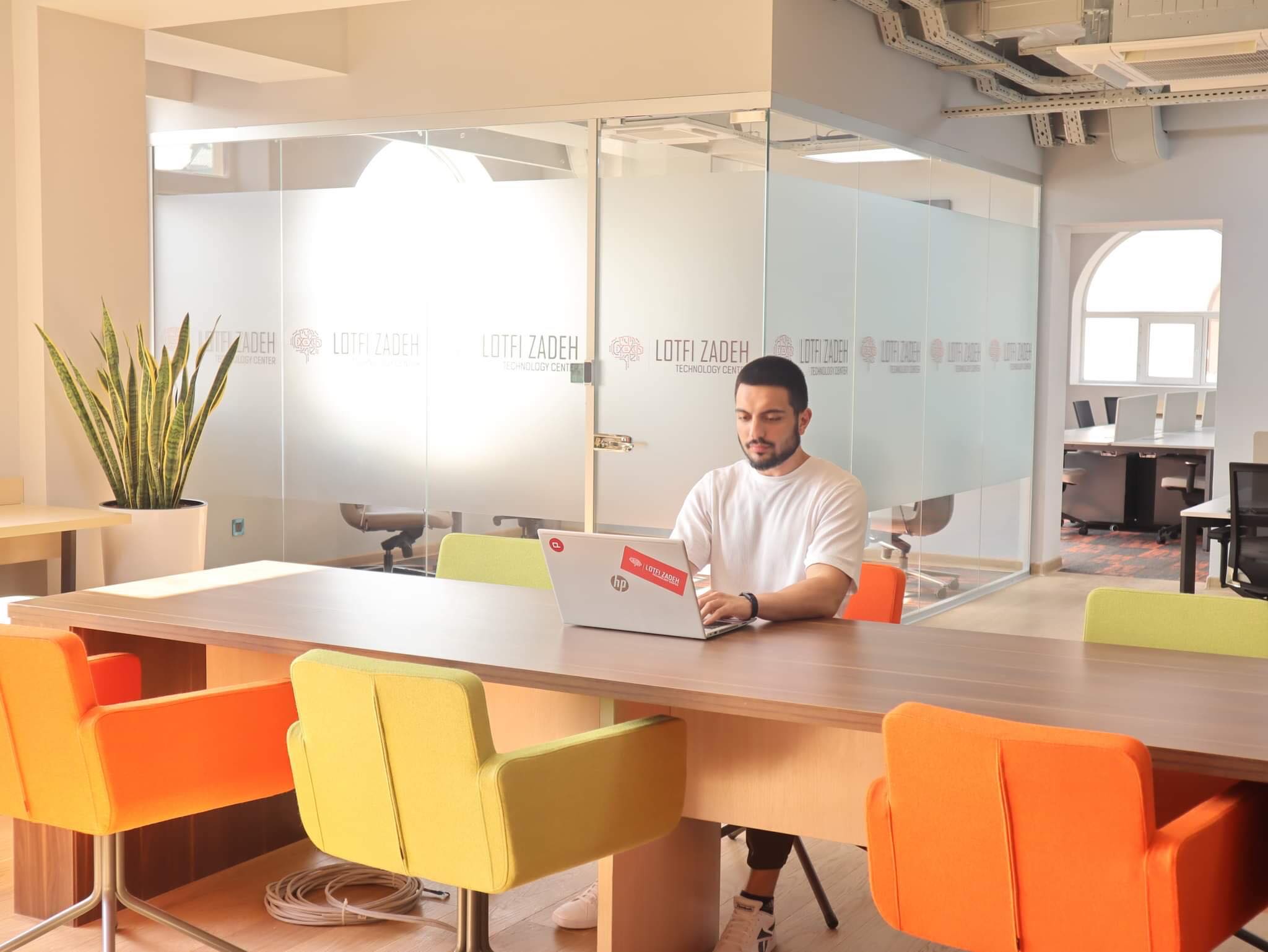
The company’s stated values emphasize fairness, quality and safety. Its workspace description also puts community managers among the services available to residents. That is a practical interpretation of hospitality: provide a person who can help, as well as a space that looks ready. A network needs repeated contact; someone answering a small question can make returning easier.
From meeting people to pitching a business
The startup activity has a distinct name. LTC Global is described in the Startup Luxembourg directory as the center’s accelerator and investment arm. Keeping that identity in view helps explain the wider organization: renting a workplace and entering an accelerator address different needs, even when they sit within the same company story.
A December 2023 report on the Startup Wise Guys Global Pre-revenue Program gives a specific example of the connections. Initiated by Azerbaijan’s innovation agency and sponsored by PASHA Holding, the program involved 30 startups across two cohorts. Ten presented at the closing event. Representatives of LTC Innovation joined the jury, and four selected startups received onward admission across the Sabah and LTC Global acceleration programs.
Those numbers belong to the shared program, rather than an LTC-only cohort. The reported training addressed a concrete problem: creating a sustainable revenue model. For an early company, that means moving beyond the pleasure of having an idea to the harder question of who pays for it. An office can make the work easier to organize; the business still needs a buyer.
In June 2024, LTC and Viveka co-hosted an Open Innovation Meetup ahead of Baku ID. The schedule brought networking, startup pitches and discussion of corporate innovation and corporate venture capital to Demirchi Tower. The event’s format shows another use for the network: put founders and people considering corporate innovation in a room with a reason to talk.
Choose the working day you actually have
LTC operates in a market where customers can also consider Regus coworking in Baku, COLAB or conventional office rental. Shared desks and meeting rooms are established products. LTC’s distinctive combination is its local technology focus, scientific identity and documented participation in startup and public-sector events. That combination will matter most to someone who wants to take part.
The practical entry point can be modest. The current website describes guest room bookings, membership plans, a member directory and tours. A prospective customer can begin with the space needed for a particular task. LTC’s February 2026 article index also points readers toward a guide to coworking in Baku, continuing its effort to explain the category to workspace buyers.
A sensible trial should resemble a normal day: make the calls, test the commute, inspect the meeting room and see whether the surroundings help concentration. Teams requiring extensive control over access or their physical environment should examine a private office carefully. Workers who prefer solitude should weigh how much they would use the communal side. Flexibility has value when it matches a real need.
There is a useful business lesson here, too. Start with a service people can recognize, then give them specific reasons to return and meet. LTC’s history supplies examples: a design talk, a science week, a startup pitch session. For a customer, the decision remains refreshingly concrete. Pick the right desk, do the work and decide which conversations are worth having.