Consider the insurance policy that has already been issued. The sale is over. The document exists. Yet somebody still has to establish whether what arrived matches what was agreed. Dates, limits, names, exclusions: the little things become the whole job. TechTammina has made a business out of these unglamorous intervals between one apparently finished task and the next.
- The work: connect documents, business systems, and approvals.
- The tools: Appian, Mendix, automation, and custom software.
- The twist: an automation specialist planning a campus with 500 projected jobs.
Founded in 2005, the Virginia company combines software development with process automation, testing, and operational support. Its most instructive offering is insurance policy checking. Follow that product closely enough and a broader proposition emerges: a surprising amount of enterprise technology consists of getting information across the last few feet.
A very expensive game of spot the difference
On its policy-checking page, TechTammina describes documents running from roughly 30 to 250 pages or more. Someone reads them, compares the details with an agency management system, and records discrepancies. The company advertises a reduction from as much as two hours of manual checking to less than three minutes. Those are its advertised timings, rather than a universal benchmark.
The mechanism matters more than the stopwatch. Appian’s document-processing tools extract fields. Bots retrieve corresponding information from existing applications. A configurable checklist brings the results together, with color-coded differences, an error-and-omission summary, and an audit trail. The useful unit is the completed comparison, with enough context for someone to act.
There is a revealing feature in the product description: user reconciliation. A person can modify or select missing information from the extracted data. That small concession to untidy documents deserves attention. It gives the operator a way to resolve what the machine has left uncertain, inside the same process.
“It also connects with other systems with ease.”Insurance agency broker, Lynchburg, Virginia
Company-published testimonial
The platform is only the start
TechTammina occupies the implementation layer of enterprise software. Appian and Mendix supply platforms; TechTammina designs applications, connects systems, tests the results, and supports what goes live. IBM’s directory also lists it as a reseller and systems integrator. A buyer is purchasing specialist delivery work around technologies that have their own vendors and commercial terms.
Its Appian partner profile provides a clue to its technical background: founding members held architecture and product-management roles at OpenText. The practice describes work that begins with studying an existing process and continues through application delivery and production support. That history helps explain the attention to business rules and process design alongside code.
The company’s more recent Appian writing emphasizes the connections beneath an attractive interface: identity systems, enterprise databases, ERP applications, and governance. Its positioning is practical. A form that is quick to build has limited value if employees must keep exporting spreadsheets to feed it.
- 01ReadExtract document fields
- 02CompareCheck system records
- 03ResolveReview differences
An invoice has the same problem
The same logic reappears in accounts payable. An invoice arrives, information must enter an accounting system, and the right people must approve payment. TechTammina’s invoice offering combines extraction, configurable approval routing, dashboards, and connections to ERP or legacy software through APIs and bots. Reading the page is one step in a longer transaction.
Here the company supplies a cost claim: processing as low as $1.21 per invoice. That figure describes advertised processing economics. A buying decision still needs to account for implementation, platform licensing, integrations, maintenance, and the effort spent reviewing exceptions. A processing number alone cannot price the project.
The policy issuance and rating application extends this approach into underwriting: quotes become proposals, rules guide the work, and underwriters collaborate through a shared workflow. Across these offerings, the recurring pattern is to organize existing information around a business decision and connect that decision to the next action.
The customer is buying the handoff
Insurance gives the story its clearest example, but the work extends into other sectors. TechTammina publishes testimonials from IntoCareers at the University of Oregon and from Dr. Reddy’s Laboratories. The university comments emphasize requirements, communication, project management, and delivery. Those are telling details for a company selling technical expertise: customers notice how the work is coordinated.
Its catalog also includes Mendix web and mobile development, Java and .NET applications, and quality assurance. Testing covers functional behavior, performance, security, compatibility, regression, and user acceptance. These services address the ordinary demands that remain after a promising demonstration: an application must survive actual users, existing systems, and the next change request.
Delivery can be onshore, offshore, or hybrid. The company’s own methodology makes the tradeoff explicit. Onshore teams allow close feedback at greater cost; offshore delivery suits requirements that are well established. Choosing between them requires a judgment about uncertainty. Cheap development hours offer little comfort when the team keeps building against yesterday’s instructions.
An automation company makes room for people
In December 2025, TechTammina marked the groundbreaking of a planned campus in Visakhapatnam. Contemporary reporting put the investment commitment at ₹62 crore, with 500 projected jobs. These are expansion plans, rather than completed spending or hiring. The company’s announcement tied the campus to regional talent development and a government land allocation.
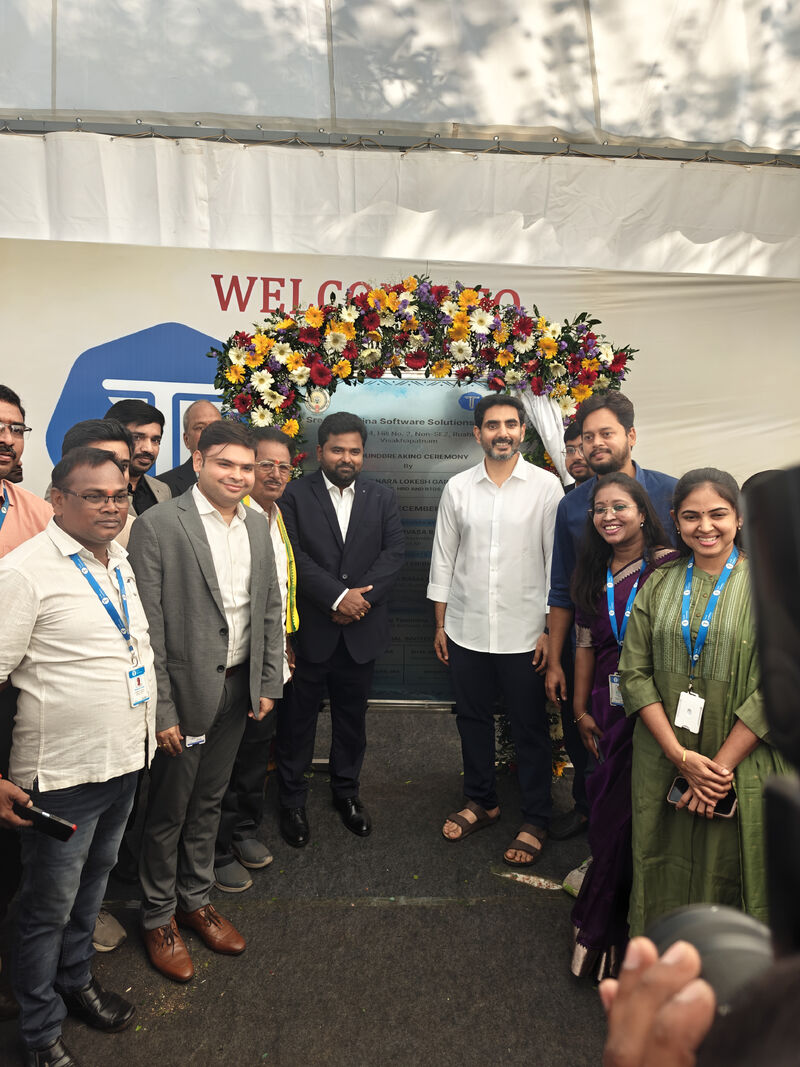
The juxtaposition is instructive. Automating routine office work still creates demand for people who can understand the process, connect the systems, and maintain the result. TechTammina’s careers page promises training, seminars, and technology workshops. In this business, learning the next platform feature belongs alongside learning how a customer’s office actually functions.
For a prospective buyer, the useful lesson is modest enough to copy: follow one document. Record every transfer, approval, correction, and delay. Test a representative sample, including the awkward cases. Compare total operating effort before and after. Where documents are inconsistent or nobody owns the exceptions, address those conditions first. The most persuasive demonstration is a piece of everyday work reaching its destination.
Follow the work
Explore TechTammina, its case studies, blog, and newsroom.
LinkedIn · X · Instagram · Facebook · YouTube
Watch and listen: automation webinars and company podcasts.