Taran Nandha had a particular place in mind when he imagined building a global company: Chandigarh, his hometown. The ambition came with a second condition. He wanted it to be a place where people could work and learn. Geography and education belonged in the same sentence as commercial success. That is a more revealing starting point than the usual founder photograph beside a revenue chart.
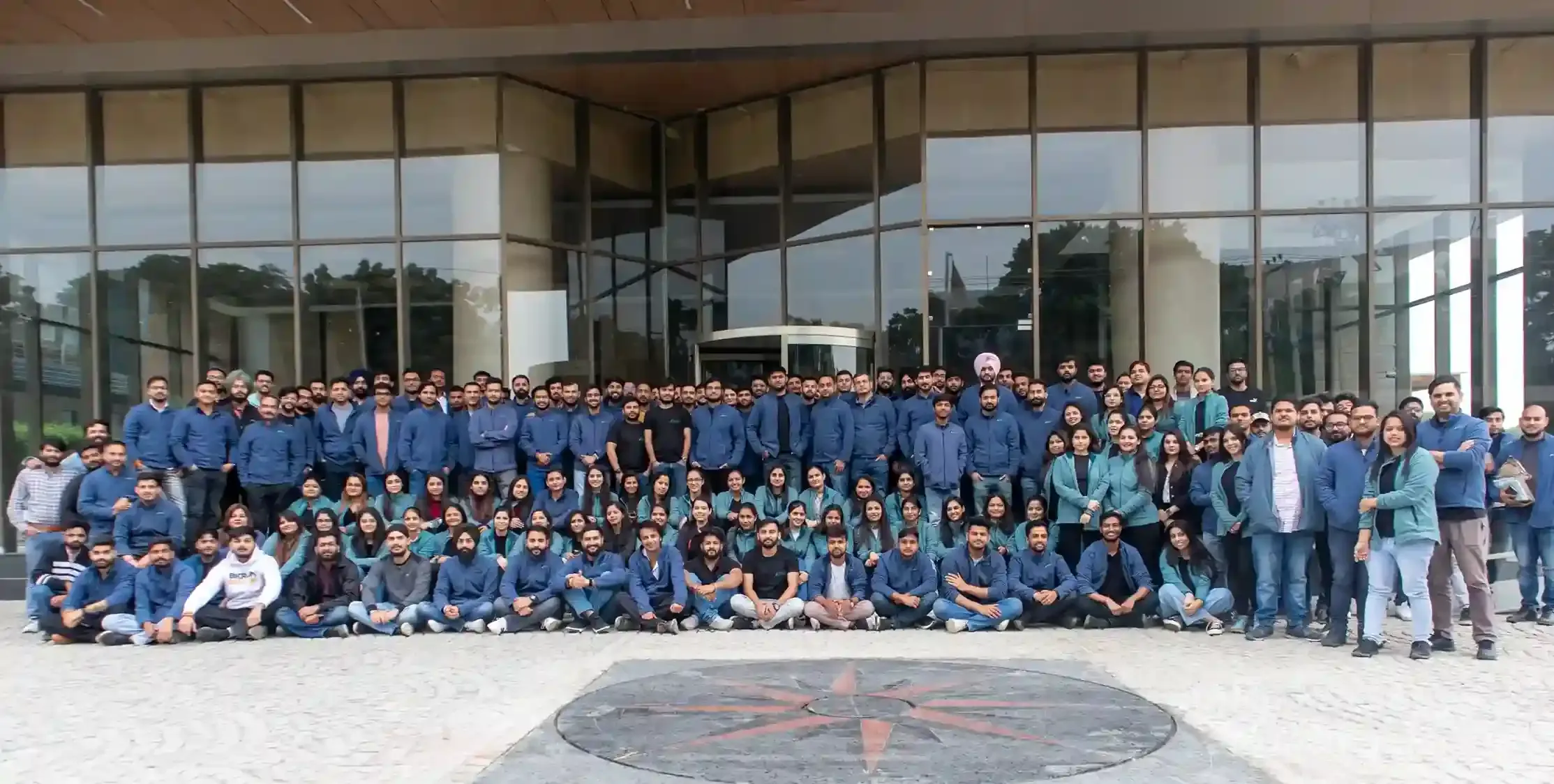
In May 2019, Growth Natives began with six people. Nandha later described a team of 150 within two years. By 2024, the business had reached No. 606 on the Inc. 5000. He celebrated the ranking with a public reflection on the dream behind it: a global company made in Chandigarh. The phrasing gave the milestone a location, and the location gave it a purpose.
His professional subject is growth, a word that has endured enough conference presentations to deserve a quiet holiday. Nandha gives it some useful specificity. He works on the distance between attracting attention and winning a customer, between buying software and getting a team to use it, between a marketing report and a decision someone can defend. Those distances explain much of the company he has built.
More colleagues. More decisions to trust them with.
An engineer learns to ask marketing questions
Nandha studied engineering at Panjab University and completed an MBA at the University of California, Irvine in 2000. His career subsequently took him through i2 Technologies, Trend Micro, Cvent and Birdeye. The combination matters: technical systems on one side, customers and commercial decisions on the other. His experience spans five countries and three continents, a working life spent crossing organizational borders as well as national ones.
The record also contains smaller signs of how he worked inside those organizations. He received i2 User Group Most Valuable Player recognition in 2003 and 2007, and a Cvent India People Choice Award in 2014. These are different kinds of acknowledgment from a company growth ranking. They concern participation, support and the people doing the work together.
Longtime connections carried into his entrepreneurial career. Marketing executive Eric Eden became an adviser to DiGGrowth. Drew Neisser, who hosted Nandha for a conversation on attribution in 2024, knew him through Eden. The relationships trace a route from working within marketing departments to building businesses that serve them. The founder arrived with experience of the buyer’s chair.
His writing shows another side of that training. In 2020, his LinkedIn articles considered brand archetypes, the economic value of leads and the history of persuasion in marketing. Alongside the systems work sits an interest in why people respond. It helps explain the range of the later business: data can describe a customer’s route, while the message and experience still have to persuade someone to take it. The numbers and the creative choices eventually meet in the same purchase.
Six people, and permission to decide
Growth Natives pairs marketing services with technology implementation and customer experience work. Its co-founder, Balwinder Kaur, brings a background in technology, finance and business operations. The partnership places execution beside strategy at the founding level. A client can have an ambitious plan and still need someone to connect the systems that make it possible.
Nandha’s account of the early company emphasizes understanding both the client and the client’s customer. That extra step changes the brief. An application has to satisfy the business commissioning it, while also making sense to the person who eventually opens it. There are two audiences in the room, even when only one is paying the invoice.
His description of management is similarly practical. Project leaders set direction and goals; individuals get room to make decisions. He says he stays available when they need help. “I have always considered myself as the part of each project team,” he explained. The wording is informal. The intended arrangement is clear: access to the founder without a founder hovering over every task.
A ranking with a hometown attached
In August 2024, Growth Natives announced its No. 606 Inc. 5000 ranking and No. 10 position in Washington state. The ranking measured revenue growth over the preceding three-year period. For a business founded in 2019, it placed a public marker on the early expansion. It also connected an American business footprint with the Chandigarh ambition Nandha described.
The next milestones require their own dates. The company reported No. 1876 in 2025 and No. 2432 in 2026, its third consecutive appearance. A rank is a position among a particular year’s qualifying companies. It should not be mistaken for a revenue figure, an employee count or a complete account of a business. Here, its value is the evidence of repeated inclusion after the first appearance.
Nandha’s own celebration distributed the credit among customers, partners and the team. His recurring phrase, #growingtogether, can look like ordinary company language until it is placed beside the original ambition. The home city and the learning environment were part of what he wanted to build. A growing organization was supposed to create opportunities for the people inside it, too.
Annual ranks, as reported by Growth Natives. Each list measures three-year revenue growth.
The product hiding inside the service business
On January 25, 2023, Growth Natives announced the launch of DiGGrowth, a no-code marketing analytics platform. The origin was close to home: problems encountered while working with customers. Marketing teams had information scattered across their software, and bringing it together was part of understanding whether their spending helped generate sales. DiGGrowth turned that recurring service problem into a product.
The launch described connectors for bringing marketing systems together, with reporting and attribution intended to make their results easier to interpret. Its audience included chief marketing officers and performance marketers. In practical terms, the product addressed a familiar embarrassment: owning several sophisticated systems and still struggling to answer one fairly ordinary commercial question.
That move added another role to Nandha’s work. Alongside running an agency, he became the founder and CEO of an analytics business. A service engagement can solve a particular customer’s difficulty; a product attempts to make a repeatable solution. DiGGrowth’s connection to Growth Natives gave that attempt a supply of problems observed in actual client work.
The click is only one witness
Nandha’s approach to attribution asks marketers to look beyond the easiest number on the screen. In his 2024 conversation with Neisser, he discussed connecting marketing platforms, customer records and advertising data, while allowing for events and sales interactions. A buyer’s route to a purchase can extend well beyond the digital trail that a single platform happens to record.
“For true attribution reporting, you need to have a consolidated view of your customer's journey,” he said. It is an unglamorous demand with real consequences. Giving all the credit to the first interaction, or the last one, can produce a tidy answer while leaving important parts of the buying process out of view.
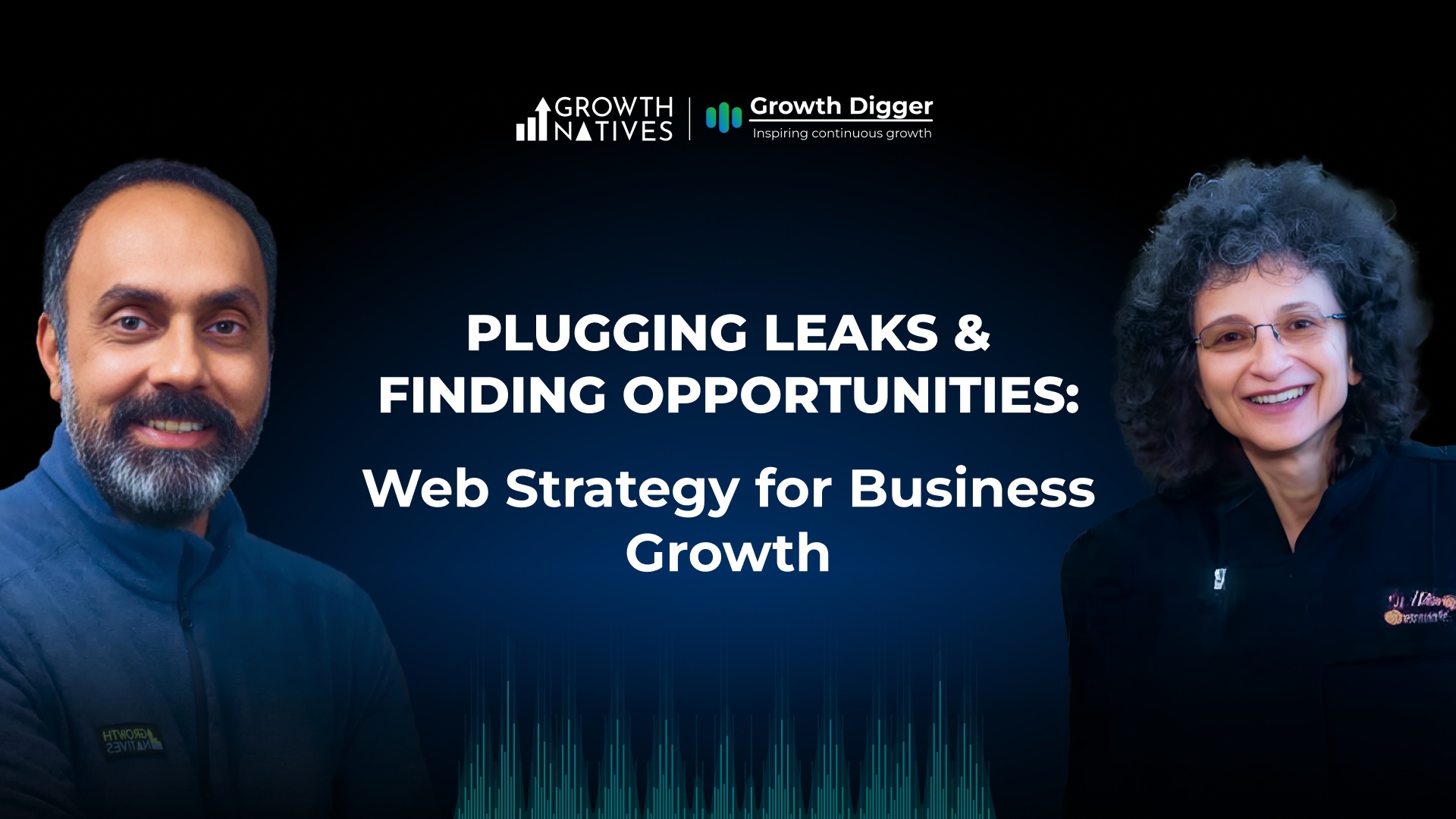
The same concern animates Growth Digger, the podcast he hosts. In a conversation with web strategist Philippa Gamse, he asks for examples and presses toward application: how would a business owner actually use an insight? Their discussion moves through website search, missed opportunities and the choice of metrics. His questions keep returning the conversation to decisions a person could make on Monday morning.
Teaching the organization to change
The attention to learning has a concrete history. In an early interview, Nandha said the company budgeted 20 percent of its time for learning new technologies. Treat that as a description of the practice he reported then, rather than a promise about every present-day employee’s calendar. It still shows how he framed keeping pace: learning needed time allocated to it.
A different aspect of participation appeared in February 2023, when Growth Natives launched a Women in Tech initiative. The announced program included mentorship, networking and educational opportunities. Nandha linked diversity and inclusion to the company’s development and the wider technology industry. It extended the idea of a learning workplace into a question of who gets the opportunity to enter it.
More recently, his conversations about AI have centered on how people absorb organizational change. In a DiGGrowth discussion with Arpit Srivastava, he describes employee readiness as necessary to adopting new technology. Srivastava, the product’s co-founder, describes Nandha as a mentor as well as a boss and investor. It is a personal connection inside a discussion often conducted entirely in software terms.
A global company made in Chandigarh.
The ambition Nandha described when celebrating the 2024 Inc. 5000 ranking
Another difficult thing to measure
By February 2026, Nandha was also discussing RepuTracker with Neisser. Developed for members of the CMO Huddles Leader program, the beta sought to give marketing leaders a monthly view of company reputation. The demonstration considered signals including awareness, engagement, perception and employee sentiment, alongside trends and competitor comparisons. It brought his measurement interests to a less easily counted subject.
Reputation is an apt extension of the earlier work. A marketing department can be asked to account for something that accumulates slowly and changes for several reasons at once. The RepuTracker conversation focused on reading changes over time, checking them against internal context and deciding what to do next. Even a score needs someone who understands the business looking over its shoulder.
Nandha’s public working life now includes running Growth Natives, developing DiGGrowth and hosting conversations with people who work on the same commercial puzzles. The through line is fairly modest when stripped of the industry vocabulary: help a team understand what is happening, give it a way to act, and let its people become better at the work. The Chandigarh ambition gives those abstractions an address in his own story. The global company has a hometown; the numbers still have people behind them.