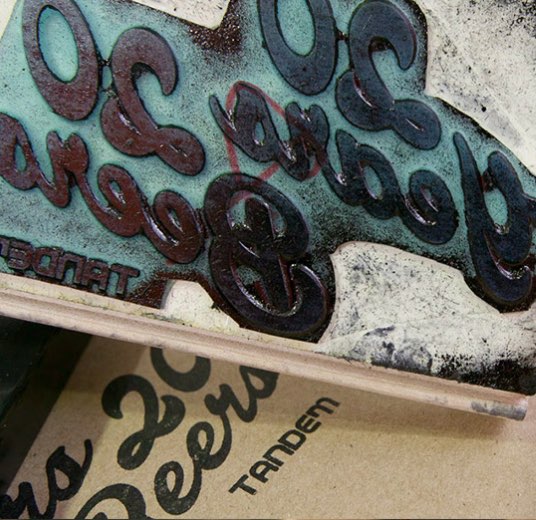
On an agency’s twentieth birthday, the customary move is a highlight reel: quick cuts, swelling music, a tasteful number of old logos. Tandem Marketing Design chose beer. Twenty beers, in fact, made with Tool Shed and Arrowhead breweries and given to clients and friends. The wooden carrier was printed with the anniversary count. The bottles turned tenure into something cold, local and shareable. It was an unusually efficient joke, because the object also explained the company.
Tandem is a Calgary creative firm founded in 1997 by Todd Fraser, who remains its managing director. Its menu is broad enough to sound like several agencies introduced at once: brand strategy, naming, identity, advertising, packaging, sales programs, websites, search optimization, analytics, promotions and physical environments. The interesting bit is not the length of the list. It is Tandem’s insistence that these things belong in the same sentence.
The costly moment between “approved” and “in market”
A brand is often presented as a clean sequence. First the strategy. Then the identity. Then the website, campaign and space. In practice, each step may go to a different specialist. The brief is repeated. Context thins. A sharp idea reaches the customer wearing four slightly different coats. Tandem’s business is built around that vulnerable middle.
The firm describes three client problems: making a brand that represents the product, people and history; finding an effective way to put it to work; and bringing it to life. Notice the verbs. Develop. Implement. Bring. This is less a promise of inspiration than a promise of travel. The idea has to survive its trip.
Tandem’s proposition: keep more of the context in the room as the work moves right.
That matters most to organizations without a small army of brand managers. A property developer launching a community may need a name, a sales centre, a brochure, a website, wayfinding and ads. An industrial company may need to explain a technical operation to recruits, neighbours, customers and investors. Buying those pieces separately can look efficient on a spreadsheet. The bill arrives later as rework, coordination and blandness.
“The best digital projects are rooted in a compelling story.”Tandem’s digital portfolio
A generalist with calluses
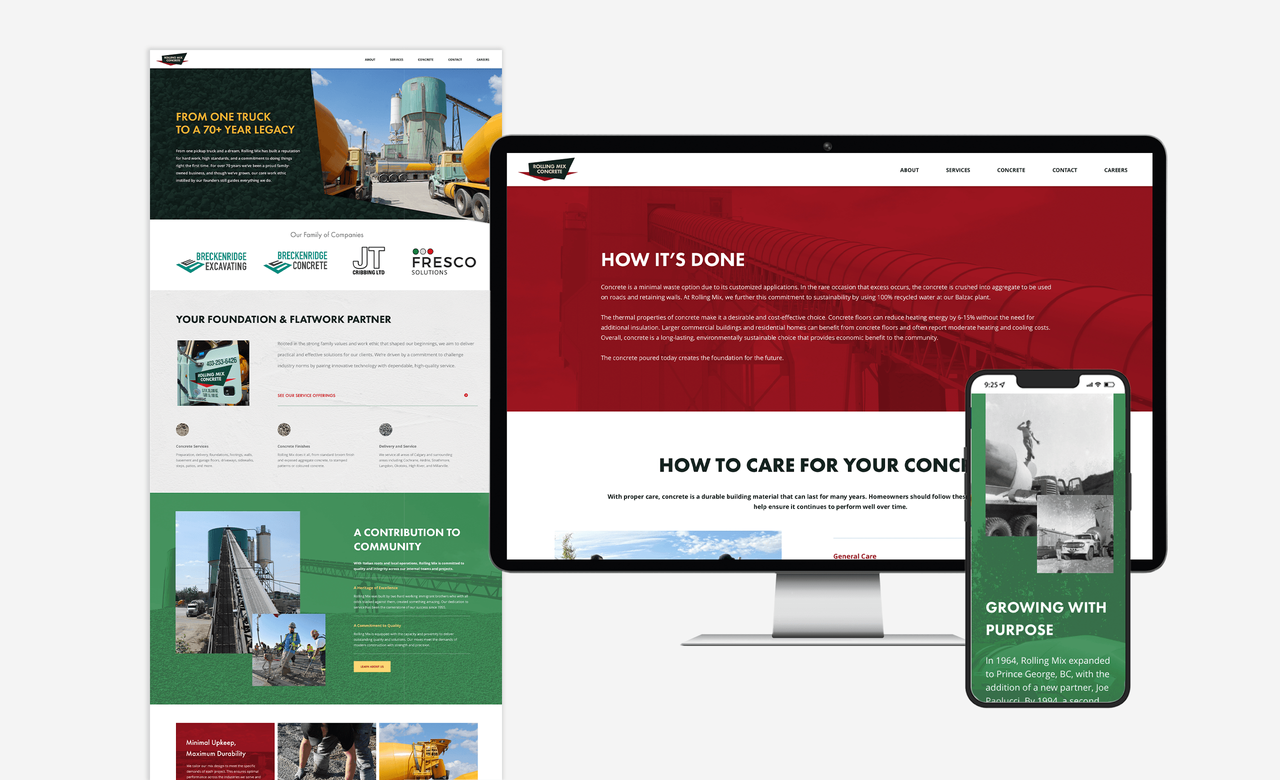
The portfolio is strikingly unprecious about medium. There is Calgary Zoo signage, Banff & Lake Louise tourism advertising, a Rolling Mix Concrete website, identities for property projects, financial communications for Mawer and packaging and point-of-sale work for Mark’s. Tandem has made radio spots, murals, proposals, tenant communications and online campaigns. “Integrated” is an abused word in marketing, but here it has a plain meaning: the team will think about the wall as well as the browser.
The breadth is not useful in every circumstance. A global consumer launch may require media scale and regional offices that a boutique firm cannot supply. A company that needs only programmatic buying may prefer a specialist. Tandem’s advantage appears when the assignment crosses formats and the client values a partner who remembers why an earlier decision was made.
That last point is visible in its long relationship with Remington Development. Tandem has served as agency of record and worked across developments such as Quarry Park, corporate profiles, digital material and environmental pieces. The work is not just a run of deliverables. It is stored context. On the tenth assignment, the agency does not begin at zero.
The owner problem came before the next campaign
Longevity can make a company look inevitable. It never is. In a testimonial about business coaching, Fraser wrote that Tandem had enjoyed success but had also faced challenges. During a difficult economy, regular coaching pushed him toward specific goals, clearer priorities and new approaches to growth. The revealing phrase is not “creative breakthrough.” It is “setting priorities.”
That is the less photogenic half of a design business. Good taste does not decide which work to decline, how much attention a client receives or how the founder stops becoming the narrowest point in the system. Fraser’s account suggests that the change was managerial: focus the company before asking the company to make more things. It is a useful corrective for any studio tempted to solve an operating problem with a new portfolio.
What a smaller team can copy on Monday
The first lesson is to organize around the customer’s problem, not your production departments. Tandem groups very different outputs around three needs: define the brand, decide how it works and make it tangible. That framing lets a buyer understand why web development and a lobby mural might belong in the same engagement.
Second, give neglected formats strategic dignity. Tandem calls presentations, proposals and information design “heavy lifting.” That is correct. A gorgeous identity cannot rescue a sales deck that makes the company impossible to understand. The unglamorous document may be where the brand earns its keep.
Third, turn your own milestones into demonstrations. “20 Years 20 Beers” thanked clients, created a physical artifact and made the agency’s personality legible without a paragraph of values language. The reader can copy the principle without copying the beer: build the announcement in the medium you want to be hired to make.
And finally, keep the central story portable. Tandem’s digital portfolio says the best projects begin with something interesting - a message, photograph, illustration, sound, map or film. Once that core exists, every channel has a job other than decoration. The website explains it. The ad compresses it. The environment lets someone walk through it. The sales material helps another person repeat it.
Twenty-nine years after the company began, that may be Tandem’s most current idea. Marketing has gained channels faster than it has gained coherence. The agency is betting that clients will still pay someone to remember the whole bicycle.