A question mark is a small piece of design with a fairly aggressive job. In a campaign for cybersecurity company ESET, Diseño Communications used it to unsettle a competitor’s familiar checkmark. The target was Symantec. The invitation was simple: reconsider the software you already trust. Across online placements, the agency turned a recognizable symbol of certainty into a prompt for doubt. No elaborate explanation was required to understand the challenge.
That little provocation is a useful introduction to Diseño. The Carlsbad, California, agency works in businesses whose products rarely explain themselves at a glance: cybersecurity, life sciences, technology and professional services. Its assignments include identities, websites, videos, advertising and trade show environments. The interesting part is how those formats serve a specific persuasion problem. Someone needs to understand a product, recognize a difference, or feel ready to speak to a sales team.
A complicated product needs a human reason
Consider another ESET assignment, called Twilight Savings Time. Security software can be discussed through capabilities and technical specifications. Diseño organized this campaign around a more immediately appealing benefit: saving time. It connected content marketing with the company’s trade show activity, giving the event effort a theme that could travel beyond the exhibition floor.
The published work includes email creative, social media treatments, responsive web layouts, booth artwork, an interactive punching game and post-show emails. The range matters. A visitor could encounter the same idea before arriving, recognize it at the booth and meet it again afterward. For a marketing team, that is a concrete example of what an integrated campaign actually requires: several pieces, each with a different job, sharing one recognizable proposition.
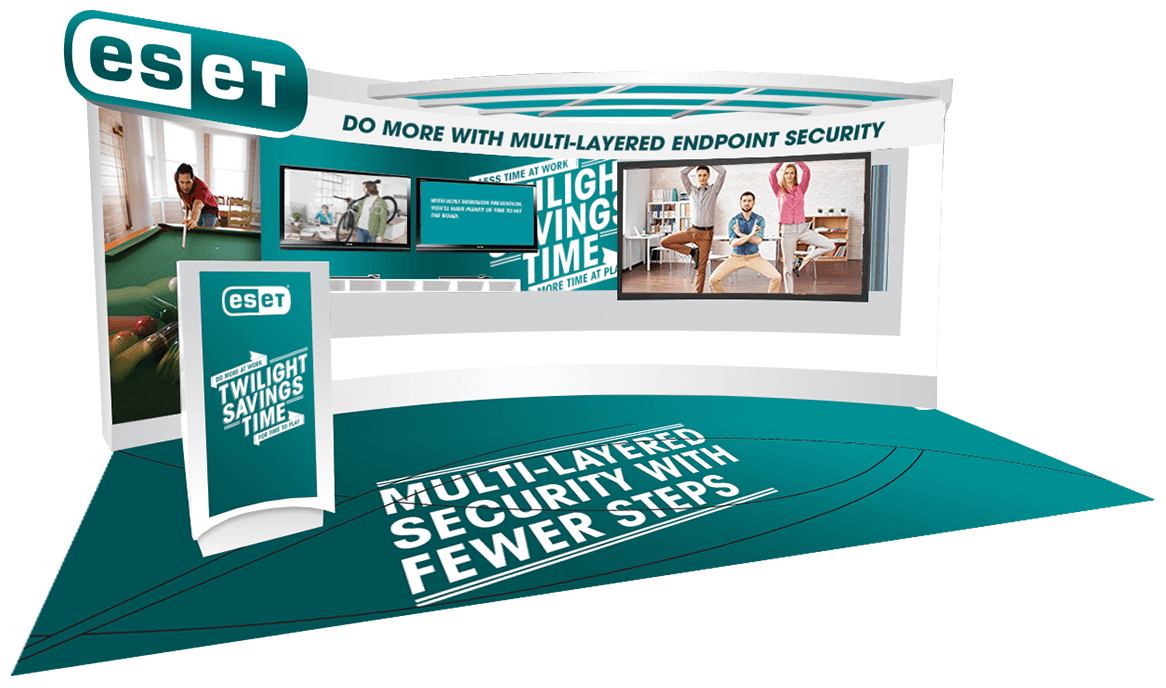
Diseño reports that the campaign increased qualified leads from ESET’s primary industry events by 30%. That is a claim about qualified event leads, with the agency as its author. It should be read at that scale. The creative lesson is nevertheless visible in the work: a customer benefit becomes more useful when every encounter reinforces it.
Qualified leads from primary industry events, as reported by Diseño.
Relative index illustration. Bars do not represent actual lead counts.The booth was part of the sale
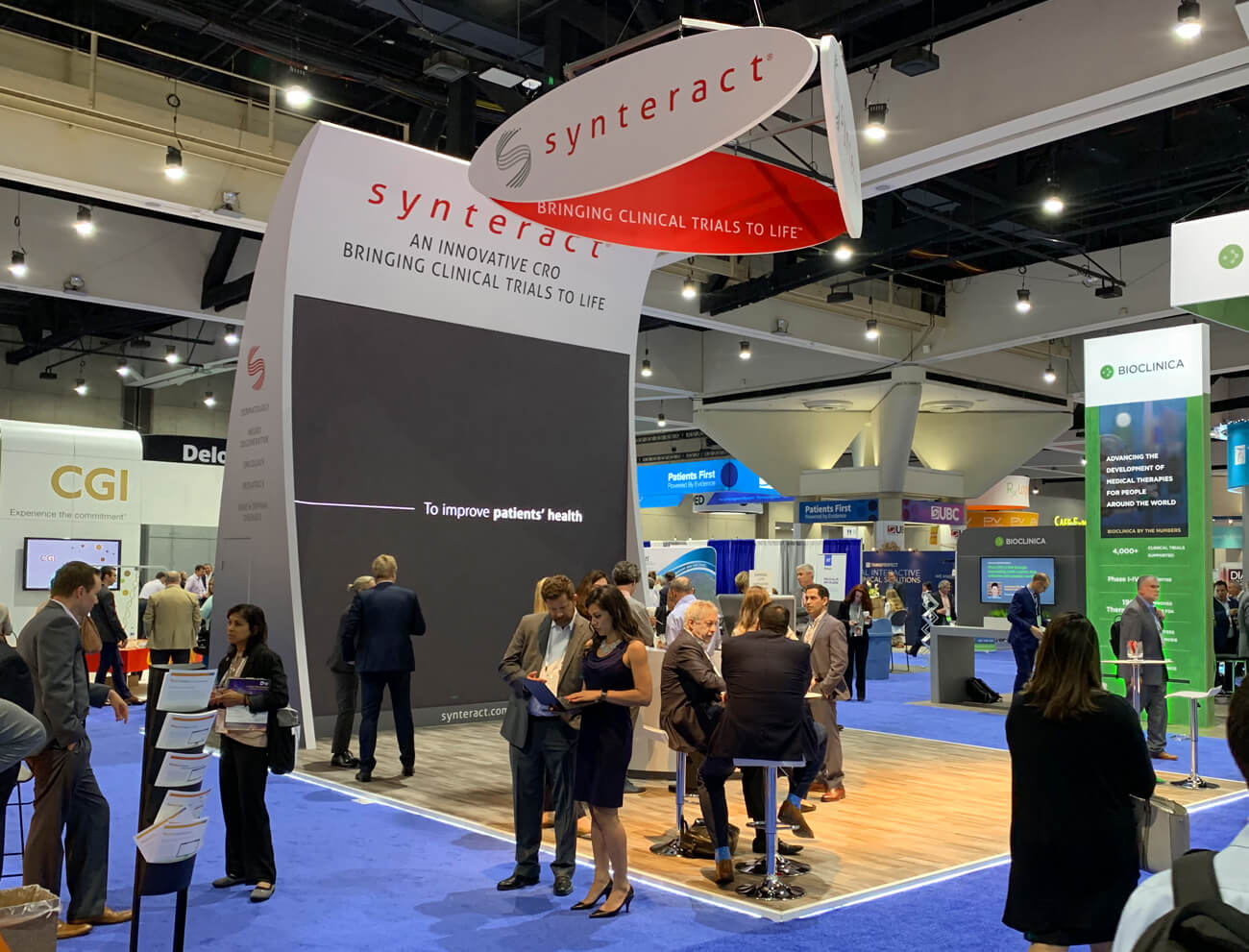
For Synteract, a contract research organization serving emerging and midsize pharmaceutical companies, Diseño’s assignment reached into physical space. It developed the booth’s floor-plan flow, structure and graphics. These are different design decisions from choosing an image for an advertisement. They shape where people stop, what they see and how a conversation can begin.
Diseño’s case study says the client reported more booth traffic than at any previous event, together with one of its largest-ever requests for proposals, received during the show. The account says Synteract subsequently won that RFP. The story is striking because it connects an exhibition environment with a specific business opportunity, while remaining a client outcome relayed by the agency.
Its Synteract website work addressed a related problem on a different surface. Following a corporate rebrand, Diseño redesigned the site to support prospective buyers and provide existing customers with industry information. Monthly search-engine optimization and pay-per-click services followed. The agency describes growth in RFP and information-request opportunities exceeding leadership’s expectations.
For a prospective client, the useful distinction is the duration of the work. Diseño can make a defined asset, such as a booth or website, and can also support the activity around it over time. A launch is one point in the relationship. Search traffic, inquiries and the next sales conversation keep the assignment commercially relevant afterward.
The business began in a borrowed corner
Humphreys founded Diseño in 2003. On the company’s About page, he describes starting alone, “without any clients in a bartered office room.” The detail makes the origin easy to picture. An agency sells judgment and execution, and he began before there was a customer roster to demonstrate either.
Today, Diseño identifies him as founder, creative director and senior brand strategist, with more than 30 years of brand development and marketing experience. He describes integrity, passion and dedication as the business’s enduring values. The company’s presentation pairs creative thinking with analytical work, an appropriate combination for assignments expected to look convincing and contribute to lead generation.

A June 2014 announcement records a subsequent expansion with public relations firm KCD PR. The two companies shared office space in San Diego’s Little Italy and offered complementary services to financial and professional services clients. The arrangement joined branding and creative work with public relations, giving their respective customers access to a broader set of capabilities.
That historical partnership also clarifies Diseño’s position in the market. Its business is professional service work, carried out for client organizations. Its value rests on understanding a brief and producing the materials it demands. Depending on the assignment, an alternative might be a branding studio, a web agency, a production company or an internal team assembling specialists.
From a Falcon video to a keyboard drawer
The CrowdStrike assignment shows how narrow the brief can become. Diseño created a Falcon product video using visual assets consistent with the existing brand, supported by custom 3D modeling and effects. The purpose was to present the product’s differentiators. The company behind the security software needed a way to make those differences visible and understandable.
Elsewhere in the ESET portfolio, the agency took a distinctly hands-on approach to helping resellers and distributors. It produced a wheel guide, pull-out cards for placement beneath a keyboard and a desktop tent-fold flip book. These are wonderfully ordinary objects in a portfolio that also includes digital advertising and animation. Their usefulness depends on a salesperson being able to consult them at the right moment.
The lesson for a buyer commissioning creative work is practical: describe the circumstances in which the material will be used. A video needs to hold attention through a sequence. A desk reference needs to make information easy to retrieve. A booth needs to accommodate people. Selecting the format becomes easier once the actual task is clear.
A wheel guide. Cards under a keyboard. A desktop flip book.
Three formats in Diseño’s ESET sales toolkit
Different audiences, different jobs
Diseño’s range becomes clearer when the audience changes. SG Biofuels, a crop-technology company, commissioned a website to explain its business and position it with the investment community. The story involved plant oil, protein and biomass. The website’s role was to make the company legible to people evaluating the opportunity.
Cyber Center of Excellence presented another brief. The nonprofit promotes San Diego’s cybersecurity community, so Diseño developed a responsive website and graphics intended to reflect cooperation. Here, the organization’s identity had to make sense as a place for a community to gather. Selling a specific software product was a different assignment.
For Viscadia, described in the portfolio as a specialty pharmaceutical startup consultancy, the challenge was entering a field of established competitors. Diseño developed a strategy and identity intended to express depth, accuracy and speed. In this case, the work concerned how a young consultancy would introduce itself before familiarity could do any of the convincing.
ESET’s healthcare IT campaign offers a further variation: address a particular buying group within a broader market. Diseño produced banners, emails, landing pages and direct mail around benefits relevant to that audience. Taken together, these projects suggest a useful way to read the portfolio. The formats repeat; the person who needs convincing changes.
Give the brief something to prove
Diseño’s published services extend from research and positioning through design, advertising and performance analysis. For a customer, the appeal is continuity: the findings that shape the message can inform the website, campaign and sales materials. Its business model combines commissioned work with ongoing services, as the Synteract search program demonstrates.
A sensible brief for this kind of agency would name the audience, the buying obstacle and the desired action. For budgeting, separate the creative deliverables from production, media spending and ongoing support. Then define what counts as a useful inquiry before work begins. Those are practical commissioning choices, rather than a claim about Diseño’s contract terms.
The approach depends on having a credible benefit to communicate and a team ready to handle the response. A persuasive campaign can attract attention; the company still has to deliver on its promise. That makes follow-up part of the assignment’s practical context, especially when the target is a qualified lead rather than a passing impression.
A useful review of the proposed work would follow that same path. Read the message as the intended buyer, move through the website as a visitor, and try the sales material in the setting where it will be needed. The projects suggest a practical review process, one that starts with the buyer’s experience of the finished work. It keeps the discussion tied to practical use when a design presentation might otherwise become a debate about personal taste, with the intended customer conspicuously absent from the discussion.
It also helps distinguish the deliverable from its intended effect. A completed film, a working website and a fabricated booth are things a team can inspect. Better understanding, stronger inquiries and new business are outcomes to evaluate afterward. Keeping both in the brief gives the client and agency a clearer basis for deciding what the next piece of work should accomplish.
The most revealing pieces in Diseño’s portfolio are the ones that put this responsibility into an object: a booth people can enter, a video they can follow, a card a salesperson can reach. Each gives an otherwise complicated business a manageable opening. Sometimes that opening is as small, and as pointed, as a question mark.