web-development
(40)
Michael Aaron Loftus keeps building beyond the brief
From early software ventures to Digital Marketing Company, Michael Aaron Loftus has made a career of connecting code with commerce. His current work stretches from search visibility to interactive tools and speculative worlds.

Jay Buys and the surprisingly practical business of giving a damn
He began with code, punk rock, and a search for how to start a company. Twenty years into Visceral, Jay Buys is still working out how to make a living without leaving his values at the office door.

Dan Tocchini IV and the website that would do its own work
A diamond salesman became a web designer, then tried to teach software the trade. Dan Tocchini IV’s story follows an awkward question: why should putting something on the internet require so much work?

Tony Svanascini and the business of changing your business
A fax-machine repair call is an unlikely starting point for a digital agency story. For Tony Svanascini, it helps explain three decades of following customers into whatever comes next.

Maiya Holliday built a company that could leave the office
A dock in Panama gave the self-taught coder a taste for working anywhere. Building Mangrove meant learning how to make that freedom work for other people, too.

Matt Schiller and the Business Hidden in a Graduation Photo
A photograph his mother loved helped send Matt Schiller toward a different business. With Snappr, the Australian founder has spent a decade working out what happens between wanting a picture and actually getting one.

John Carley and the long road to the next audience
John Carley founded Trinet Internet Solutions in 1995. His route from web development to overseas ministry training and the South Dakota Senate follows a persistent interest in getting a message heard.
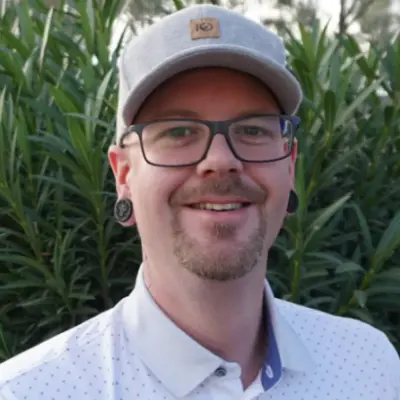
Matthew Gibson and the pleasure of making things work
A childhood fascination with computers became Flewid, a consulting business built around practical fixes. Away from client work, Matthew Gibson applies the same curiosity to old televisions, electronic music and life in Quebec.

Sean Conaty followed a thread
A favorite plaid shirt became a software project. For the Portland engineer behind PlaidMaker, the interesting details are often the smallest ones: a pixel, a space, a change worth keeping.
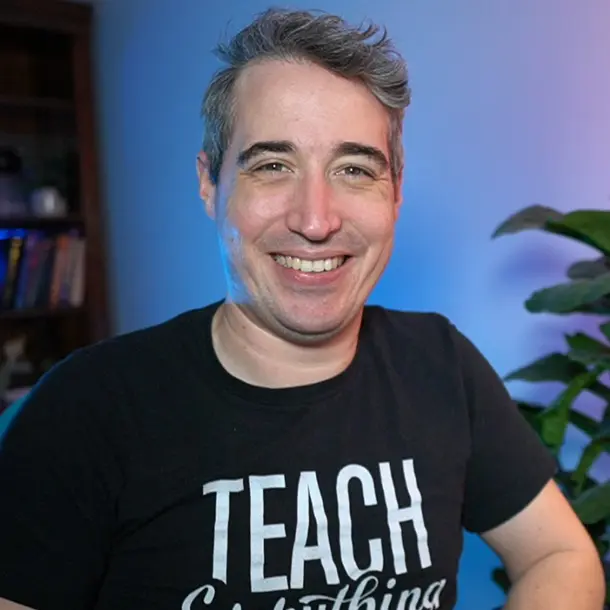
Kevin Powell Built a Classroom That Fits in a Browser
A former print designer started a CSS channel to keep learning beyond his classroom syllabus. More than a thousand videos later, he is still making the case that understanding the web is worth the trouble.
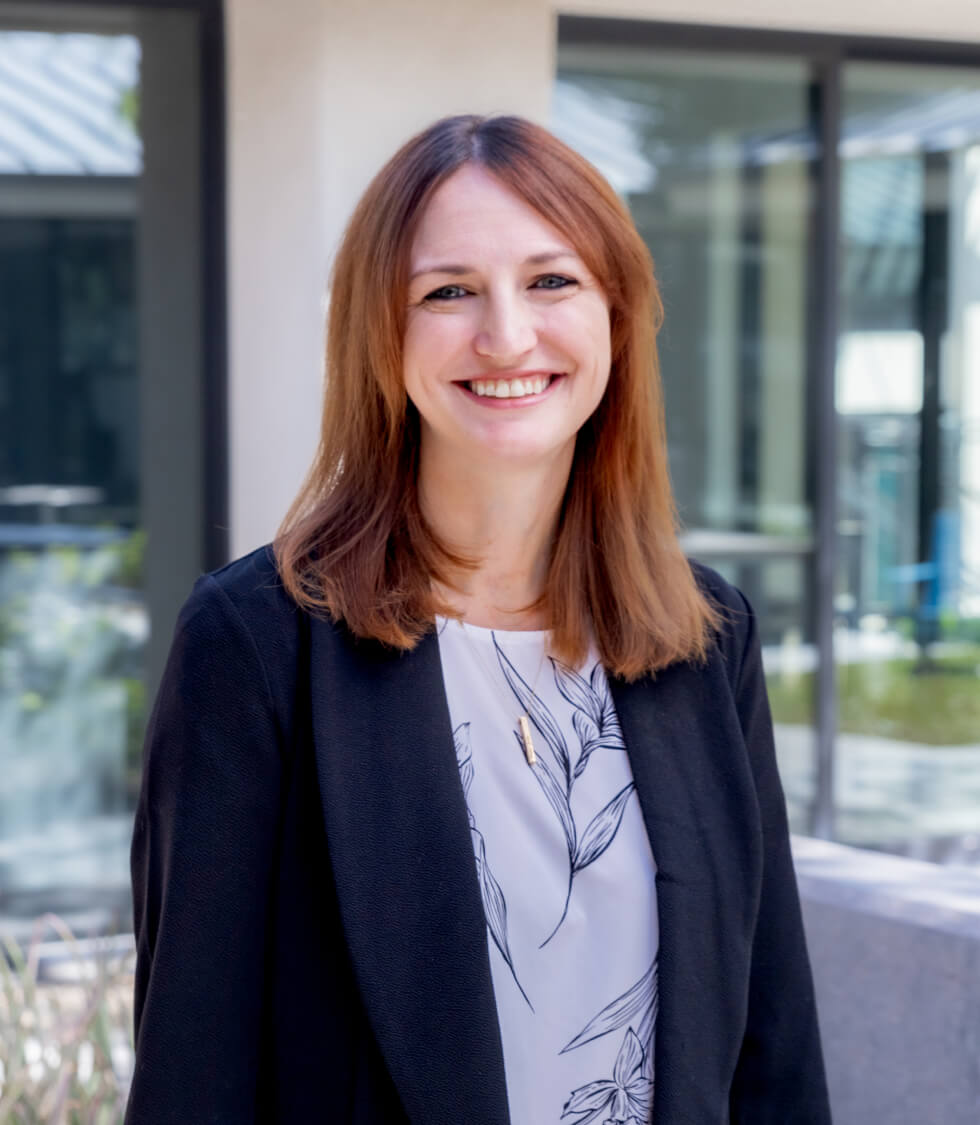
Megan Simoes Spent 13 Years Learning Every Room - Now She Runs the Hallway Between Them
A graphic designer became a developer, an integrator, a president and, in July 2026, Chief of Staff to Nextiva's CMO. The through-line is not title collecting. It is the patient craft of making specialists work as one team.

Natalie Williams Markets Software With a Builder’s Eye
At MindK, Natalie Williams occupies the tricky seam between what software can do and what buyers can understand. Her public notes reveal a practical marketer with a taste for sharp analogies, useful tools and fewer empty rituals.

Michael Arce Took the Long Way Into Marketing - and Kept the Useful Parts
Before he led marketing, Michael Arce studied networks, managed web developers, helped run a landscaping company, and tested entrepreneurship three times. His career makes a useful case for collecting skills before collecting titles.
Mohammed Razem Bet on Open Source - Then Built a Company Around the Long Run
The Vardot founder has spent nearly two decades turning Drupal contribution into enterprise infrastructure. His method is less sprint than ultramarathon: reusable systems, multilingual reach, and patient work in public.

Ariel Quinones
Ariel Quinones is the co-founder and co-CEO of Ironhack, a global tech bootcamp he launched in Madrid in 2013 with Gonzalo Manrique after the two met at Wharton. Raised in a Puerto Rican family of educators, he spotted a mismatch he could not unsee: youth unemployment above 50% in Spain sitting beside hundreds of thousands of unfilled tech jobs. Ironhack was his answer - short, intensive, outcomes-obsessed training that has since graduated thousands of career-changers across campuses in Europe, the Americas, and beyond. He now leads from Miami, preaching a gospel of ruthless focus on student outcomes and over-delivering on what people expect.

Jeff Delaney
Jeff Delaney is the creator of Fireship, a YouTube channel with over 4 million subscribers known for delivering fast-paced, entertaining programming tutorials - most famously the '100 Seconds of Code' series. Based in Phoenix, Arizona, he turned a side project teaching Firebase and Angular into one of the most influential developer education platforms on the internet, complemented by his course platform fireship.io and an 8,000-member developer Slack community.

Ben Ho
Ben Ho is the Singapore-based founder of Hex (hex.sg), a web design and development studio, and the creator of Sendy - a widely-used self-hosted email newsletter application powered by Amazon SES. A self-taught designer and programmer, Ben co-founded Hex with Melly Fong in 2007, building websites and web applications for major brands like Sony, Nokia, Levi's, Changi Airport, and Tiger Beer. His best-known product, Sendy, launched in August 2012 and transformed the email marketing economics for thousands of businesses by offering a one-time $69 fee to send newsletters at a fraction of the cost of platforms like Campaign Monitor - roughly $1 versus $150 per 10,000 emails via Amazon SES.

Mathias Biilmann Christensen
Mathias (Matt) Biilmann Christensen is a Danish-born entrepreneur who went from music journalist to Silicon Valley CEO. He co-founded Netlify in 2014, coined the term 'Jamstack' that reshaped modern web development, and most recently introduced 'Agent Experience (AX)' — the idea that software must be designed not just for humans but for the AI agents that increasingly act on their behalf. Netlify now serves 35 million+ websites and raised $212M total including a $105M Series D in 2021.

Sameer Kazi
Sameer Kazi is the CEO of Pantheon, the leading WebOps platform powering websites for The Home Depot, Kaiser Permanente, and Doctors Without Borders. A two-decade SaaS veteran who scaled ExactTarget through its $2.7B Salesforce acquisition, ran Cheetah Digital across 18 countries, and served as ActiveCampaign's first-ever president, Kazi brings a rare combination of operational rigor and growth instinct to Pantheon's 10,000-customer platform.

Sandeep Panda
Sandeep Panda is the Co-Founder and CTO of Hashnode, a developer-first blogging and community platform that lets software engineers own their content and publish on custom domains. Founded in 2016 alongside Syed Fazle Rahman, Hashnode has grown to serve 3M+ monthly readers and 10M+ monthly views, backed by Sequoia Capital India's Surge, Salesforce Ventures, and angel investors including Naval Ravikant and Guillermo Rauch (Vercel). A graduate of IIIT Bhubaneswar with a background in web development and technical writing, Sandeep has authored books on AngularJS and HTML5, and is now building Bug0, an AI-native end-to-end testing platform.

Sergie Magdalin
Sergie Magdalin is the co-founder and Chief Experience Officer of Webflow, the visual web development platform that lets designers build production-ready websites without writing code. Alongside his brother Vlad Magdalin and Bryant Chou, Sergie — a former freelance graphic designer and UX designer — built Webflow from a rejected Y Combinator application into a $4B company with over 3.5 million users. His design sensibility shaped Webflow's core UX, including pioneering visual interaction tools and a responsive design system that democratized professional web publishing.

Anandan Chinnalagu
Anandan Chinnalagu is a PhD computer scientist and serial technology entrepreneur leading MindPro Technologies, an AI-focused software development firm headquartered in Karur, Tamil Nadu, India, with personal base in Sunnyvale, California. With over two decades of building enterprise software companies - from founding AC INFOTECH INC in 2003 to steering MindPro's 110-person team - he specializes in machine learning, natural language processing, and Google Cloud AI integrations. His academic research in sentiment analysis has been published in PeerJ Computer Science and IJACSA, while his products span educational platforms, IoT consulting, and notification automation under the CanString brand.
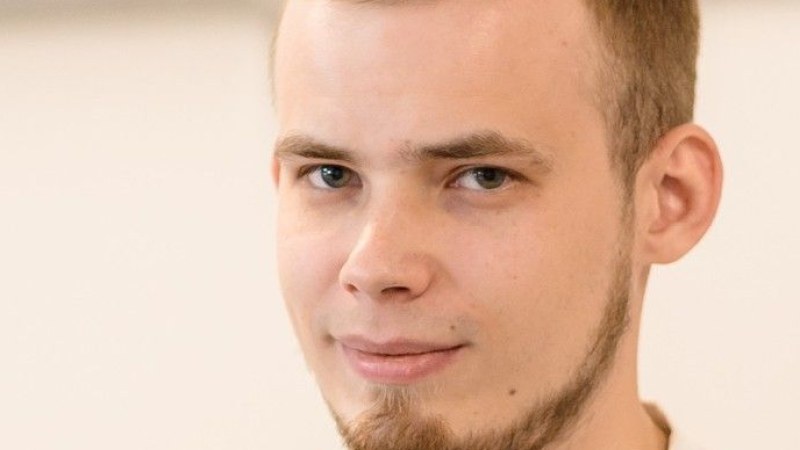
Igor Repeta
Igor Repeta is the CEO of Empat Tech, a Kyiv-based software development and outsourcing firm with nearly 200 engineers serving clients across 17 countries. He rose from Project Manager to Chief Executive Officer in four years, formally taking the helm in February 2026 after co-authoring the company's operational playbook as COO. Empat ranked #5 globally on the Clutch 100 Fastest-Growing Companies list in 2026 and holds back-to-back #1 Best IT Employer rankings in Ukraine (DOU 2024 and 2025). Beyond commercial growth, Repeta launched two civic tech projects during Russia's invasion of Ukraine: RevengeFor, a military fundraising platform channeling funds to ComeBackAlive, and HealUA, a peer-to-peer medical consultation platform for Ukrainian doctors.

Usman Pervaiz
Usman Pervaiz is the CEO and co-founder of Tekxai, a San Francisco-based digital innovation studio that builds AI-powered MVPs and custom software for startups and enterprises. With over a decade in tech, he leads a ~56-person team delivering full-stack web and mobile products with a signature 6-week build methodology, serving founders backed by Y Combinator and Techstars.

Linda Tong
Linda Tong is the Chief Executive Officer of Webflow, the visual web development platform powering over 300,000 businesses. Promoted from COO to CEO in June 2024, she brings a rare cross-industry pedigree - from helping launch Google Chrome and Android, to co-founding Tapjoy, to driving product innovation at the NFL, to running Cisco's AppDynamics division. A Yale-educated economist who discovered she 'never felt empowered to build' herself, she now leads the platform designed to fix exactly that problem.

Declan Chidlow
Declan Chidlow, known online as Vale, is a Perth-based front-end developer, writer, and photographer who champions the open web from the front of the front-end. Armed with HTML, CSS, and JavaScript, he builds accessible digital experiences and publishes technical articles across Smashing Magazine, CSS-Tricks, and Piccalilli — while also shipping quirky open-source tools like BritCSS (CSS for those who refuse to spell 'colour' without the u) and Adduce, a Rust-powered static site generator. When not coding or writing, he can be found on a unicycle.

Simon Willison
Simon Willison is a British software engineer, open source creator, and AI commentator best known for co-creating the Django web framework and building Datasette, the open-source data exploration tool. He coined the term 'prompt injection' in 2022 and popularized 'AI slop' in 2024 - a word later named Merriam-Webster's 2025 Word of the Year. Through his prolific blog (active since 2002), newsletter with 54,000+ subscribers, and 100+ open source tools, he is one of the most influential independent voices at the intersection of LLMs and open source software.
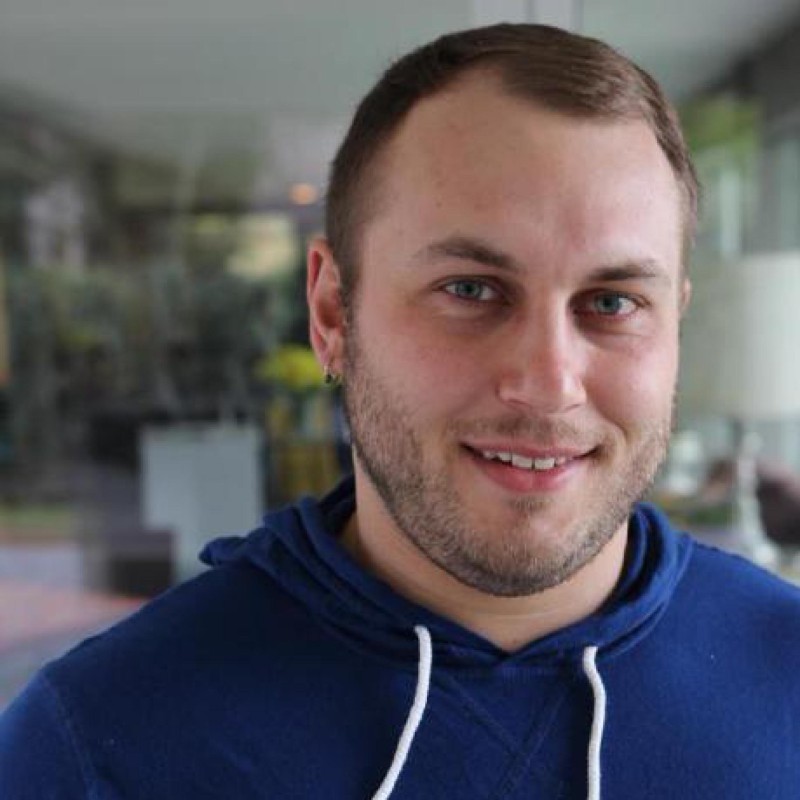
Adam Wathan
Adam Wathan is a Canadian developer, entrepreneur, and the creator of Tailwind CSS - the utility-first CSS framework used by millions of developers worldwide. As CEO of Tailwind Labs, he turned a side-project experiment into a multi-million dollar business encompassing Tailwind UI, Headless UI, and an ecosystem of developer tools. A college dropout turned prolific course creator, he built his reputation first through 'Refactoring to Collections' and 'Refactoring UI' (co-authored with Steve Schoger), generating over $2.5 million in book sales alone. In January 2026, he made headlines again when AI's disruption of developer documentation led to dramatic revenue declines and significant layoffs at Tailwind Labs, prompting major sponsorships from Vercel, Google, and others rallying to support what they called 'foundational web infrastructure.'

Cassidy Williams
Cassidy Williams is a Chicago-based software engineer, Senior Director of Developer Advocacy at GitHub, and one of the most recognizable voices in the frontend developer community. Known online as @cassidoo, she runs the widely-read weekly newsletter 'rendezvous with cassidoo,' builds mechanical keyboards, mentors early-career engineers, and has spoken everywhere from TED stages to the United Nations. She's a Glamour '35 Women Under 35 Changing the Tech Industry' honoree, a LinkedIn Top Professional, and a firm believer that you get a lot by giving.

Dave Rupert
Dave Rupert is a senior UX engineer at Microsoft, co-founder of the Austin-based web agency Paravel, and co-host of the long-running ShopTalk Show podcast. With over two decades in web development, he is widely recognized for his accessibility advocacy - notably founding The A11Y Project in 2014 - and for open-source tools like FitVids.js and FitText.js. He brings a maker's instinct, a teacher's heart, and a quietly sharp wit to everything he touches.