In 2009, Maiya Holliday went to Panama with a useful form of holiday currency: a website. Childhood friends owned a hostel there, and she had built their site in exchange for the trip. Once she arrived, a possibility became quite practical. If she could do the work here, she could do it somewhere else, too. She left the web development company where she worked in Berkeley and returned to Panama for four months of freelancing.
One workplace was a dock beside a lagoon, reached by a 20-minute boat ride from Bocas del Toro. Mangrove trees surrounded it. A photograph she took of a small tree there became the basis of her company’s logo. The business had acquired a name, a place to sit and a convincing argument against a commute. There was still the small matter of making it a business.
The useful thing she learned by accident
Holliday had studied international development at UCLA. Her route into technology began at a San Francisco nonprofit, where working on the website was one of several duties that stretched beyond her qualifications. She enjoyed it enough to keep learning. The important discovery was that a skill she could teach herself might be useful to organizations whose work she already cared about.
That connection remained the organizing idea. A website could help an organization explain its purpose, find support and make its work easier to reach. In her conversation with fundraising adviser Sherry Quam Taylor, Holliday’s path runs from nonprofit work to noticing organizations struggling with their web presence, then to learning how to build something more useful for them. The interest in code followed a reason to use it.
Today she is Mangrove’s founder, CEO and technical director, based in Truckee, California. Her career includes leading more than 200 website projects. She still describes the pleasure of the work in terms of solving problems with people: taking technical possibilities and fitting them to an actual human experience. A degree in international development and a career in web development turn out to be a workable combination.
“Our team is the heart of the company.”
Maiya Holliday
Freedom needs a hiring process
The move from freelancer to employer changes the meaning of freedom. A founder can choose where to open a laptop. A team needs to know how work gets assigned, who makes decisions and what an applicant can expect. Holliday has devoted unusually specific attention to those questions. Her account of Mangrove’s hiring practices makes the administrative work visible, down to the information included in a job advertisement.
The agency publishes compensation, values and hiring timelines, explains the stages of the process and evaluates candidates against a shared scoring rubric. A senior developer participates in the evaluation. Job boards include Diversify Tech and Jobs for Humanity. Formal qualifications receive scrutiny of their own: in her January 2022 account, fewer than half of the development team had a computer science or related degree, or even postsecondary education. Curiosity and evidence of learning carry weight. A self-taught founder has reasons to look beyond a diploma.
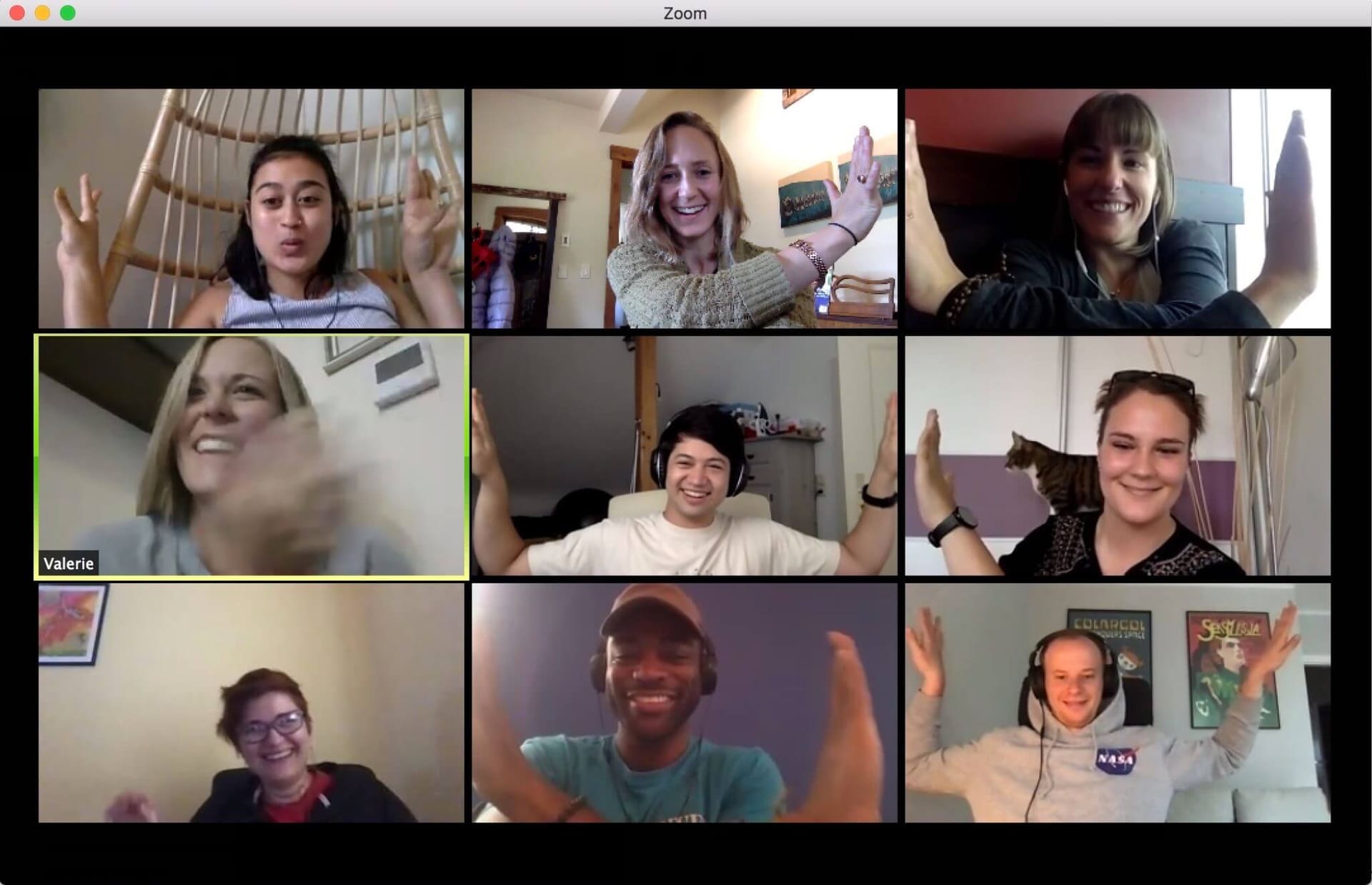
The geography eventually became a substantial part of the organization. In 2024, Mangrove’s team spanned 12 cities, seven countries, six time zones and three continents. Its leadership described the team as intentionally distributed since 2016. At that scale, working together requires more than agreeing that remote work sounds pleasant. The distances appear on a map; the coordination has to happen every working day.
A certificate with homework attached
Holliday led Mangrove into B Corp certification in 2016. In the company’s first impact report, she described the assessment as a way to examine how the business operated and identify changes it could make. Some actions were straightforward. Others required planning and work. Certification gave an existing intention a process, and brought the agency into a community of businesses willing to exchange ideas and resources.
By its 2023 recertification, Mangrove reported a score of 112. Holliday wrote about the value of having to collect information, establish systems and examine progress again. Digital accessibility was becoming a larger part of that effort. The questions had widened from who worked at the agency to who could use the things it built. For someone running a web company, that is a direct test of whether a stated value reaches the finished product.
certification
Corporation
certification
A recurring assessment also has an advantage over a stirring declaration: it comes back. Holliday’s account makes room for the effort of recertifying, and for learning to manage that effort with better records and templates. Good intentions still require someone to keep the paperwork. There is something reassuringly ordinary about this part of the story. A company can care about the world and still need a better filing system.
The Earth Day post that never appeared
In April 2023, Mangrove planned a social media slideshow of beautiful places that inspired the team’s commitment to sustainability. Photographs arrived in Slack. Then Marie, one of the agency’s partners, questioned the premise. Why should remote landscapes be the main illustration of environmental concern when people living with environmental damage were part of the story?
The team dropped the slideshow. Holliday published a reflection on how the original idea had overlooked questions of access, privilege and the communities connected to those places. Professional development funds would be available for further learning, and the discussion would continue in a team meeting. It is a revealing episode for a company whose founder’s own origin story includes a beautiful lagoon. A colleague challenged an attractive idea, and the company changed what it was going to publish.
More design, then a smaller company
Mangrove’s acquisition of Winnipeg design agency Manoverboard, announced in January 2023, joined two businesses that had already collaborated. Andrew Boardman and his colleagues brought additional design experience to an agency with a strong development background. The combined offering included branding, advanced animation, digital data modeling and accessibility audits. Holliday was building an organization that could take on a broader portion of a client’s problem.
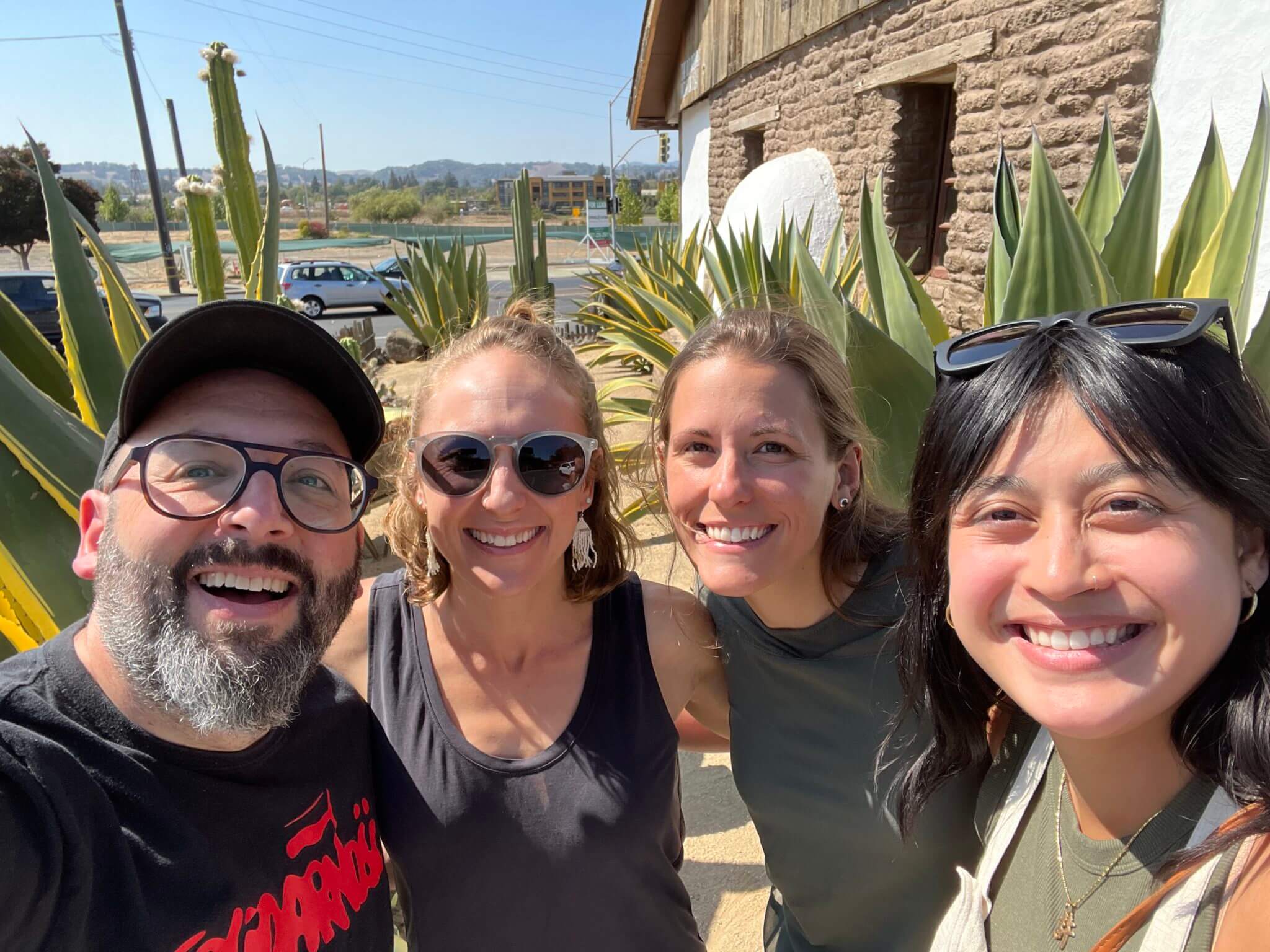
The expansion did not spare Mangrove the difficulties facing agencies. Its fifteenth anniversary in 2024 arrived after a period when stabilizing the business had taken much of the leadership’s attention. Holliday and Boardman acknowledged that pressure while taking stock. The anniversary account holds both experiences together: the satisfaction of developing more capabilities and the continuing job of keeping the company viable.
Her May 2025 reflection was equally direct about the result: Mangrove was smaller. Across 2023 and 2024, the team had launched or rebuilt 60 websites, added capabilities through the merger and obtained WBENC certification as a women-owned business. Holliday also took part in an accessibility session at the 2024 B Corp Champions Retreat in Vancouver. The work of running the agency included sharing what the team was learning beyond its own projects.
Even its refreshed visual identity involved practical decisions. The team reconsidered typography for accessibility, changed its palette for digital use and revised internal documents alongside public-facing materials. Boardman’s explanation of the 2024 redesign connects appearance to the way the company works. For Holliday, whose original business began with making someone else a website, the agency itself had become a continuing design project.
What she chooses to count
Environmental accounting introduces another set of less photogenic details. Mangrove has worked with Offset Alliance since 2021 to measure and address emissions. Holliday’s explanation includes energy use, digital subscriptions, internet connections and travel. She also makes room for a necessary qualification: offsets do not erase the business’s impact. The point of the exercise is to understand that impact and support verified projects, with records of credits being retired.
Giving has acquired structure, too. In May 2026, Holliday announced Mangrove’s membership in 1% for the Planet, extending a revenue-based giving goal it had set in 2019. The agency had already nominated Black Girls CODE as a prospective nonprofit partner. That choice connects an environmental giving framework to a longstanding interest in who gets to participate in technology. The organization’s remit, and the range of eligible partners, helped make membership fit.
There is room for colleagues to choose, as well. Mangrove’s team-directed giving lets each team member select an organization for a charitable donation toward the end of the year. Its pro bono work has included designing and building the Association of Registered Graphic Designers’ AccessAbility website, from discovery through launch. Giving can take the form of money or the professional time a client would otherwise pay for. The process brings more than the founder’s preferences into the decision about where that help goes.
given to charity
The figures she shared in July 2026 put numbers beside those choices. Mangrove reported more than 200 pro bono hours in 2025 and charitable contributions equivalent to 2.28% of gross revenue. Holliday also described mentoring through Girls Who Code and joining a BLD Bay Area panel with fellow founders. For the coming year, her priorities included more deliberate AI use, team learning and partnerships with women-owned and purpose-driven organizations.
The same curiosity has entered her public writing about AI. In August 2026, she published a LinkedIn article considering tools through questions about energy and where money goes. It is a recognizable extension of the work she has done with websites: choosing technology includes asking what surrounds it. The tool’s output is only part of the decision.
There is also a sense of proportion. Asked what she might give a talk about outside business and technology, Holliday offered the daily problem of getting children’s shoes on. She was similarly candid about the agency advice to narrow one’s niche: she understood its relevance and was tired of hearing it. In an industry fond of confident instructions, her willingness to leave some friction in the answer is appealing. The founder who began with a laptop on a dock is still figuring things out, now with colleagues, clients and a family in the picture.