There is a moment in almost every government project when a thing that looked finished turns out not to be finished at all. The report has been written. The colors have been approved. The website is live. Then somebody tries to navigate it without a mouse, or asks a screen reader to make sense of a table, or opens the PDF and discovers that its handsome pages have no usable reading order. The public information is technically public. It is also, for that person, locked.
Breck Inc. lives in that awkward interval between publication and actual use. From Arlington, Virginia, the women-owned small business sells strategic communications, graphic design, web work, video, events, writing, and Section 508 testing to federal agencies and a smaller group of corporate and nonprofit clients. The menu is broad. The organizing idea is not: understand the user, make the message useful, and test whether the result works.
Sarah Long founded Breck in 2011. Her background makes the combination less peculiar than it first appears - public-sector work, journalism, and graphic design. In a larger consultancy, those disciplines might sit on different floors. Breck's wager is that they belong at the same table, especially when the client is a federal agency whose audience is everybody.
The one-stop shop has a point
“Full service” is one of those phrases agencies use when they would rather not explain themselves. Here it describes a practical chain. Breck can research an audience, develop the message, write the copy, design the object, build the page, produce the video, stage the event, test the output, and remediate what fails. The buyer gets fewer handoffs. The accessibility specialist arrives before the launch-day fire drill.
The useful sequence - accessibility moves upstream
That sequence is the copyable part. Accessibility is cheapest when it changes the first draft, not the final invoice. A heading hierarchy can be planned. Contrast can be chosen. Captions can be budgeted. A complicated interface can be tested by keyboard while it is still a prototype. Breck calls this accessibility process mapping, a dry phrase for avoiding expensive surprises.
“Not only do we know the rules, we understand why they matter.”Breck Inc. on Section 508
The company says automated tools detect only about half of website accessibility issues. Whatever the precise percentage on a given site, the operational lesson is sound: software can flag missing labels or suspect contrast, but it cannot reliably tell you whether a journey makes sense. Breck pairs automated scans with manual work, including keyboard checks and screen-reader testing. Its teams remediate documents, websites, apps, training modules, presentations, graphics, and videos; they also offer captions, audio description, and training.
The money has footnotes
Breck's public footprint includes numbers large enough to distort the story. A Health Resources and Services Administration accessibility agreement has a reported potential value of $100 million. A Housing and Urban Development agreement carries a $50 million ceiling. A Department of the Interior Section 508 vehicle was reported at roughly $14.05 million. Those are not checks handed to Breck. They are contracting ceilings - permission for agencies to place orders up to a limit, often across years and, in some cases, among several vendors.
Selected ceilings - maximum capacity, not guaranteed revenue
What does the work actually cost? Breck's federal schedule is unusually concrete. In its published pricing, a junior Section 508 specialist was listed from about $75 to $83 an hour across contract years; a senior specialist from about $90 to $99. Writers, designers, UX specialists, programmers, and project managers each have their own bands. A project cost is the mix of those people, their hours, and any fixed-price terms - not the impressive ceiling attached to the vehicle.
Historical schedule figures shown for orientation. Actual orders, current rates, labor mixes, and negotiated terms vary.
The first thing to fail was the front door
The most revealing document Breck publishes is not an award announcement. It is the accessibility statement for its own website. The company says the site is partially conformant with WCAG 2.1 AA and lists known limitations: skip links that do not work as intended, a homepage carousel that creates trouble for keyboard and screen-reader users, uneven alt text, insufficient contrast in places, and heading structures still being corrected.
A public punch list
The specialist admits its own site still needs work. That is uncomfortable marketing and credible accessibility practice: test, name the failure, prioritize it, fix it, repeat.
This is where Breck becomes more interesting than its trophy shelf. The first failure is often not dramatic. It is the front door: the navigation shortcut, the carousel control, the reading order. And the company's response is not to claim purity. It is to publish the punch list and describe the manual checks, including NVDA screen-reader testing, used to find it.
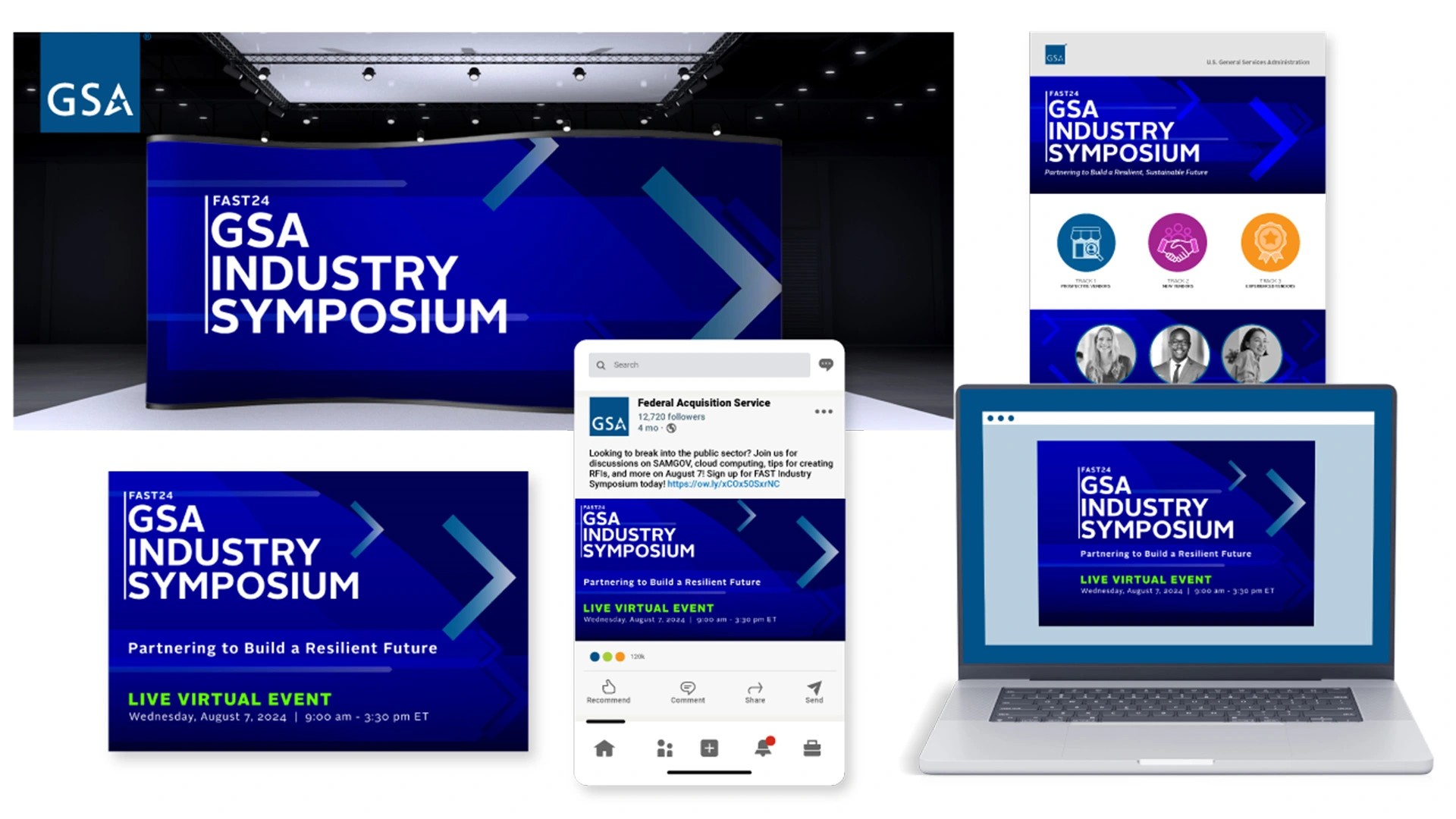
What changed the firm's approach in another part of the business was less subtle. Live events stopped being possible. Breck moved government gatherings into virtual form, including CISA's 2021 Cyber Summit, which brought together more than 15,000 cybersecurity experts, agency participants, and industry partners. By the 2024 GSA FAST Industry Symposium, the portfolio says Breck had applied lessons from an earlier iteration and increased engagement by more than 200% year over year. Constraint forced the format to change; measurement told the team what to keep.
A specialist disguised as a generalist
The alternatives to Breck are easy to name. A large integrator can staff a sprawling program. A specialist accessibility firm can perform a deep audit. A creative agency can make a campaign sing. An event producer can move thousands of people through a schedule. An internal agency team can own the institutional memory. Breck competes in the seams, where the report becomes a PDF, the campaign becomes a website, the event becomes a video library, and every artifact still has to work for people with different abilities.
That model is best suited to clients with several connected deliverables, federal procurement requirements, and a reason to reduce handoffs. It is less compelling when the problem is narrowly technical, when a buyer needs thousands of engineers at once, or when the client wants a single famous creative specialty above all else. A broad small firm wins by coordination; it loses when scale or extreme specialization is the whole brief.
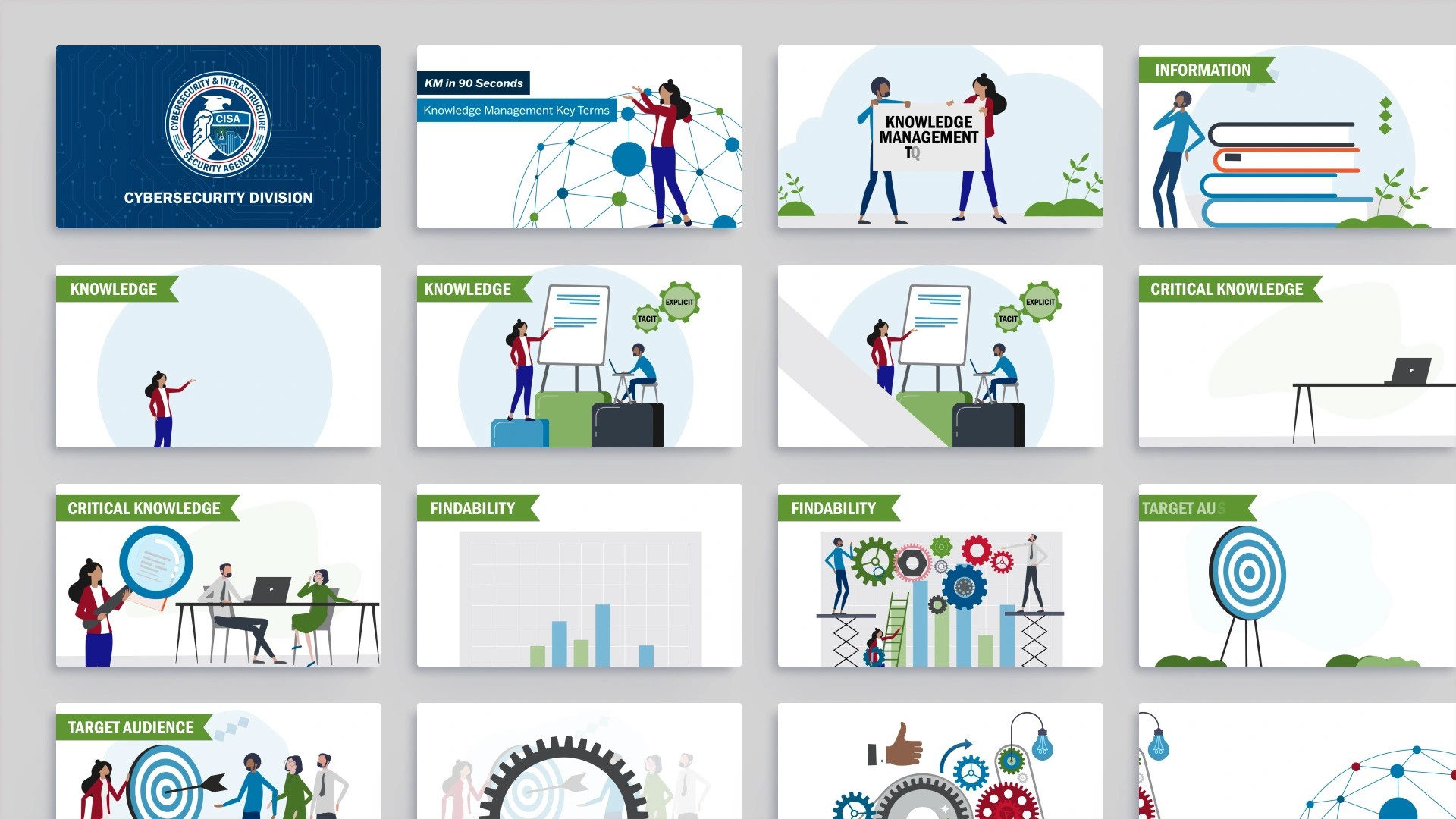
Breck's portfolio wanders delightfully from a CISA training series to USA Rugby merchandise to an award-winning animated explanation of chili peppers. But the same small mechanism sits beneath the variety. Somebody has to understand the audience. Somebody has to make the thing. Somebody has to check whether the thing can be used. The clever move was deciding those somebodies should know one another.
Public information is not public merely because it has been posted. It becomes public when people can find it, understand it, and use it.
That is the lesson worth borrowing. Do not bolt accessibility onto the end. Put the tester near the designer, the writer near the developer, and the measurement plan near the original brief. Then publish what still fails. The work is less glamorous than a launch and more useful than a slogan - which is probably why a firm of a few dozen people found so much room to do it.