There is a moment in event planning when the poetry stops. A quote arrives. The coffee is too expensive. The room is wrong. Seventy international delegates need rides, translations and a useful reason to meet a hall full of American suppliers. This is where Davis Management Group lives - after the optimistic brief and before the doors open.
The Alexandria, Virginia firm is easy to describe and harder to classify. It plans conferences, certainly. But an event company that also writes copy, builds digital assets, handles Section 508 accessibility, manages registration, sources interpreters, negotiates hotel minimums and supports federal programs is selling more than an event. It is selling controlled complexity.
Founder and CEO Erika Davis built the company into an 18-person operation, according to company data provided for this profile. Its public footprint is larger than the headcount suggests: more than 1,000 events in the United States and 20 countries, with assignments for the National Science Foundation, Department of Defense, State Department, HHS, USDA and USAID. Public federal-award data compiled by HigherGov totals more than $36 million since 2011. The clients are often agencies whose meetings carry policy, scientific or commercial consequences. A missed shuttle can become more than a missed shuttle.
Breakfast explains the business
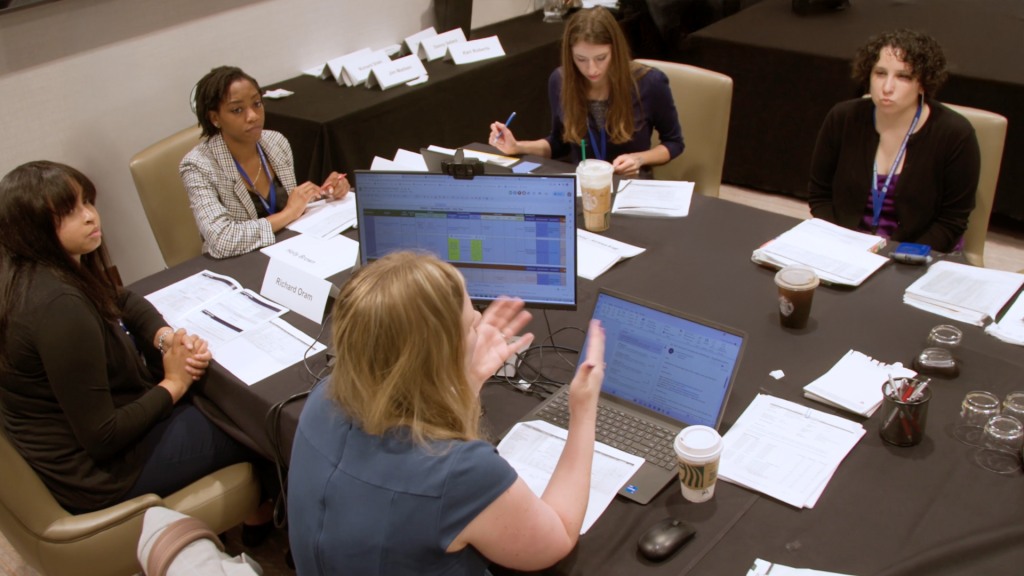
In 2023, DMG was supporting an International Day of the Girl program for the State Department’s Office of Global Women’s Issues. Breakfast and snack quotes came in $3,500 beyond the budget. That was the first thing to fail: not the program, the catering assumption. The conventional package no longer made sense.
The team changed its mind about what “catering” needed to mean. It sourced food through national retailers and a large coffee-and-pastry chain, then assembled a full-day spread for less than $1,000. DMG reports savings above 70 percent. The maneuver is almost comically ordinary, which is precisely why it matters. The fix did not depend on a dazzling new technology. It required someone to separate the desired experience from the vendor’s default bundle.
The company’s product is not the breakfast. It is the judgment to ask which parts of the breakfast are actually fixed.YesPress analysis
This is the useful, copyable part of the DMG method. Price the experience by component. Negotiate food-and-beverage minimums and meeting-room fees separately. Ask for parking. Adjust guarantees late enough to reflect the real count. Design signage to work twice. Bring translation inside the team when the capability already exists. None of those choices photographs well. Together they can rescue the budget.
A conference is a machine for making something happen
DMG’s best case studies do not stop at how many people entered a room. In Chicago, its team supported the USDA Foreign Agricultural Service’s USA-Africa Showcase. Seventy delegates came from 13 African countries. DMG created buyer profiles, matched importers with American exhibitors, coordinated transportation and accommodations, arranged interpretation, selected venues and delivered bilingual messages by email, mobile app and WhatsApp.
The result was more than 650 scheduled meetings. Delegates spent over $900,000 during the show, and projected more than $21 million in purchases over the following year. The numbers belong to the company’s account of the event, but they expose an important distinction: logistics was the mechanism; market access was the purpose.
The Spring 2024 NSF Grants Conference makes the same point from a different angle. The first hybrid edition since 2019 brought together 1,822 attendees from 595 institutions, including 116 minority-serving institutions. DMG handled logistical coordination, audiovisual production, streaming and on-site support. Eighty-seven percent of in-person attendees and 94 percent of virtual attendees said the conference met or exceeded expectations. Ninety-eight percent of survey respondents reported increased knowledge.
That measurement habit separates DMG from the familiar picture of an event planner as a tasteful arranger of stages and flowers. The firm fits closer to the professional-services market: it is a government contractor with a GSA Multiple Award Schedule, ISO 9001:2015 certification and Women-Owned Small Business credentials. Its alternatives include big meeting agencies, generalist federal contractors, destination-management firms and the client’s own communications department. DMG’s pitch is that one accountable team can connect all those functions without losing the mission in the handoffs.
The small-firm wagerAttention is the differentiator
The company’s stated values - service, professionalism, fairness and trust - sound conventional until they become operating instructions. Arrive early. Stay on site. Communicate regularly. Pay competitively enough to keep capable people. Build vendor relationships that last. Davis has described the business as beginning as a way to support her family. The resulting culture is personal, but its customers buy reliability.
In 2020, prime contractor PAE selected DMG to support more than 30 Defense Threat Reduction Agency counterproliferation workshops around the world. The work called for venues, travel, multilingual materials, senior project managers and full on-site support. It illustrates the company’s unusual position: a small specialist nested inside missions with large institutional stakes.
This approach works when a client can define the outcome, share decisions early and let the operator trade one line item against another. It is less useful when every vendor, format and deliverable is locked before planning begins, or when success is judged only by appearance. Creative sourcing needs room to move; measurement needs agreement on what matters.
There is also a broader lesson here for anyone who runs projects, not just events. Most complexity hides in the seams between specialties. The app team assumes registration has the data. Registration assumes communications sent the instructions. Communications assumes the venue confirmed the door. A capable integrator makes those assumptions visible before guests discover them.
This is why the coffee story sticks. It is a tiny drama with a deadline, a constraint and a choice. DMG did not make the budget larger. It made the problem smaller, then rebuilt the experience from the pieces that mattered. By the time attendees arrived, there was breakfast. Ideally, nobody wondered how.