sustainable-manufacturing
(21)
Trentino Sviluppo Gives Old Factories a New Job
In northern Italy, a publicly owned company puts workshops, research and business coaching under one roof. Its bet: the next industrial chapter needs somewhere to build.
MITO Spent a Decade Making Graphene Boring Enough for the Factory Floor
Graphene had extraordinary lab results and an ordinary factory problem: it clumped, wandered and asked manufacturers to change too much. MITO built its business around the unglamorous fix - make the wonder material behave like an additive people can actually use.

The Company That Sold You the Bag, the Dock, and Everything In Between
Targus made the first laptop case 40-plus years ago. It survived by owning the boring, essential stuff everyone forgets to buy until they need it - and by turning old bottles into backpacks.
Diageo Owns the Labels. Its Real Product Is the Shelf.
The company behind Guinness, Johnnie Walker and Don Julio is less a distiller than a global operating system for taste - one now being rewired for slower growth, sober-curious drinkers and a more demanding balance sheet.
The Factory Behind the Internet's Oddly Specific Orders
A missing car-wash sign became a portfolio of 12 brands and more than 10,000 customizable products. Group Bayport's real product is the machinery that turns one-off requests into repeatable ecommerce.

The Family That Has Been Making Strings Since Before the Guitar
A 300-year-old Italian craft, a Long Island factory, and the strings on a very large share of the world's guitars. Inside how D'Addario turned a family trade into the industry's workhorse.
The 130-Year-Old Foundry That Turned a Skillet Into a System
Lodge does not merely sell heavy pans. From two Tennessee foundries, it has built a loop of manufacturing, education, mass retail, collecting, and care that keeps a 19th-century material useful in a nonstick age.

Every Pokemon Card Runs Through a Belgian Town You've Never Heard Of
The name on the box is Pokemon, Hasbro or Disney. The company that actually prints, cuts and packs the cards is a 250-year-old Belgian manufacturer most players have never heard of.
The Plate That Refuses to Leave the Restaurant
Steelite International turned a fragile object into operational equipment. Its real product is not merely a good-looking plate - it is fewer chips, cleaner service, easier replacement and a reliable canvas for a chef's work.
The $5.1 Billion Company Hiding in Plain Sight on 30 Million Cars
Axalta’s name is rarely visible, but its chemistry sits on millions of vehicles, factory parts and buildings. Now the coatings specialist is turning paint into a system of color data, robotics and manufacturing efficiency - just as a pending merger could redraw its market.
Bimbo Bakeries USA
Bimbo Bakeries USA is the company hiding in plain sight across the bread aisle. Its advantage is not one famous loaf, but a portfolio of old brands tied to a daily system for baking, forecasting and delivering freshness at national scale.
At One Ventures
At One Ventures is betting that climate technology wins when it is cheaper, better and difficult for incumbents to ignore. Its $525 million experiment stretches from honeybee vaccines to underground ammonia reactors.

Syenta
Syenta is an Australian deep-tech semiconductor company building next-generation chip-to-chip interconnects for the AI era. Spun out of the Australian National University, it has developed a proprietary process called Localized Electrochemical Manufacturing (LEM) that deposits and patterns metal in a single step, producing micron-scale interconnects across large packages with fewer process steps. The technology targets the 'memory wall' that limits AI and high-performance computing, aiming to raise interconnect density and bandwidth while cutting manufacturing cost and waste. Headquartered in Sydney with a new development facility in Tempe, Arizona, Syenta has raised more than A$37 million, with former Intel CEO Pat Gelsinger joining its board.

6K
6K is a North Andover, Massachusetts advanced materials company that uses its proprietary UniMelt microwave plasma technology - which reaches roughly 6,000 degrees, hence the name - to produce battery cathode materials and additive-manufacturing metal powders faster, cleaner, and with fewer processing steps than conventional methods. Spun out of research at MIT and the University of Connecticut, the company operates through two divisions, 6K Energy (battery cathode active materials) and 6K Additive (sustainably sourced metal powders), and is building a domestic U.S. supply chain for critical materials backed by federal grants and more than $348 million in venture funding.

Infinitum
Infinitum is an Austin, Texas company reinventing the electric motor. Founded in 2016 by Ben Schuler, it replaced the century-old iron-and-copper stator with a printed circuit board (PCB) stator, producing air core motors that are roughly 50% smaller and lighter, use 66% less copper, and consume about 10% less energy than conventional motors. Its Aircore EC motor system integrates a variable frequency drive and targets HVAC fans and pumps, data center cooling, industrial equipment, power generation and mobility. Backed by more than $385M in funding and partners such as Rockwell Automation, Infinitum was named to Fast Company's 2025 list of the World's 50 Most Innovative Companies, ranking No. 1 in energy.
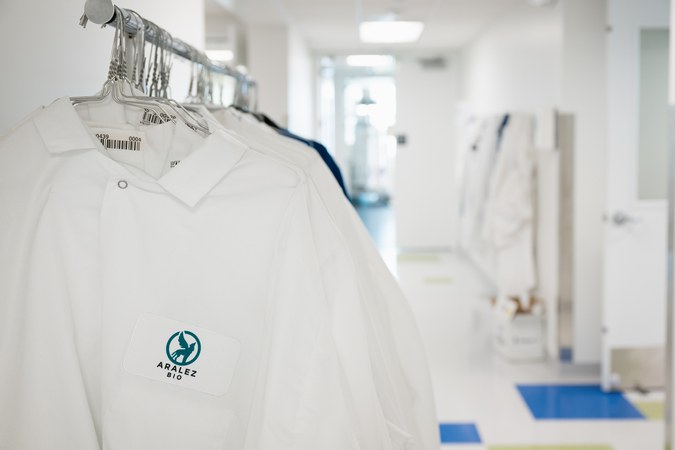
Aralez Bio
Aralez Bio is a Berkeley, California biotechnology company that uses engineered enzymes and directed evolution to manufacture noncanonical amino acids (ncAAs) - the specialized building blocks used in peptide drugs and other pharmaceuticals. Spun out of Nobel Laureate Frances Arnold's Caltech lab in 2019, the company runs biocatalytic reactions that produce enantiopure ncAAs in a single step with water as the main byproduct, expanding the amino acid toolbox roughly 1,000-fold. Aralez sells a catalog of thousands of exclusive amino acids and offers custom synthesis and ton-scale production for pharmaceutical customers, including partners among the world's largest drug companies.

Tailored Industry
Tailored Industry is a Brooklyn-based on-demand knitwear manufacturer that pairs industrial 3D 'wholegarment' knitting machines with a proprietary software platform. It lets fashion brands of any size produce seamless sweaters and knit staples with zero minimums and near-zero waste, matching supply to actual demand instead of guessing seasons in advance.
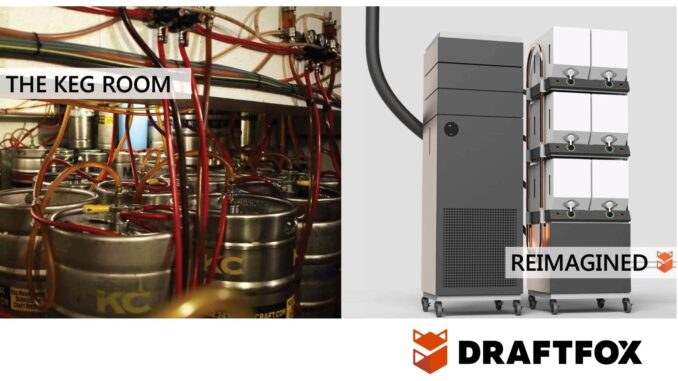
Porifera
Porifera builds forward osmosis membrane systems that concentrate beverages and treat wastewater without heat or pressure. Its proprietary PFO technology removes water from juices, coffee, beer and wine while preserving flavor, aroma and color - cutting energy use up to 80% versus conventional evaporators. In 2025 the company launched Draftfox, a beer concentration and Microkeg dispense system that shrinks a keg by 6x.
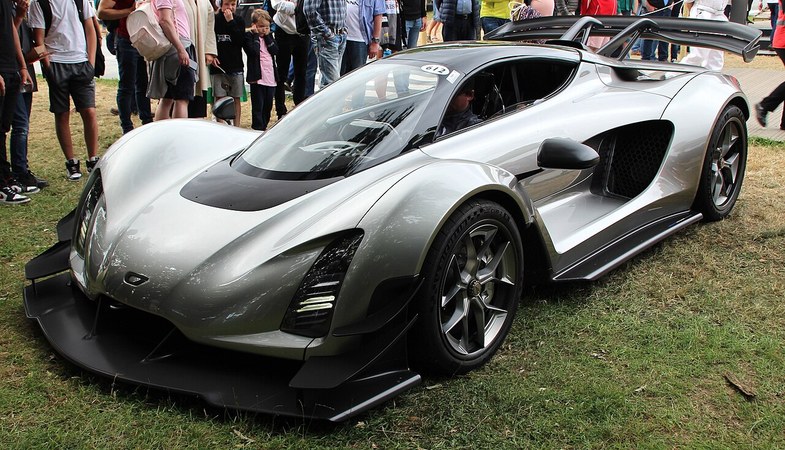
Divergent
Divergent Technologies is a Torrance, California digital-manufacturing company behind DAPS, the Divergent Adaptive Production System - an end-to-end platform that pairs AI-driven generative design, metal 3D printing, and software-defined robotic assembly to produce complex automotive, aerospace, and defense structures without part-specific tooling. The same system that builds the record-setting Czinger 21C hypercar now turns out missile airframes and drone aerostructures for U.S. defense primes.

Seurat Technologies
Seurat Technologies is a Massachusetts-based contract metal manufacturer built around Area Printing, a laser powder bed fusion process invented at Lawrence Livermore National Laboratory. Instead of melting metal powder one point at a time, Seurat uses millions of tiny laser points to print entire areas at once, decoupling resolution from speed. The company doesn't sell printers; it runs its own clean-energy print factories and sells finished parts at costs meant to rival casting, forging, and machining, with the goal of reshoring high-volume metal manufacturing and cutting its carbon footprint.

Solarbiotech
Solarbiotech is a U.S.-based synthetic biology and biomanufacturing company that helps companies move precision-fermentation products from lab bench to commercial scale. Built around a Norton, Virginia plant with fermentation capacity from 6L to 10,000L and a modular 'BioNodes' architecture, it offers end-to-end strain-to-shelf services - upstream fermentation, downstream processing, and commercial production - for food ingredients, nutraceuticals, cosmetics, enzymes, and industrial bioproducts. After a 2024 Chapter 11 restructuring, its assets were acquired by Pictor Biotech (led by ex-Novozymes executive Peter Rosholm) and unified in January 2025 with GPC Bio and Eleszto Genetika into a vertically integrated, 100+ person SynBio platform.