sustainable-aviation
(11)
Eric Bartsch Bet on the Part of Electric Flight That Could Actually Fly
The VerdeGo Aero co-founder stopped trying to build the whole aircraft and focused on its hardest constraint. His wager is practical, technical and increasingly visible in hardware: electric motors can reshape flight, but fuel may carry the energy for longer than futurists expected.

Aleksey Matyushev Is Betting That Aviation’s Next Leap Is a Change of Shape
The Natilus co-founder spent years learning how aircraft behave. Now he is trying to prove that commercial aviation can change its economics by changing its silhouette.

VerdeGo Quit Building the Flying Car - and Found the Business Every Flying Car Needs
The Daytona Beach startup stopped trying to win the air-taxi beauty contest and started supplying the awkward, essential machinery underneath it. Now its hybrid powerplants are moving from test stands to customer aircraft.

The San Diego startup betting the plane is the wrong shape
Every commercial jet you have ever flown is a tube with wings bolted on. Natilus thinks that is a $24 billion mistake - and it has the order book to argue about it.
GE Aerospace
GE Aerospace sells some of the most complicated machines humans make. The deeper business begins after delivery, when decades of maintenance, data and parts turn an engine under the wing into a long-lived service relationship.

Jaunt Air Mobility
Jaunt Air Mobility is a Dallas-based aerospace company building the all-electric Journey eVTOL, an air taxi that takes off like a helicopter and cruises like an airplane using patented Slowed Rotor Compound (SRC) technology. Founded in 2019 on intellectual property acquired from Carter Aviation, Jaunt is pursuing a certification path as a rotorcraft and is now a brand within publicly traded AIRO Group Holdings. Its aircraft carries a pilot and four passengers roughly 80-120 miles at 175 mph with low noise and an autorotation safety fallback.
Electra.aero
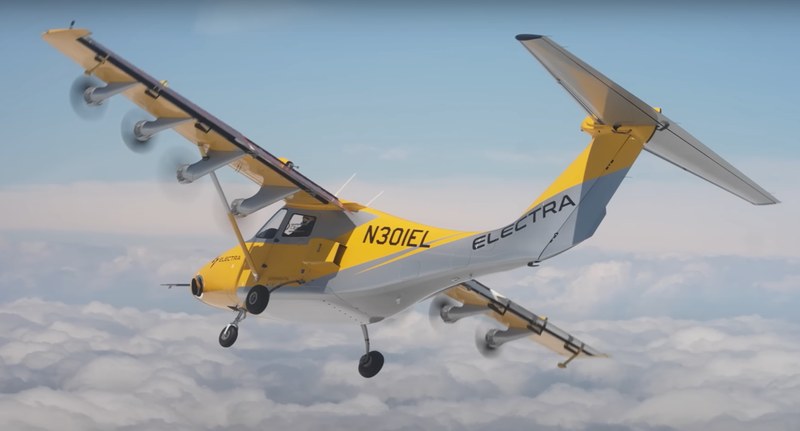
Electra.aero is a Manassas, Virginia aerospace company building the EL9, a nine-passenger hybrid-electric 'Ultra Short' aircraft that takes off and lands in about 150 feet - roughly a soccer field - without conventional runways, charging stations, or the noise of a normal airplane. Using blown-lift aerodynamics and eight electric motors, it aims to open regional and community air travel from grass strips and small airfields while cutting emissions, with FAA Part 23 certification targeted for 2029.

Odys Aviation
Odys Aviation is a Long Beach, California deep-tech aerospace company building long-range, hybrid-electric vertical takeoff and landing (VTOL) aircraft. Its blown-wing design lets aircraft lift off and land anywhere - no runway needed - while flying farther and carrying more than battery-only eVTOLs. With two platforms, the Laila tactical cargo drone and the larger Alta regional aircraft, Odys targets defense, logistics and passenger markets, and has amassed more than $11 billion in signed letters of intent.

James Dorris
James Dorris is the co-founder and CEO of Odys Aviation, a Long Beach company building long-range, hybrid-electric VTOL aircraft that take off and land like a helicopter but cruise like an airplane. A former fusion physicist who started at MIT's Plasma Science and Fusion Center, he helped build the propulsion and levitation tech at Virgin Hyperloop One before turning to flight. At Odys he is chasing aircraft that can lift off from a helipad, fly up to 1,000 miles on a hybrid system, and cut regional travel emissions sharply while serving defense, logistics, and passenger markets.

Marc Allen
Marc Allen is the CEO of Electra.aero, a Manassas, Virginia startup building the EL9, a nine-seat hybrid-electric ultra-short takeoff and landing (eSTOL) aircraft that can lift off in roughly 150 feet of runway. A Yale Law graduate and former U.S. Supreme Court clerk who spent 17 years at Boeing - including stints as Chief Strategy Officer, President of Boeing International, and Chairman of Wisk Aero - Allen left the world's largest aerospace company in August 2024 to run a startup chasing what he calls 'Direct Aviation': air travel without airports, emissions, or noise. Under his watch Electra has stacked up roughly 2,200 pre-orders worth nearly $9 billion and closed a $115 million Series B.

Josh McFarland
Josh McFarland is the Executive Chairman of Boom Supersonic, the Colorado-based company racing to bring commercial supersonic flight back to the skies. The son of a Wyoming coal miner who grew up building rockets and flying Piper Cubs with his dad, McFarland parlayed a Stanford economics degree into a career arc that touched Google's earliest advertising infrastructure, the $500M-plus sale of his AI marketing startup TellApart to Twitter, a VP role running Twitter's revenue products, and a partnership seat at Greylock Partners - before landing back in the world he loved as a boy: aviation. As Executive Chairman, he leads fundraising and go-to-market strategy for Boom, whose XB-1 demonstrator broke the sound barrier in 2025 and whose Overture airliner promises Mach 1.7 travel on sustainable aviation fuel.