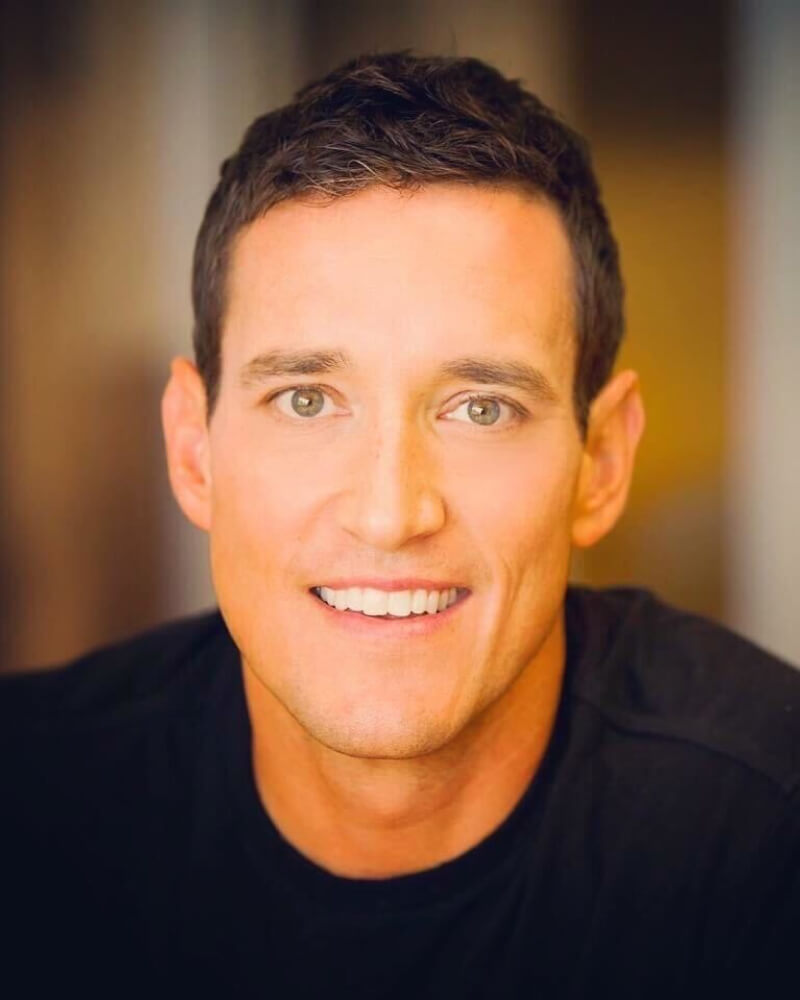
The Window-Seat Kid Who Went Supersonic
Gillette, Wyoming is not where you'd expect to find the future chairman of a company trying to break the sound barrier commercially. It's a coal town - flat, practical, unromantic about ambition. Josh McFarland grew up there, son of a miner, in a world where the sky was something you drove under, not something you aimed at. Except he did aim at it. He and his father would take their Piper PA-18 Super Cub up over the Wyoming plains, and whatever a ten-year-old sees from a single-engine prop plane at a few thousand feet - that view stuck.
It stuck so hard that when he graduated from Stanford, he launched a rocket off his mortarboard. He is, by his own proud accounting, the only Stanford graduate ever to have done this. Whether the university agrees is a separate matter. The point is: the man thinks in trajectories.
The career that followed traced a line from Google to a $500M exit to venture capital to the chairmanship of one of the most audacious aerospace bets of the century. Each move looks inevitable in hindsight - which is another way of saying it wasn't inevitable at all, just relentlessly purposeful.
I'm a window-seat, shade-up, gazing-out kind of flyer.
- Josh McFarlandFrom AdWords API to Adtech Empire
He arrived in Silicon Valley in 1997, mid-dotcom bubble, as a Stanford freshman. He did what the Mayfield Fellowship taught its participants to do: he got close to startups. He interned at them. He watched some succeed, watched others fail. Then Google hired him - after 23 interviews spread over 18 months. The patience alone should have been the tell.
At Google, McFarland and Mark Ayzenshtat built something that didn't exist: the AdWords API team. It earned Google's Founder's Award, the company's highest internal honor. He learned how to wire together advertising infrastructure at a scale most people couldn't imagine in 2003. Five years later, he left.
In 2009, as an Entrepreneur in Residence at Greylock Partners, he founded TellApart. The pitch was simple to describe and hard to execute: use machine learning to help retailers figure out which abandoned-cart customers would actually buy something if you showed them an ad. The clients who bit - Neiman Marcus, Warby Parker, Sur La Table, Brookstone - weren't small accounts.
He grew TellApart from $7M in annual revenue to $170M. Then Twitter bought it for more than $500M, the largest acquisition in Twitter's history at the time. McFarland joined as VP of Product, running all of Twitter's revenue lines: advertising, data services, customer support infrastructure. He had built a business to sell to a platform. Now he was running the platform's commercial engine.
Back to First Principles - and First Loves
In 2016, McFarland left Twitter and joined Greylock Partners as a full partner. He wasn't done building companies - he was just going to do it from the other side of the table. At Greylock he led investments in Coinbase (before it was obvious), Atomic Finance, Frec, Splitwise, and Wisetack. He serves as board director at PayJoy. His thesis was technical founders building category-defining infrastructure.
That same year, he made a bet that had nothing to do with fintech or commerce infrastructure. He became one of Boom Supersonic's earliest investors and strategic partners. Blake Scholl's pitch - a commercial supersonic airliner, Mach 1.7, sustainable aviation fuel, no sonic boom over populated areas - was exactly the kind of audacious-but-rigorous mission McFarland gravitates toward. It was also, probably, a call back to the Piper Cub over Wyoming.
He's described himself as a "window-seat, shade-up, gazing-out kind of flyer." Most people lower the shade. McFarland studies the horizon line.
Great ideas are critically important, but you also need to understand how to put people together to achieve more.
- Josh McFarland, on building companiesMach 1.7 and the Sound Barrier the World Forgot
Commercial supersonic flight died with the Concorde in 2003. For 22 years, nothing broke the sound barrier commercially. The regulations, the economics, the politics - all of it converged into a ceiling. Then Boom Supersonic started breaking through it, piece by piece.
In March 2024, Boom's XB-1 demonstrator completed its first flight. In 2025, it broke the sound barrier - the first American civil supersonic aircraft to do so. The same year, an Executive Order lifted the 52-year U.S. ban on civil supersonic flight over land. Boom's Overture airliner has orders from United Airlines and American Airlines. The Symphony engine is in rig testing. The Overture Superfactory in Greensboro, North Carolina is the first U.S. facility built to manufacture a supersonic airliner.
In 2025, McFarland stepped up as Executive Chairman - not a ceremonial title. He leads fundraising and go-to-market strategy for Boom Superpower (Boom's natural gas turbine division for AI data centers), brings leverage to the executive team, and stands alongside Blake Scholl as the company moves from demonstrator to production aircraft. He presented Boom's XB-1 program as a finalist for the 2025 Robert J. Collier Trophy to the National Aeronautic Association.
The coal miner's son is now one of the people deciding whether commercial supersonic travel comes back to the world. The view from a Piper Cub over Wyoming doesn't explain all of that. But it probably explains some of it.
The Highlight Reel
Twitter's Biggest Buy
TellApart's $500M+ acquisition in 2015 was the largest deal in Twitter's acquisition history at the time.
Google Founder's Award
The AdWords API team McFarland co-built won Google's highest internal honor - a recognition reserved for transformative internal projects.
Early Boom Backer
Invested in Boom Supersonic in 2016, when supersonic commercial flight was a concept more than a company. Now leads it as Executive Chairman.
Coinbase Board
Led Greylock's investment in Coinbase before it became obvious. One of a portfolio of category-defining infrastructure bets.
$170M ARR Machine
Grew TellApart from $7M to $170M in annual recurring revenue through rigorous focus on enterprise clients and technical excellence.
Rocket at Graduation
Claims to be the only Stanford graduate to successfully launch a rocket off his mortarboard. A detail that explains a lot about everything else.
A Life in Trajectory
Specific, Strange, True
Phil Libin, then CEO of Evernote and a McFarland investor, challenged him at dinner once: "That's great you got to $7M. But what's your plan to get to $100M?" That question - blunt, impatient, precise - reoriented TellApart's entire growth strategy. McFarland refocused on larger enterprise accounts and globally recognized brands. Revenue followed.
He is also, on evenings that have nothing to do with supersonic travel or venture capital, involved in laser production for electronic music performances. The man who runs fundraising for a company trying to break the sound barrier also operates lasers at events. The range of the thing is impressive.
He teaches his two children skiing and snowboarding. He founded the digital arm of Family Giving Tree, a nonprofit. He co-founded MyTwoFrontTeeth.org. The pattern - build something for a while, then make sure it exists for people who need it - runs through his career and his philanthropy in parallel.
What He's Made Of
He describes what he looks for in founders: technical commitment, openness to feedback, and the ability to attract exceptional people. The three-item list is a self-portrait. He got hired at Google by refusing to stop trying. He built TellApart by shifting from founder mentality to CEO mentality when a dinner conversation challenged him to do so. He's been at Boom Supersonic since 2016, which means he's been waiting a decade for the sound barrier to break. Patience, in a landscape of impatience, is itself a strategy.