smart-grid
(12)
The Software Company Trying to Put Every Utility on One Screen
SEW.AI began by making utility self-service less painful. Now it wants to connect the customer, the field crew and the grid - without asking a century-old industry to rip out everything underneath.
Connected Energy Outlived Its First Big Bet - Then Turned 4,500 Farm Pumps Into a Virtual Power Plant
A Pittsburgh smart-grid company survived the collapse of its original broadband thesis by learning to control the least glamorous machines on the grid. Its reward: a utility software business built around farm pumps, real-time measurement and a newly acquired second act inside CLEAResult.

The Software Company Utilities Call When the Lights Go Out
Milsoft began with a pencil, a calculator and one engineer’s circuit model. Thirty-seven years later, more than 1,000 utilities use its software to find faults, dispatch crews, answer anxious callers and keep the grid’s many databases speaking the same language.

dcbel’s $9,999 Bet: Your EV Should Run the House
The Montreal company spent a decade turning an electric car into a home battery. Now the hardware is certified, Volvo and Polestar are plugged in, and the hard part has shifted from invention to installation.
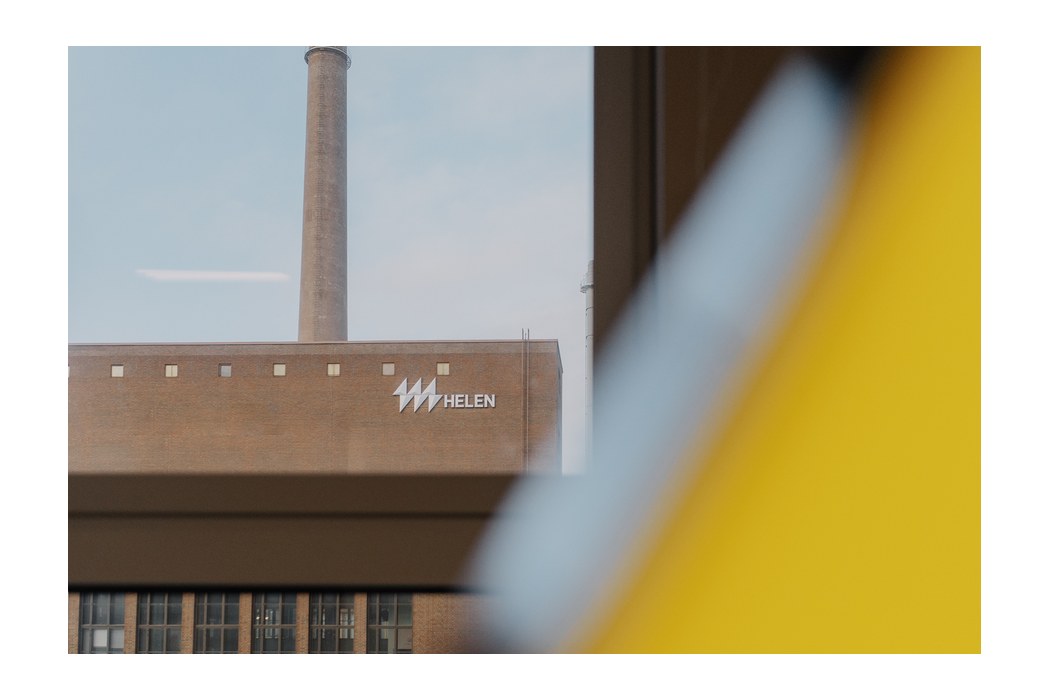
Helsinki Killed Coal Without Freezing: Helen's Blueprint for Rebuilding a City While It Runs
A century-old municipal utility retired its last coal plant, cut direct emissions 56% in a year and survived the next hard winter with heat reliability above 99.9%. The useful idea is not one miracle machine - it is a network designed to swallow whatever clean heat source works next.

The Korean Startup Trying to Shrink the Grid's Heaviest Box
Crocus wants to replace the hundred-year-old iron transformer with a silicon one that thinks. Its bet: the same box that charges electric cars can also keep an AI data center from browning out.
The Humble Power Meter Is Learning to Think
For 130 years, Landis+Gyr has counted electricity. Its next act is to turn the meter on your wall into a sensor, a computer and a traffic cop for an increasingly unruly grid.

Hitachi
The 1910 mining-repair shop that quietly became the backbone of the world's power grids and railways is now betting its next century on AI you can touch.
Pylon
Pylon is a Cairo-based smart infrastructure platform that sells electricity and water utilities a subscription-based Smart Metering as a Service (SMaaS). Its software layers on top of any meter - old or new - to cut losses, improve revenue collection and give operators real-time visibility, all at zero upfront cost. Founded in 2017 and backed by Y Combinator (S21), Pylon runs across more than a million metering endpoints in Egypt and the Philippines.

SwitchDin
SwitchDin is a Newcastle, Australia-based energy technology company that builds software and edge hardware to make distributed energy resources (DER) - rooftop solar, home and grid batteries, EV chargers and controllable loads - visible, controllable and orchestrable at scale. Its Stormcloud cloud platform and Droplet edge controllers create a common, vendor-neutral language across different brands of inverters and batteries, letting utilities, retailers and network operators run microgrids, virtual power plants and flexible-export programs. Founded in 2014 by Dr Andrew Mears, the company works with major Australian utilities including Horizon Power, Ausgrid, AGL, Origin and Western Power, and helped deliver a world-first renewable-only microgrid run in Onslow, WA.
Sitetracker
Sitetracker is a cloud software company that helps owners and operators of critical infrastructure - telecom towers, fiber and wireless networks, EV chargers, renewable energy sites, utility grids and data centers - plan, build, operate and maintain their assets from a single system of record. Built on the Salesforce platform, its asset lifecycle and deployment operations management software is used by roughly 300 organizations worldwide, including BT, Ericsson, AT&T, Vodafone, Southern Company, RWE, Engie and EVgo, to manage millions of sites and projects representing more than $25 billion in portfolio holdings.

Plentify
Plentify is a South African climate-tech company that builds AI-driven hardware and software to intelligently manage home energy use. Its flagship device, HotBot, is a smart controller for electric water heaters (geysers) that shifts heating to when power is cheaper and cleaner, while its SolarBot companion maximizes solar self-consumption. Founded in 2017 by Jon Kornik and Kailas Nair, Plentify links water heaters, batteries and solar inverters into a coordinated energy platform that cuts household electricity costs and eases pressure on strained grids. The company raised a roughly $15M Series A in 2025 to expand from South Africa into the UK, Australia and Brazil.