signal-processing
(8)
Binah.ai wants your next health check to be a selfie
A face, a camera, 35-60 seconds. Binah.ai is putting health checks inside other companies’ apps - and discovering how much depends on what happens after the scan.

Uhnder wants your car to see the cyclist beside the truck
A tiny radar chip takes on a large problem: telling a small hazard from its imposing neighbour. Uhnder’s route from a laboratory idea to automotive hardware shows why the invention is only half the work.

MAUI Imaging Waited 17 Years for Chips to Catch Up. Now It Wants Ultrasound to See What It Used to Miss.
A father-son garage project spent nearly two decades turning telescope logic into a portable ultrasound system. The first serious proof is in, but the most interesting claims still have to survive larger clinical trials.

The Liverpool radar shop that turned a $151 billion missile-defense door into an open one
A 58-person shop in upstate New York builds software-defined radar - and just landed on a defense contract worth up to $151 billion.
Distributed Spectrum
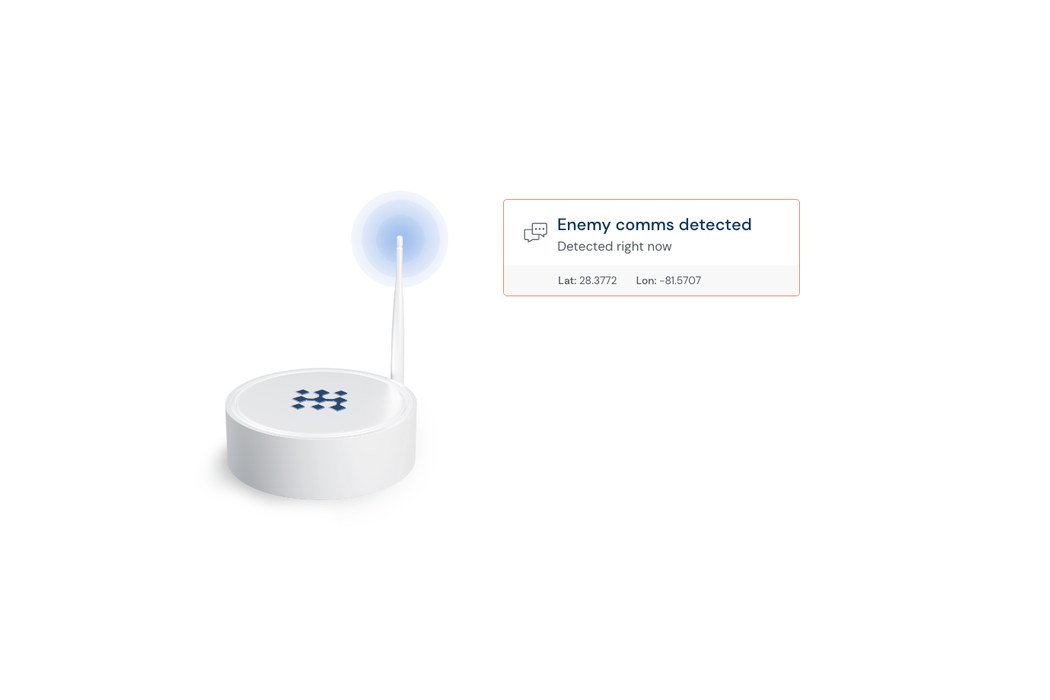
Distributed Spectrum builds AI-powered radio-frequency sensors and software that automatically detect, classify, and locate signals - drones, jammers, tactical radios, GPS spoofers - in real time. Founded by three Harvard engineers, the company packs commercial hardware and edge AI into sub-one-pound sensors that give soldiers and analysts persistent spectrum awareness without specialist RF expertise. It raised a $25M Series A in March 2025 and has fielded systems with US military branches and partners in Ukraine.

Cambridge Terahertz
Cambridge Terahertz is an MIT spinout building a chip-based imaging system that combines the 3D vision of lidar with the see-through power of X-ray, but using human-safe terahertz waves at a thousandth the power of a cell phone. Shrunk from an airport-scale scanner into a palm-sized, two-pound device, its AI-powered sensors detect concealed weapons through clothing and bags, and can see inside sealed packages without opening them. Founded in 2023 by MIT PhD Nathan Monroe, the company raised a $12M seed round led by Felicis with participation from Amazon's Industrial Innovation Fund.
SpeakIn Technologies Co.,Ltd.
SpeakIn Technologies is a voiceprint-recognition and identity-security company founded in Silicon Valley in 2015 and headquartered in Shenzhen. Using deep neural networks and its iVector engine, SpeakIn turns the unique physical signature of a human voice into a biometric key, offering both 1:1 verification (is this the right speaker?) and 1:N identification (who is speaking, out of many?). Its SDK and cloud APIs are used across banking, public security, and smart devices, with reported accuracy near 98% and customers including Tencent, Lenovo, ASUS, and China Merchants Bank.
Pleno Inc.
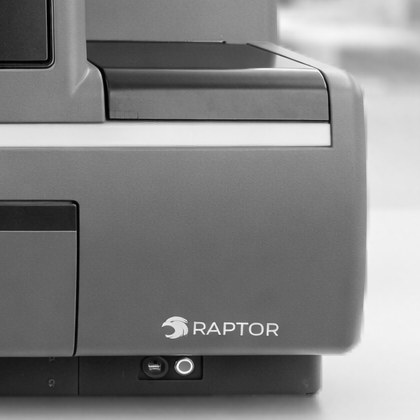
Pleno Inc. is a San Diego multi-omic instrument company rebuilding the economics of biological target detection. Its RAPTOR platform, powered by proprietary Hypercoding technology borrowed from telecommunications signal processing, can detect up to 10,000 targets in a single sample at PCR-like speed and cost. Founded by serial entrepreneur Pieter van Rooyen, the company is moving from R&D into commercial launch with backing from Deerfield Management and Foresite Capital.