privacy
(22)
Sera wants to make speaking up feel safe.
An AI proxy between employees and HR. A simple idea with a difficult assignment: make the first conversation feel safe enough to start.
Minds wants you to own the room
Minds learned the cost of letting another platform control its audience. Now the open-source social network sells tools that let communities build a home of their own.

Malwarebytes wants to catch the click.
It earned its reputation cleaning up infected computers. Now Malwarebytes is moving closer to the moment things go wrong: the message, the link, and the split-second decision to trust them.

DuckDuckGo sells the search. Keeps you out of it.
A search for a car can pay for a search engine. Does it really need to become a dossier on the driver? DuckDuckGo has built its business around that question.
AnthologyAI wants your data. It offers to pay.
Through its Caden app, AnthologyAI turns permission into consumer intelligence. The interesting question is whether paying people can produce a better picture of how they live.
SpruceID wants your ID to keep a secret
The company behind California’s digital DMV wallet is tackling a peculiar problem: proving who you are without telling everyone more than they need to know.
The Company That Tried to Put One Lock on Every Data Door
Okera sold a deceptively simple idea: write the rule for sensitive data once, then make it follow the data everywhere. Databricks bought the company in 2023, just as AI made the old permission problem larger and stranger.
PeopleConnect Helps You Find People - and Hide Your Own Report
TruthFinder, Intelius and Classmates sit inside a company that turns personal history into a consumer product. With free report suppression and OmniWatch identity protection, PeopleConnect also serves the person who would rather stay out of the search results.

Apple Sells You a Smaller World, and You Keep Buying It
It started in a garage and now runs on custom silicon, a services machine, and a billion-plus devices that all talk to each other. Here is how the walled garden actually works - and why leaving it feels like moving countries.
Zoho Corporation
How a bootstrapped software company from small-town India built 55+ business apps, signed up 130 million users, and refused to take a single dollar of venture capital.

Cactus
Cactus is a cross-platform, open-source AI inference engine built in C/C++ to run language, speech, and vision models directly on smartphones, laptops, wearables, and other low-power edge hardware. It gives mobile developers Flutter, React Native, Kotlin, and Swift SDKs to deploy quantized models on-device - cutting latency to under 100ms, keeping data private, working offline, and avoiding cloud API bills - with automatic cloud fallback for heavier tasks. A YC Summer 2025 company, Cactus already powers production apps serving 500,000+ weekly inference tasks.

jo
jo is a voice-first personal AI agent for macOS that runs on your Mac and a private, per-user cloud machine. Rather than waiting to be asked, it proactively summarizes what is on your screen, drafts emails, manages your calendar, clips relevant content, and keeps up with the loose ends of work and life. Built natively in Swift for Apple Silicon and backed by Y Combinator (W24), jo reaches users across Mac, web, iMessage, Telegram, and WhatsApp while keeping personal data local and out of model training.
BreachRx
BreachRx is a San Francisco-based SaaS company that pioneered Cybersecurity Incident Response Management (CIRM) - treating a breach as an enterprise-wide business crisis rather than a purely technical problem. Its Rex Platform gives security, legal, communications, and executive teams a single secure workspace to coordinate response, automatically track regulatory reporting obligations, and preserve a defensible audit trail. Founded in 2017 by Andy Lunsford and Matt Hartley, the company raised a $15M Series A in 2025 and serves 100+ customers including Coinbase, American Express, and Commvault.

Thesis*
Thesis* is a Bitcoin-focused venture production studio founded in 2014 that builds companies and protocols in-house rather than investing in outside teams. Operating under the banner "Money is power, Bitcoin is empowerment," it has incubated a portfolio spanning Bitcoin infrastructure and consumer finance - including tBTC (a decentralized, trust-minimized bridge that tokenizes Bitcoin on Ethereum), Mezo (an on-chain Bitcoin banking layer backed by the MUSD stablecoin), Fold (a Bitcoin rewards app), Acre (Bitcoin staking), and Taho (a community-owned web3 wallet). Led by CEO Matt Luongo, Thesis raised a $21 million Series A in 2021 and has become one of the most prolific studios building Bitcoin-native financial products.

Ad Hoc Labs (makers of Burner + Dialed)
Ad Hoc Labs is a Los Angeles-based independent mobile software company that builds communication tools giving people control over how they can be reached. Its flagship app, Burner, launched in 2012 as the original disposable second phone number - a privacy layer that lets users spin up, use, and delete alias numbers on demand. Its second product, Dialed, packages a business phone line, contact management, and marketing tools into one app for solopreneurs and micro-businesses. Founded by Greg Cohn and Will Carter, the company remains independent and remote, focused on utility and reliability over feature volume.

Sonic
Sonic is the largest independently owned internet service provider in California, founded in 1994 in Santa Rosa. It builds and runs its own fiber-optic network, selling fast, flat-priced gigabit and 10-gigabit home and business internet with no contracts, no data caps, and a privacy stance that has earned it a perfect score from the Electronic Frontier Foundation. After more than 30 years serving the San Francisco Bay Area, Sonic began its first out-of-region expansion in 2026, lighting up fiber in Los Angeles and Dallas.
Edge
Edge is a San Diego company building a self-custody, privacy-first mobile wallet for buying, storing, swapping and spending more than 120 cryptocurrencies. Founded in 2014 as Airbitz and rebranded to Edge in 2018, it pioneered a username-and-password login model backed by client-side encryption and a zero-knowledge architecture, so private keys and account data never leave a user's device unencrypted. The same security layer is offered to developers as the Edge Login SDK.

Loti AI
Loti AI is a Seattle-based startup that scans the public internet to find, verify, and remove unauthorized uses of a person's face and voice - including deepfakes, AI impersonations, scams, and leaked content. Founded in 2022 by Luke Arrigoni, Rebekah Arrigoni, and Hirak Chhatbar, the company began protecting A-list celebrities through talent agencies like WME and CAA, then opened a free consumer tier so anyone can claim control of their own likeness. Its automated takedown engine removes flagged content with roughly a 95% success rate, typically within about 17 hours.
TerraTrue
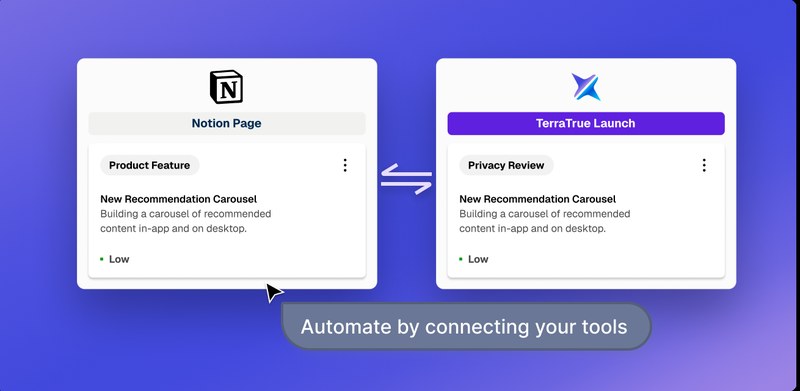
TerraTrue is a San Francisco privacy and security platform that bakes compliance into the product-development process instead of bolting it on at the end. Founded in 2018 by two former Snap executives, it automates privacy, AI, and third-party risk reviews from intake to approval - flagging GDPR, CCPA, and AI Act issues while products are still being designed, not after they ship. Customers like Lyft, Roku, and Elastic use it to turn slow legal bottlenecks into fast, repeatable workflows.

Mozilla
Mozilla builds Firefox and a family of privacy-first internet products with a single, stubborn goal: keep the web open, private, and not owned by anyone. Spun out of Netscape in 1998 and run by a for-profit corporation wholly owned by the non-profit Mozilla Foundation, Mozilla competes with the largest companies on earth while answering to a mission instead of shareholders.

Chain Reaction Ltd.
Chain Reaction is an Israeli-American semiconductor company designing custom ASICs for encrypted computation and Bitcoin mining. Its EL3CTRUM line powers next-generation hashing hardware, while its 3PU (Privacy Processor) accelerates Fully Homomorphic Encryption so cloud workloads in finance, healthcare and defense can run on encrypted data.

Zoho CRM
Zoho CRM is the flagship product of Zoho Corporation, a bootstrapped Indian SaaS powerhouse founded in 1996 that has never taken external funding yet grown to over $1.4 billion in annual revenue and 1 million+ paying customers. Zoho CRM is a cloud-based customer relationship management platform used by 250,000+ businesses in 180+ countries, offering AI-powered sales automation, marketing automation, and omnichannel communication—all at a fraction of competitor pricing. Zoho Corporation's wider suite of 55+ integrated business applications makes it one of the most comprehensive software vendors in the world, competing simultaneously with Salesforce, Microsoft, Google, and SAP while championing privacy, rural employment, and long-term independence over short-term shareholder returns.