illustration
(17)
Communication Arts sells a second look
A magazine born to keep a printing operation busy became a place where creative work gets noticed. Its enduring product is the judgment between making something and deciding it deserves an audience.
YOLO: a software reel, a rap identity, and a painted monkey
Inside the early portfolio of a Washington-area design studio that put corporate software, music branding, and hand-painted experiments on the same workbench.
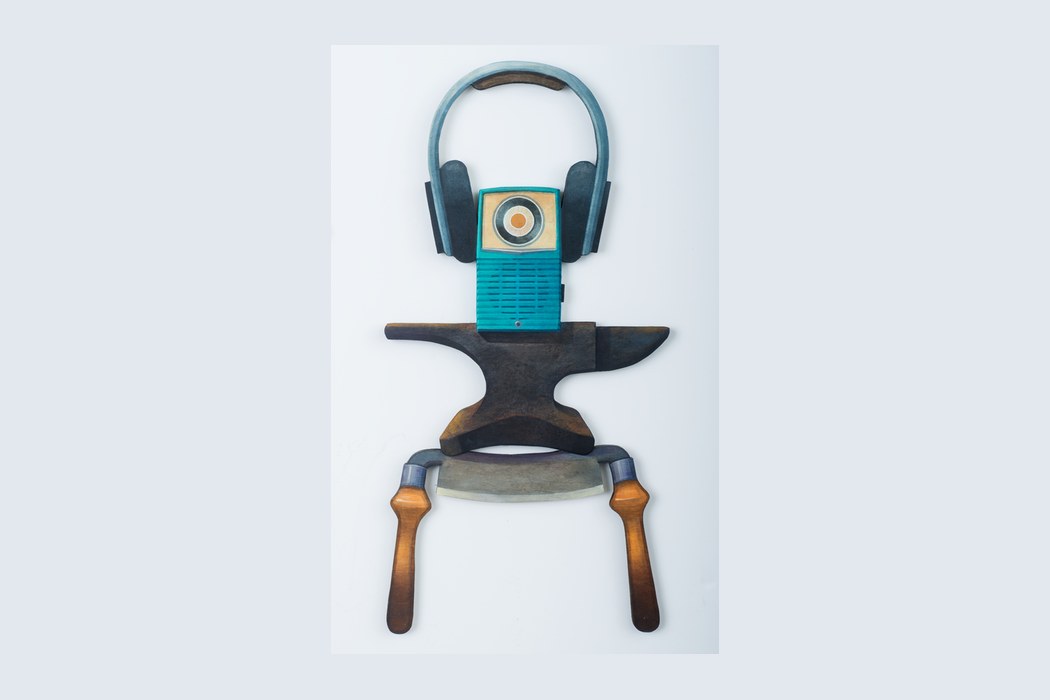
Karwan Company gives ordinary things a second life
A painted marlin, a firetruck bedsheet, a discarded shopping bag. Johnny Karwan’s San Francisco studio finds work for an image wherever it can live.
Inbeon knows a story needs a crowd
A stalled werewolf comic, a convention built around artists, and an animation launch on the horizon. Inbeon’s history is a lesson in getting creative people into the same room.
Okay knows a good brand needs something real to stand on
A whale, a whiskey label, and a 50-pixel square: inside the design practice of Carl Bender, where the useful detail does the talking.
Poster Posse made the fan art. Then Hollywood bought it.
Eight artists made a World War Z tribute. Paramount bought artwork from the project. Poster Posse built a business around the distance between loving a film and knowing how to sell it.
Gayle Midnight turns a change of scenery into a change of medium
An Iceland sketchbook changed the way Gayle Midnight paints. Her San Francisco studio carries that habit of translation into original art, illustration and design.
DSIGNWRX: The designer who also teaches you the tools
Websites, illustration, motion and sound share a home at this Ventura design practice. Its most useful extra may be the offer to teach clients how the work gets made.
MAX Design Studio Took the Scenic Route
From San Francisco illustration to Lake County paddling guides, Max Seabaugh and Laura Lamar built a practice around making information readable. The journey included an early Macintosh, a school bus and a cookbook with more than 225 recipes.
Happy Creative Land Makes Room for a Dumpling
Yiying Lu’s studio turns cultural blind spots into pictures people want to use. Its trail runs from Twitter’s Fail Whale to the emoji keyboard, with a few well-dressed sushi warriors along the way.
BPE’s strange business: ink, cats and backyard punk
Buzz Parker helped draw the world of Emily the Strange. His own art business carries the same appetite for oddness into original ink drawings, impossible treehouses and a handmade garden zine.
Blush lets you change the drawing without learning to draw
The illustration platform turns artists’ work into parts anyone can rearrange. Its real product is the distance between “I need a picture” and having one that fits.
National Forest Put a Paintbox Inside the Ad Agency
The Los Angeles studio turned a refusal to separate art, advertising, objects and environments into a durable business - and a useful lesson in making one visual idea travel.
The Company That Owns the Pen
Wacom's battery-free pen quietly became the default input device for professional digital art - and the invisible layer inside other companies' screens. Here is how a Japanese firm turned one idea about a stylus into a category it still dominates.
Skillshare
Skillshare is an online learning community where creatives learn by doing. Through tens of thousands of project-based video classes taught by working professionals - in illustration, design, photography, film, marketing, music and more - the New York-based platform turns a flat monthly subscription into access to a library built and taught by practitioners rather than academics. Founded in 2010, it has grown into one of the largest creative learning marketplaces in the world.

Domestika
Domestika is a global learning platform for creatives - illustrators, designers, photographers, animators, writers - built around professionally produced video courses and an enormous community of working professionals. Founded in Spain in 2002 as a forum, it became a unicorn in 2022 and now hosts millions of students taking courses in more than 10 languages.
Wirestock
Wirestock is a two-sided marketplace that connects 700,000+ photographers, videographers, illustrators, and 3D artists with AI labs that need ethically-sourced, high-quality multimodal training data. After pivoting from stock-content distribution in 2023, the company now supplies six of the largest foundation-model makers and is running at a $40M revenue run rate.