A whale floats above the water, suspended by a flock of small birds. The engineering looks doubtful. The whale seems untroubled. For early Twitter users, this was the picture that appeared when the service could not cope. For its creator, Yiying Lu, it became an introduction to a world of founders who suddenly knew her work.
Happy Creative Land, Lu’s creative studio, has an unusually recognizable portfolio for a business whose name may need explaining. There is the Fail Whale. There are the original designs behind the dumpling and boba emoji. There is Mickey Mouse rendered through Chinese paper-cut imagery. The recurring subject is communication: how a picture can make an unfamiliar technology, brand or institution feel a little closer.
The company sells the work around those pictures, too. Brand strategy, logos, mascots, packaging, campaign illustration, talks and workshops all sit inside its practice. A startup can bring an identity problem. A corporation can commission a campaign. A university can invite participants to draw their way into a conversation that would feel stiff around a conference table.
A failure screen with a fan club
The whale’s first assignment was personal. Lu created Lifting a Dreamer as a greeting for people far away. Twitter co-founder Biz Stone subsequently found and licensed it. A wish crossing an ocean became an illustration of a service struggling under its own weight. That change of context did much of the storytelling.
Then users took over. Lu’s online gallery documents whale tattoos, cakes, Lego constructions and other interpretations. People gave the image a nickname and made their own versions. The audience had found something it could play with. An operational nuisance had acquired a character, and the character had acquired a life beyond the product.
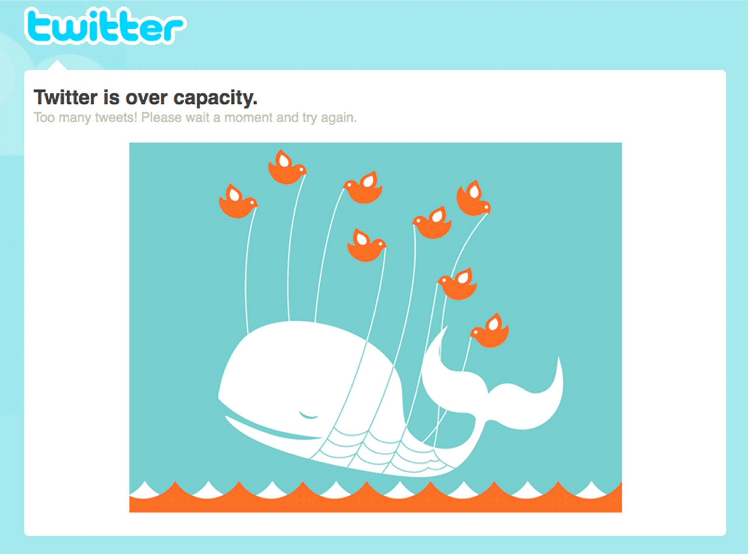
This is a useful distinction for anyone hiring a designer. The first thing that failed here was Twitter’s capacity. Lu’s illustration supplied a way to encounter that failure. A memorable error screen can soften an experience; it cannot repair infrastructure. Copy the attention paid to a neglected customer moment, then give the engineering team its own budget.
The exposure also opened doors. In a 2016 interview, Lu described arriving in the Bay Area to find people who already recognized her art. The subsequent work included startup campaigns and a Pale Whale for Conan O’Brien. A personal drawing had become a professional calling card with an unusually persuasive reference: people had voluntarily put it on their bodies.
The dumpling needed a place at the table
In 2015, Lu and journalist Jennifer 8. Lee discovered that a conversation about eating dumplings could not include a dumpling emoji. The omission was small enough to shrug off. Lu drew an answer. Together, they pursued the harder task of getting the symbol into the shared system used by phones and computers.
That effort helped give rise to Emojination, an advocacy organization separate from the studio. Its Kickstarter campaign collected $12,478 from 318 backers against a $3,750 goal. The money supported the campaign to bring the dumpling into the emoji catalog and participate in Unicode. It is a concrete measure of public support, rather than a price tag for hiring Happy Creative Land.
Emojination crowdfunding. Separate from studio financing.
The drawing changed along the way. Unicode feedback prompted Lu to remove the original character’s face and adjust its angle. Cultural feedback mattered as well: a viewer in Taiwan pointed out a problem with crossed chopsticks, and Lu uncrossed them. The point was to make the symbols usable by people whose assumptions she could not safely guess.
Even an approved reference drawing does not control every pixel on a keyboard. Vendors produce their own versions. The dumpling entered Emoji 5.0 in 2017, but a person sending it from one platform may see a different rendering from the recipient. A studio can help shape a shared visual vocabulary while having limited control over its final appearance.
Boba took longer. Lu recalled in a Smashing Magazine interview that an early submission was rejected. Data scientists later helped demonstrate demand, and the emoji arrived in 2020. The practical lesson is almost comically unromantic: sometimes a drawing needs a spreadsheet. When approval depends on evidence of use, enthusiasm and artistic polish only cover part of the brief.
Five sushi brothers, one coherent brand
The studio’s commercial work makes its method easier to inspect. For Wasabi Warriors, formerly GoSushi, Lu developed an identity extending across the logo, mascots, brand materials and packaging. Five warrior brothers represented seafood, pork, beef, chicken and vegetables. Menu ingredients became a cast of characters a customer could recognize.
She also designed packaging with chopsticks incorporated into the carrying box. That detail matters because it moves the work beyond decoration. The illustration, the physical object and the act of carrying lunch belong to the same customer experience. A buyer commissioning similar work needs to think about the whole system: what appears on a sign, what travels home, and what staff hand across the counter.
Disney posed another kind of translation problem. Lu’s Shanghai recruitment work used Chinese paper-cut treatments of familiar characters, including Mickey Mouse. The brand retained a recognizable face while adopting a visual tradition meaningful to the audience. The technique offers a more specific starting point than adding a translated slogan beneath an unchanged global campaign.
“The keys to tapping into another culture are curiosity and respect.”
Yiying Lu, in conversation with Adobe
That principle comes with homework. Lu has described consulting children’s books and folk tales when preparing to visit another culture. These are places to notice humor, characters and shared references. For a brand team, the transferable habit is to research what an audience already knows and enjoys before deciding what it ought to recognize.
A designer within reach of the founder
Lu’s relationship with 500 Startups, now 500 Global, placed those skills near entrepreneurs still working out how to explain their companies. Her account describes mentoring hundreds of founders, running branding workshops and giving real-time feedback on logos and interfaces. Her remit also included the investment organization’s events and marketing.
There was a personal preference behind that direction. Lu told Forbes that conventional agency life offered too little direct interaction with clients. Working with entrepreneurs brought different skills into the room and made the collaboration more interesting to her. That is a revealing reason to choose this kind of practice: the conversation with the person building the business is part of the creative work.
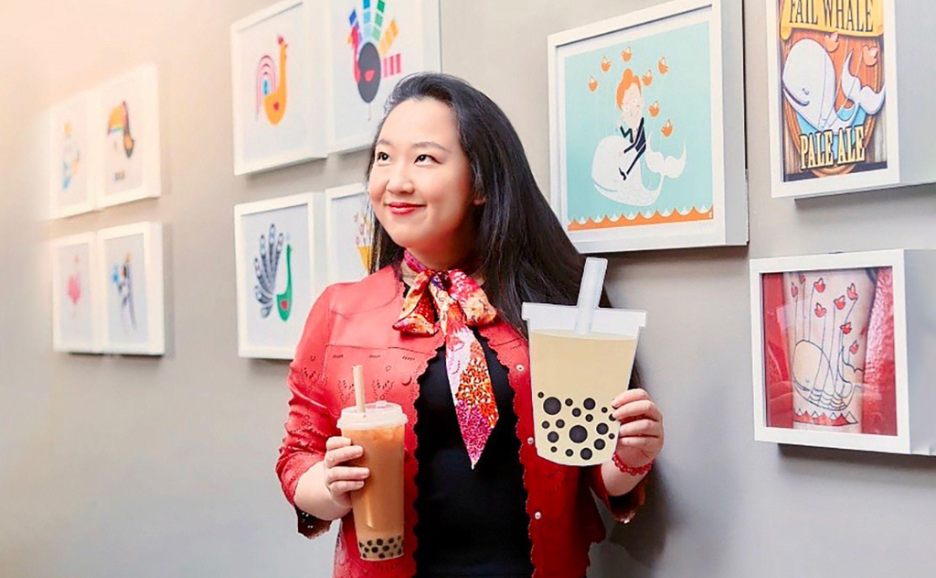
Happy Creative Land occupies the market between independent illustration, brand consultancy and creative education. Alternatives include an in-house design team, a specialist identity studio or a larger agency coordinating several disciplines. Its particular appeal is the continuity between the artist’s visual language, cultural research and teaching. Buyers should evaluate those qualities against the audience and assignment they actually have.
For a useful first conversation, bring the places where communication is breaking down. Is the logo difficult to read across languages? Does the packaging tell a different story from the store? Are employees using a corporate message nobody would say out loud? Those questions produce a firmer brief than asking for something cheerful. Agree on deliverables, usage rights, production needs and revisions before comparing proposals.
From the keyboard to the museum wall
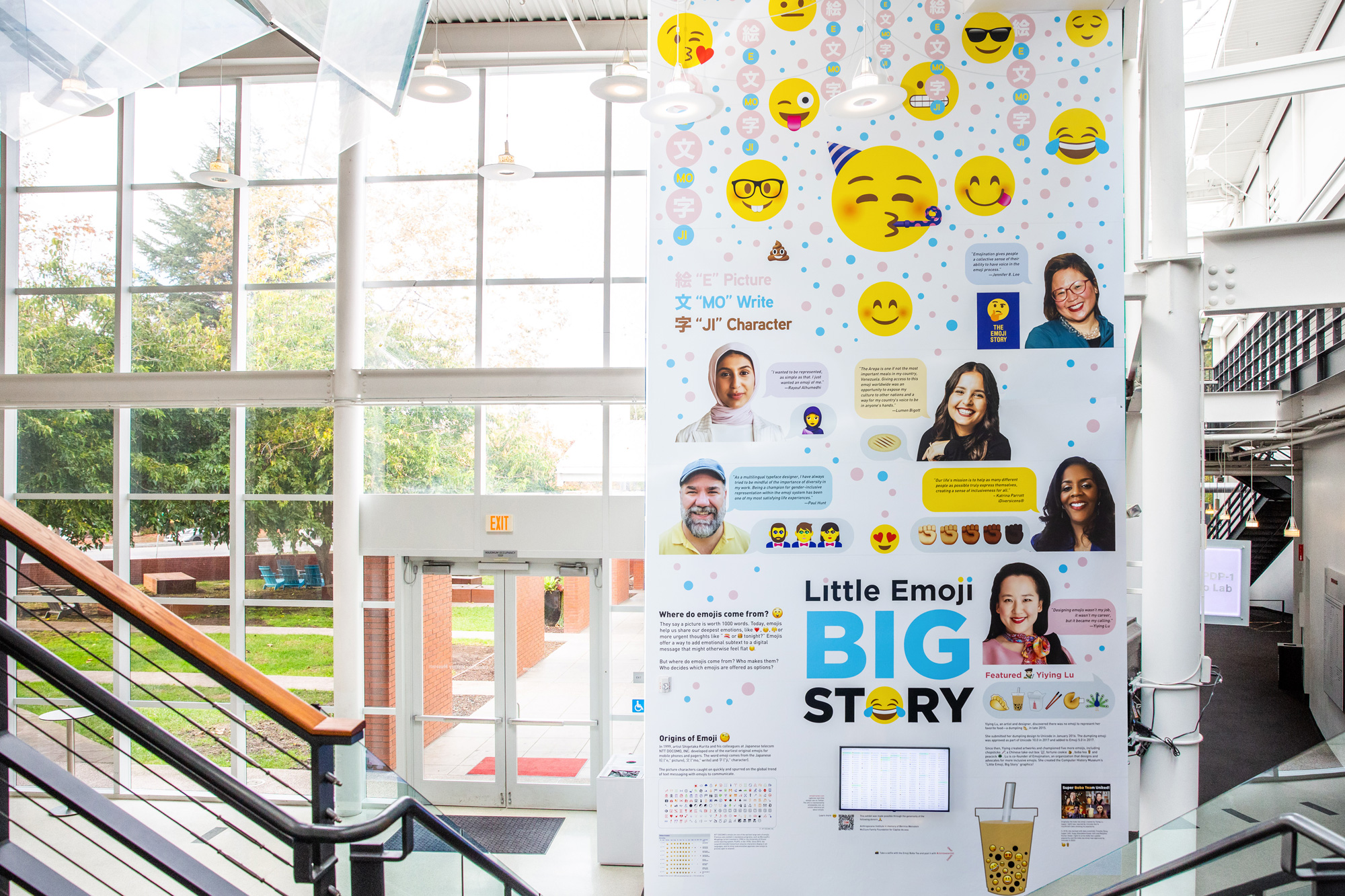
Lu’s imagery also works at a scale that makes the keyboard seem absurdly small. For the Computer History Museum, she created a 30-foot-tall Little Emoji, Big Story wall. The project connected everyday symbols with questions about identity and representation, bringing the subject into a place where visitors could stop and discuss it.
At Let’s Glow SF in December 2022, her animal artwork became a projection on One Bush Plaza. Animator Tyler Clapp, musician Nick Andre and projection specialist A3 Visual helped bring the piece into public space. The collaboration shows how an illustration practice can extend through partners with different production skills.
In summer 2025, Stanford’s Green Library became another setting. Masterpieces, Emojified comprised five large-scale prints reworking public-domain artworks through emoji. Mona Lisa sips boba; familiar art history admits a contemporary visual joke. The work gives a museum or university something beyond an attractive surface: an easy opening for a discussion about who appears in established cultural pictures.
First, draw yourself as a dumpling
The studio’s recent Designing for Belonging: Analog + AI workshops return that question to participants. People draw and tell personal stories before introducing Adobe Firefly or Express. Lu’s July 2026 session with Adobe and AIGA San Francisco brought together more than 50 people. The sequence begins with a lived experience that belongs to the person holding the pen.
In the Stanford workshop account, participants represented moments of exclusion and connection through dumpling characters. Their drawings became reference images for further digital work, and final images were printed as keepsakes. The format is offered to organizations in person or online, with adaptations for groups from 10 to more than 100.
It asks something of the buyer and the participants: time to draw, willingness to share, and room for an outcome that is personal. An organization seeking only a finished campaign asset has a different assignment. For a group trying to start a conversation across backgrounds, however, the modest absurdity of becoming a dumpling can be useful. People have something concrete to show one another. The discussion can begin there.
Visit, watch, wander
Explore the studio portfolio, follow Happy Creative Land on LinkedIn, or find Lu on Instagram, X and Behance.
Watch Empowering Through Cross-Cultural Design & Innovation at Talks at Google. Read How the Dumpling Democratized Emoji and browse the Stanford workshop story.