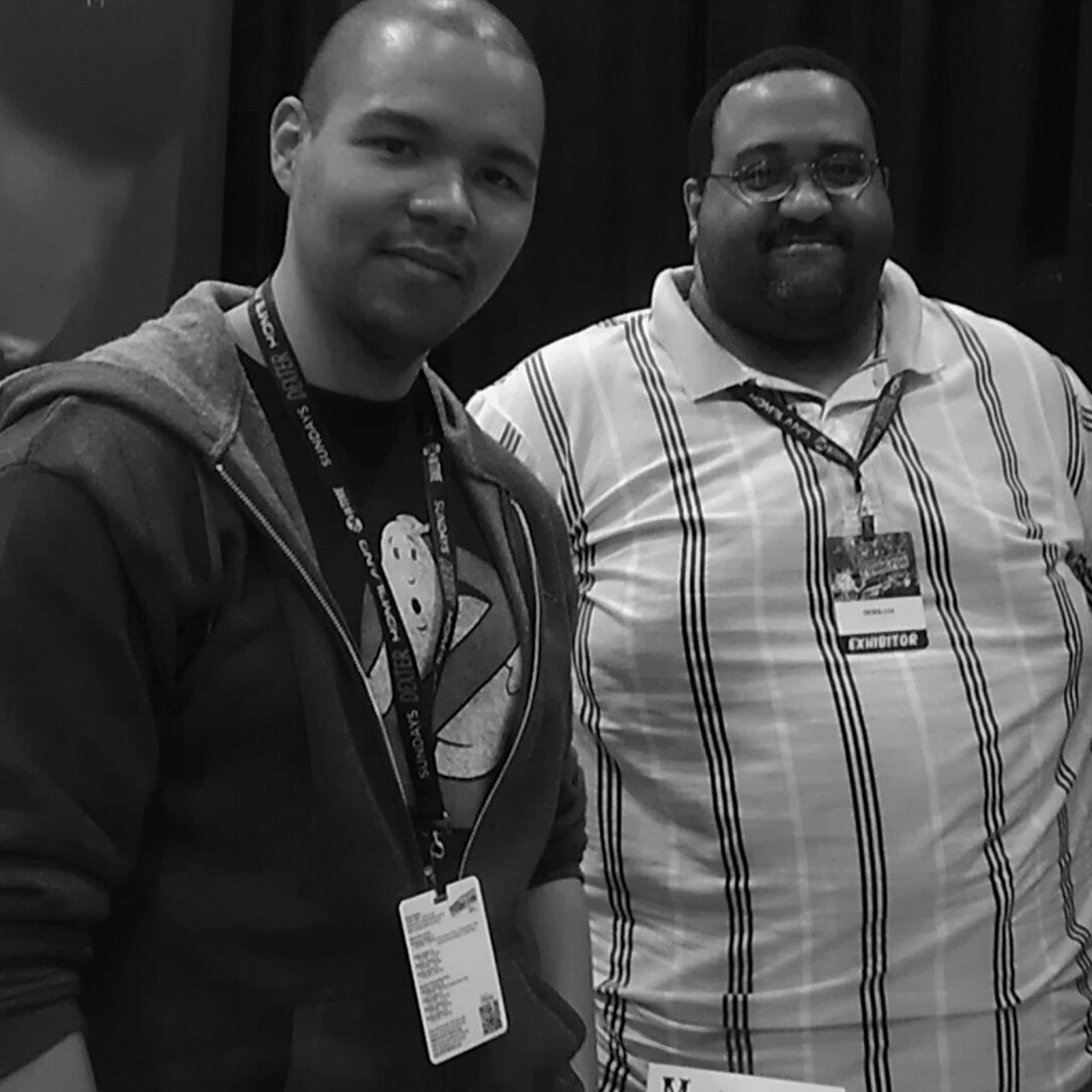
Dwayne Robinson Jr. was minding his booth. At the 2018 Inbeon Con, the Brooklyn comic creator was exhibiting alone, so he stayed close to his table rather than circulating through the room. One conversation stayed with him anyway. He met Eric Hutchison, the owner of Inbeon Studios, who told him he saw a kindred spirit. Robinson later recalled how much the compliment meant. In an industry populated by characters with extraordinary powers, being recognized by another working creator can be a useful power of its own.
It is a small encounter, with no grand announcement attached. That makes it a good place to meet Hutchison. His career includes making images, helping other people make theirs, and arranging occasions when those people can find each other. The founder and CEO of Inbeon also created Inbeon Con, a gathering whose independent artists were meant to receive the attention. Robinson’s memory catches that ambition at the scale of two people standing beside a booth.
Hutchison’s work invites a closer look at the jobs that surround an artwork. Someone must understand the idea. Someone must prepare the image for another pair of eyes. Someone must arrange the room. He has taken on all three kinds of work, sometimes with a pencil involved and sometimes with considerably more people.
A pencil, a degree, and somebody else’s idea
There is an engineering credential in this artist’s biography. The Art League of Long Island’s spring 2015 program lists Hutchison with a B.S. in Computer Engineering from the University of New Orleans, alongside Microsoft systems certifications. A faculty directory is an unshowy place for a career detail to appear. It gives his creative work an interesting additional dimension: technical education belongs in the same life as illustration and teaching.
The pairing is easy to overexplain. An engineering degree does not tell us why someone draws a particular face or chooses a particular color. It does establish the range of training he brings to the work. The person helping an author imagine a character has also studied a discipline concerned with making systems function. Both occupations have room for a problem that refuses to behave.
Author Alison Caiola described the collaborative part of Hutchison’s practice in 2015. She came up with basic cover designs and shared her ideas with him at Inbeon Studios. He listened and developed them into artwork. Her appreciation extended beyond the result to the experience of working together: she described patience and kindness as well as artistic ability. Those are useful qualities when the object being commissioned begins as a picture that only one person can see.
“Eric listens patiently to my thoughts”
Alison Caiola, describing their cover-design collaboration
Such an assignment has an awkward opening condition. The client can recognize what she wants without being able to draw it. The illustrator can draw without yet knowing what the client means. Conversation has to close the gap. Caiola’s account makes that usually invisible part of the finished cover visible for a moment.
The instructor opens the doors
In December 2014, Hutchison was an instructor at the Art League of Long Island. On the thirteenth of that month, the organization hosted the first Inbeon Con, which he organized. Costumed visitors included children and adults. An institution accustomed to art classes and exhibitions had made room for another kind of creative gathering. The audience arrived with some of its own visual effects already on.
The setting matters. A teacher works with people who are developing a practice. A convention organizer works with people ready to put that practice in public. The two roles meet at a familiar threshold: showing somebody what you have made. For an independent artist, crossing it may mean answering questions, explaining a character, taking a commission, or simply finding out which image makes a visitor stop.
Art League of Long Island
Live convention coverage
Second year at Hofstra
Inbeon itself dates its establishment to 2011. The convention gave that creative business an additional public setting. A studio can have collaborators without giving them a shared room. An event makes the relationships visible, and introduces the possibility that someone who came to see one artist will leave knowing another.
What fits on a four-by-six print
Some of Hutchison’s help was small enough to fit in a pocket. In June 2015, writer and artist J. M. DeSantis was preparing to exhibit at Eternal Con. His planned merchandise included new four-by-six-inch prints. Hutchison had mentioned that the format had proved popular for him, and DeSantis decided to try it. The suggestion concerned an actual object, a manageable size, and a choice another artist could make before the weekend.
It is an appealingly practical detail. Advice to creative people often arrives in a form too large to use: find your voice, build an audience, believe in the work. A print dimension offers something you can measure with a ruler. DeSantis already found that size popular for his convention sketches. Hutchison’s experience gave him another reason to consider it for prints.
Hutchison also persuaded DeSantis to exhibit at the summer 2015 Inbeon Con. Afterward, DeSantis described conversations with visitors, signed books and prints, and commission sketches. There was a Hellboy drawing, a Spider-Man sketch cover, and fresh-baked sweets from a neighboring exhibitor’s wife. The detail of the sweets is worth keeping. An account of a useful professional gathering can accommodate dessert.
By August 2017, DeSantis was thanking Hutchison and the Inbeon crew again. He described a friendship extending back years through Baltimore Comic-Con, ongoing encouragement, and a working relationship in which Inbeon printed his artwork. At that year’s one-day event, he had been busy with commissions and diminishing print stock. The connections involved both goodwill and the less romantic matter of having physical work ready to sell.
The author, the artist, and the wolf
Hutchison’s own drawing work supplies another view of collaboration. In March 2014, novelist Tamsin Silver announced that she was working with Inbeon Studios on a comic or graphic-novel version of Moon Over Manhattan. She had encountered Hutchison repeatedly around conventions and events before they discussed the project. Their conversation included a shared understanding of werewolves. She sent him four chapters.
The announcement included his drawing of Denika in human and wolf form. Here was a visible first step in translating a novel into another medium. The same character had to remain recognizable across a rather substantial change of appearance. For most book-cover assignments, the client does not have to consider the extra legs.
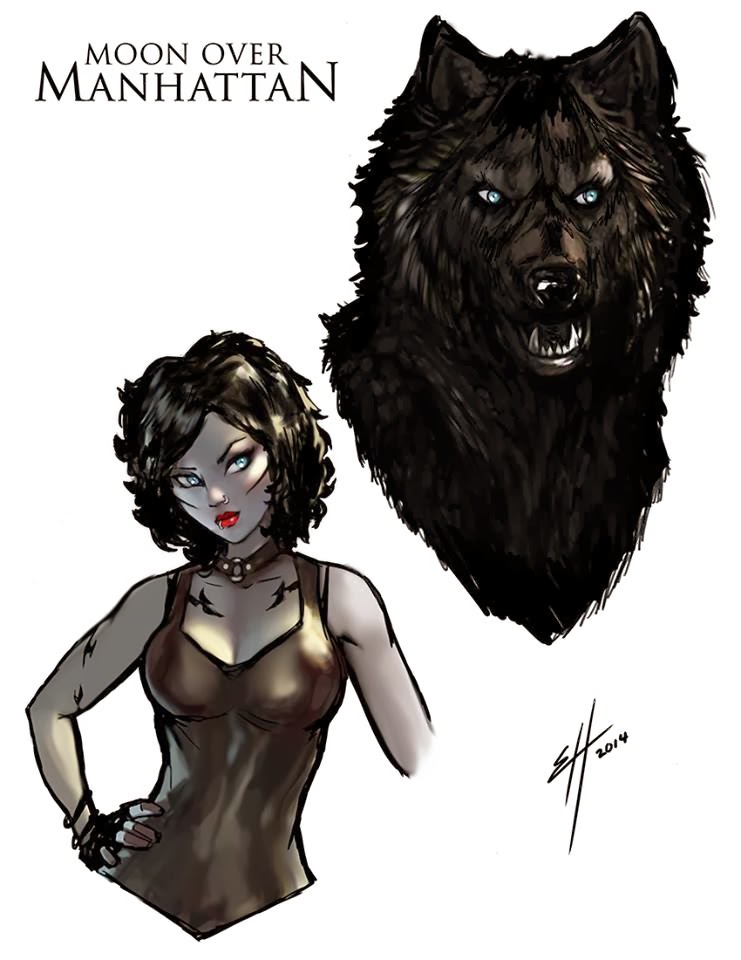
The episode places Hutchison on the other side of the convention table’s social equation. He creates opportunities for artists to meet, and he has also found creative work through repeated encounters himself. A room full of people carrying books and portfolios can produce an assignment that no one arrived with. The conversation still has to happen.
A show with the artists in front
By 2017, live coverage of Inbeon Con was interviewing Hutchison as its creator alongside participants from the event. The gathering brought together comic artists, costume designers, animators, and game developers. In 2019, it was in its second year at Hofstra University, with eight shows reported across its history. The event had acquired a record of returning, as well as a particular idea of whose work deserved attention.
Team member Sebastian Bonet explained the priority: independent artists could be overshadowed by celebrities and large exhibitors elsewhere. At this show, the creators were intended to occupy the foreground. There was discussion of adding a day while retaining the intimate atmosphere. That is a recognizable organizer’s problem. More opportunity requires more room, time, or capacity; the qualities that attract people can depend on keeping the encounter personal.
Robinson’s recollection of Hutchison becomes especially apt here. A show can announce that it supports creators. The visitor or exhibitor experiences that support through particular interactions. A conversation at a booth will not solve every problem of an independent career. It can give someone a reason to return, carrying the next thing they have made.
From the table to the screen
In November 2021, Hutchison appeared in episode 13 of Keiko’s Diary, a conversation lasting nearly an hour and a half. The program introduced him as Inbeon’s CEO and the father of actor Ethan Hutchison. Family and creative work share space in that introduction, just as friendships and business share space in the convention accounts. The people who know him through a studio, an event, or an illustration assignment encounter different parts of the same career. A job title takes only a moment to say. The conversation had time to run longer.
Hutchison’s visual work also extends into film. The team behind Women of Dominica, directed and produced by Farrah La Ronde-Hutchison, credits him with creative direction and cinematography. It is another collaborative role, this time within a documentary centered on Dominican women and cultural heritage. The work shifts medium while retaining the need to make someone else’s story visible.
Inbeon’s website now presents films, animation, books, apps, games, and events as its disciplines, and advertises an animation-studio launch for October 2026. The range leaves plenty of possible directions. Hutchison’s earlier work gives those possibilities a human reference point: an author explaining a cover, an artist considering a print run, a convention exhibitor waiting behind a table.
Those encounters make a founder’s career easier to picture. Hutchison has drawn the image and helped provide the place where an image meets its public. The invitation remains concrete. Bring the work. There is somebody here you should meet.