digital-government
(13)
Manuel Pietra and the Quiet Power of the Public Ledger
For two decades, the FreeBalance chief has argued that a government budget is more than an account book. It is policy with arithmetic - and, handled well, a quiet instrument of public trust.
The Government Form That Refused to Die
GovOS made a business out of the chores citizens notice only when they go wrong - permits, records, taxes, signatures and payments. Its rise, and one costly migration that did not work, explain both the promise and the limits of digital government.
Granicus Owns the Boring Stuff at City Hall - Now It Wants to Be Government's AI Front Door
The software best known for council agendas and government email alerts now touches 30 billion digital experiences a year. Its next bet is that a governed AI agent can turn the municipal website maze into a useful front door.
CATALIS Bought 30 Gov-Tech Companies. The Hard Part Was Making Them Feel Like One.
CATALIS assembled a billion-dollar government software portfolio by buying the specialists already running courts, tax offices and city halls. Now it has to make those inherited tools easier to use, easier to connect and harder for public servants to dislike.

Kelly Davis-Felner Has Spent a Career Making Complicated Technology Feel Obvious
From Wi-Fi standards to tax bills and fishing licenses, the PayIt CMO keeps returning to the same deceptively hard assignment: turn complicated systems into experiences ordinary people can trust and use.
PayIt Put a Checkout Button on City Hall - Then Learned Ease Is Not Adoption
PayIt built a modern front door for taxes, tags and tickets without asking government to bulldoze the systems behind it. Grand Rapids shows the playbook can work; Toronto shows exactly where it can crack.

Durham Region Runs the Business Nobody Can Opt Out Of - Here’s the Playbook for Making 780,000 Customers Feel Local
Durham’s real product is coordination: one regional layer for pipes, buses, health, housing and emergencies across eight very different municipalities. Its useful lesson for operators is simple - scale the hard infrastructure, then make the front door feel local.
OpenGov’s $1.8 Billion Bet: Make City Hall Software Less Painful
OpenGov started by making municipal budgets readable. Fourteen years, ten acquisitions and a $1.8 billion deal later, it is trying to become the operating system behind the permit, purchase order and pothole.
Tyler Technologies
Tyler Technologies built a $2.3 billion business in the least glamorous corner of software: the machinery of government. Its advantage is not a single killer app, but a web of systems that makes switching difficult and public work increasingly connected.

Accela
Accela powers the permits, inspections and licenses most people notice only when they stall. Now the 27-year-old govtech company is stitching city hall into one cloud platform - and betting that practical AI can make the machinery move faster.

CivicActions
CivicActions is a fully remote digital services firm that helps U.S. federal, state, and local government agencies modernize the technology behind public services. Founded in 2004 by Henry Poole and Aaron Pava, the company pairs free and open-source software - especially Drupal - with agile delivery, DevSecOps, human-centered design, and accessibility expertise to rebuild legacy government websites and platforms. Guided by the values of Balance, Openness, and Care, CivicActions has served agencies including Veterans Affairs, the FCC, the National Science Foundation, and the State of Georgia while contributing heavily back to the open-source communities its work depends on.
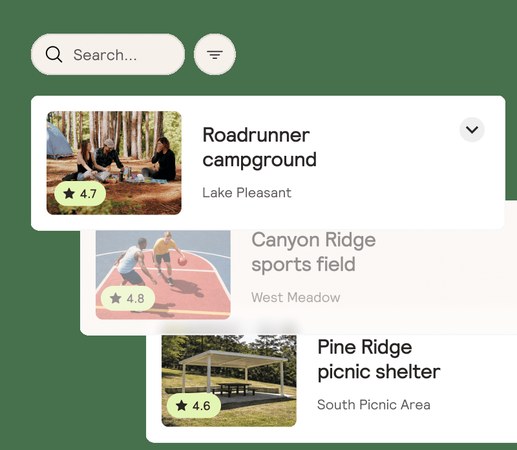
Kaizen
Kaizen (Kaizen Labs) is a New York-based civic technology company building modern, people-first software for America's essential public services. Its AI-native, highly configurable SaaS platform replaces aging legacy systems across permitting, parks and recreation, licensing, transit, payments, and resident engagement. Founded by Nikhil Reddy and KJ Shah, Kaizen partners with local, state, and federal agencies to give residents consumer-grade digital experiences - from reserving a campsite to renewing a license - while restoring public trust in government services.
Polimorphic
Polimorphic is a New York-based govtech company building AI-powered software for local and state governments. Its platform pairs a purpose-built Constituent Relationship Manager (CRM) with an AI chatbot, search, voice agents, and automated workflows so residents can get answers and start services 24/7 in 75+ languages - while understaffed agencies cut call volume, automate permitting and licensing, and recover thousands of staff hours. Founded by MIT alumni Parth Shah and Daniel Smith, the company raised an $18.6M Series A led by General Catalyst in 2025, bringing total funding to roughly $28M.