The first thing to understand about Kelly Davis-Felner’s career is that the products keep changing while the problem does not. A toy store on the early web. A wireless standard hiding inside laptops and phones. Software for customer reviews. A distribution for data science. A security scanner. A government platform that lets somebody renew a license or pay a tax bill without finding a stamp, a parking space, or the correct office before four-thirty.
The industries sound unrelated. To a marketer, they share a stubborn condition: the machinery is complex, the stakeholders are numerous, and the person at the end wants none of that complexity. The person wants the thing to work.
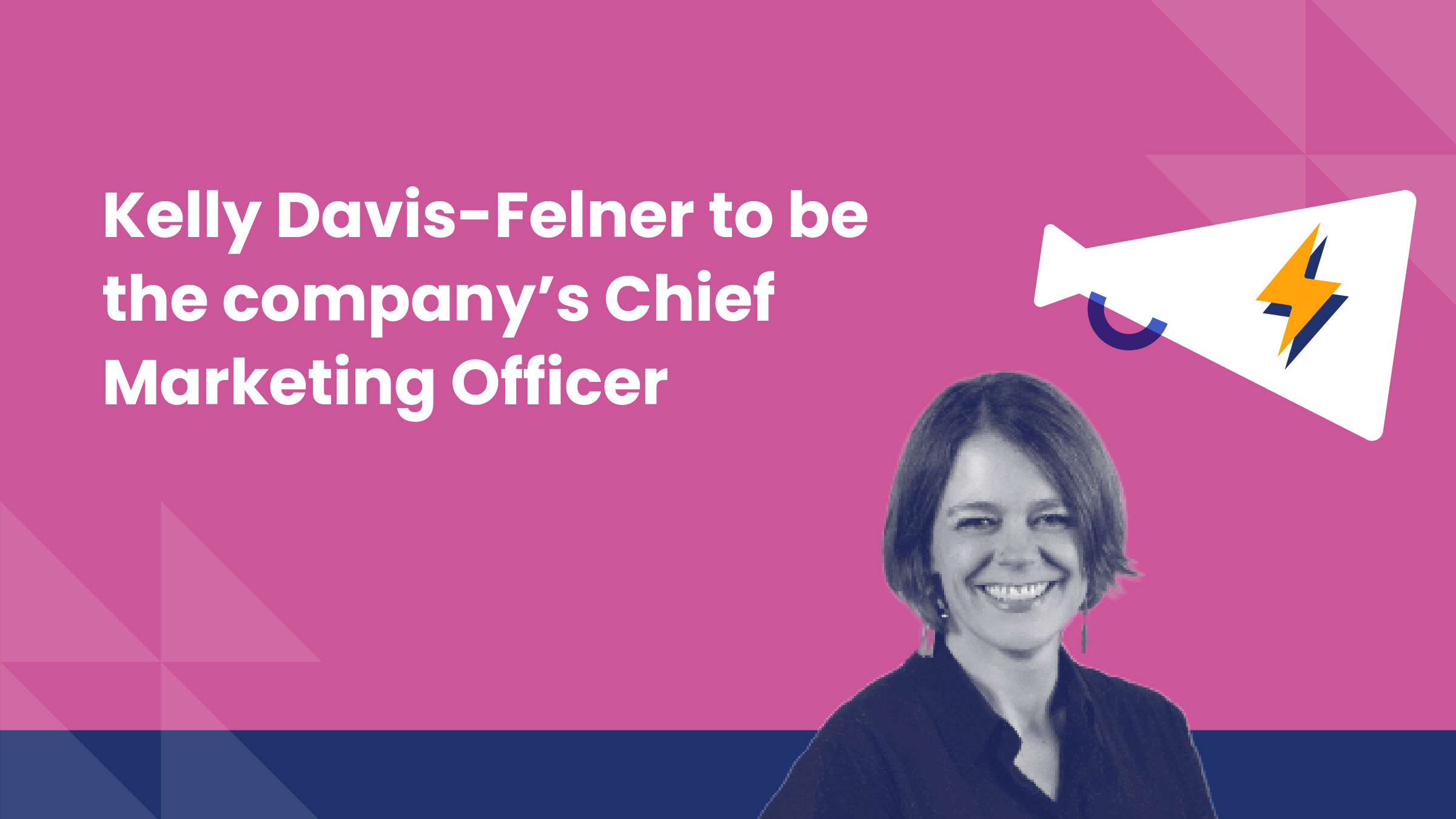
Davis-Felner has built more than two decades of technology marketing around this negotiation. She is now chief marketing officer at PayIt, a Kansas City company whose cloud platform connects government services and payments. Based in Austin, she leads the company’s marketing and works with clients on a problem that begins after software goes live: getting residents to use it.
Three degrees, one useful tension
Her education looks less like a straight line than a well-stocked desk. At Loyola University New Orleans, she studied print journalism and sociology. At Tulane, she earned a master’s in social work. Then came an MBA in marketing and management from the University of Texas at Austin, where she served as vice president of communications for Graduate Women in Business and contributed to Texas Business Weekly.
Journalism trains the eye to find the point. Sociology and social work insist that people live inside systems, not slide decks. Business school asks how an organization turns an insight into a repeatable decision. Davis-Felner’s career sits at their intersection: evidence, people, and execution.
The early career included product work at eToys, the kind of dot-com name that now arrives carrying its own period costume. In 2004 she joined Wi-Fi Alliance. The organization’s work was deeply technical and strangely intimate. Certification happened in labs; its consequences appeared whenever a laptop recognized a router at a café.
A name is part of the infrastructure
At Wi-Fi Alliance, Davis-Felner rose into the vice president of marketing role and became a public interpreter of technologies that most consumers would only notice when they failed. She discussed the rapid spread of Wi-Fi in phones, the final shape of 802.11n, and the plan to bring WiGig development and certification into the alliance.
In 2012, she entered a revealing dispute over “super Wi-Fi,” a catchy phrase being used for wireless service over unused television spectrum. Her objection was specific. The service might be valuable, but calling it Wi-Fi could confuse consumers because the experience and technology were different. The episode was nominally about a trademark. It was really about the contract inside a familiar word.
“Although white space service is a good thing, we are concerned that continuing to analogize this to Wi-Fi would lead to consumer confusion.”Kelly Davis-Felner, then marketing director at Wi-Fi Alliance
Marketing is sometimes caricatured as the department that gives things shinier names. Here was a marketer arguing for the less glamorous phrase because accuracy protected trust. The consumer did not need a lesson in spectrum policy. The consumer did need the label to mean what it had meant yesterday.
Years later, Davis-Felner marked Wi-Fi’s 25th anniversary with a note about memories and enduring friendships. Old colleagues filled the replies. One asked whether he had missed the “endless sake and all-night karaoke.” Standards bodies produce specifications, but they are also made of recurring arguments, travel, late rooms, and people who remember one another long after the acronym changes.
Product management at eToys, in the first loud chapter of consumer e-commerce.
Marketing leadership at Wi-Fi Alliance, explaining certification and new wireless capabilities.
Client, demand, retention, and North American marketing roles at Bazaarvoice.
Executive marketing roles at Anaconda and Invicti Security.
Chief marketing officer at PayIt, focused on growth and resident adoption.
The category changes. The crowd gets bigger.
After Wi-Fi Alliance came Bazaarvoice, where Davis-Felner moved through client marketing, demand and retention, and leadership of North American marketing. In 2017, she received the company’s CEO and CRO MVP Award for an event program credited with $300,000 in closed-won business. Then came Anaconda, the data-science company, where she was vice president of marketing and business development, followed by a stint as senior vice president and head of marketing at Invicti Security.
Each move enlarged the translation problem. A B2B SaaS buyer is rarely one person. A developer may care about capability, a security leader about exposure, a finance chief about risk, and a sales team about a reason to call today. Former colleagues describe Davis-Felner as data-driven and comfortable with brand decisions, but also willing to work alongside the team. Another remembered a leader who made learning available across the group and translated business goals into action.
That combination matters in a stakeholder-rich market. The story has to be precise enough for a specialist, legible enough for an executive, and honest enough to survive the product demo.
Government is where convenience meets consequence
Davis-Felner joined PayIt in 2022. She said she was inspired by clients’ desire for a transformed customer experience, more efficient service delivery, and the team’s commitment to client success. The words “customer experience” can sound imported from retail when applied to government. The daily transactions are ordinary enough to prove the case: property taxes, utility bills, driver services, court fines, permits, hunting and fishing licenses.
A person cannot simply choose a more delightful tax authority. Convenience here is not a trick for winning market share. It determines whether an essential obligation costs ten minutes or an afternoon. It also determines whether agency staff spend their time processing paper or handling work that requires judgment.
Davis-Felner has written that removing friction between government offices and residents is the primary aim of going digital. The important word is not digital. It is friction. An online form that reproduces the confusion of a counter visit has changed the scenery, not the experience.
A Grand Rapids case study puts dimensions around that idea. Between 2017 and 2023, the city reported a 245 percent increase in electronic collections, $200,000 saved by residents in water-bill late fees, and 549,193 fewer manual transactions than a no-change baseline. Numbers like these are the unromantic poetry of service design. A late fee avoided is small in a strategy document and quite specific in a household budget.
“Build it and they will come” isn’t enough for digital government.Kelly Davis-Felner on the adoption gap
Her public biography calls her a “market research nerd,” a social media enthusiast, and a believer in technology that helps organizations accomplish their missions. The research habit is visible in how she frames modernization. The 2026 Government Payments Experience Index surveyed more than 600 state and local leaders. It found broad availability of online payments, but less than half of transactions taking place digitally. Davis-Felner’s reading is blunt: access has improved faster than adoption.
She names four drivers: awareness, ease of use, trust, and consistency. They sound simple because all durable principles do after someone has organized them. Together they turn a launch announcement into an operating agenda. Residents must know a service exists, understand it quickly, believe the transaction is safe, and encounter a coherent experience the next time.
The future arrives through the back office
In 2026, PayIt introduced Smart Works, AI-powered features aimed at payment reconciliation, transaction workflows, financial-data questions, identity checks, and document verification. Davis-Felner’s description emphasized the work agencies already do: matching records, moving sensitive paperwork, finding an answer across disparate systems. The technology may be new; the marketing test is familiar. Can the organization explain a capability through the burden it removes?
She also celebrated PayIt’s launch of a modern hunt and fish licensing platform with the Minnesota Department of Natural Resources. It is an almost perfect GovTech object: recreation and regulation, mobile convenience and conservation administration, an outdoor ritual with a database behind it.
Outside work, Davis-Felner’s speaker biography lists music, rescue dogs, travel, and tattoos. The details loosen the necktie of an executive profile. They also fit the pattern. Her professional subject is technology; her actual subject is how people move through the world. She served several years on the board of Austin’s Magellan International School, working on marketing, strategy, and communications as the young school grew.
The career lesson is not that every marketer should collect industries. It is that expertise can live in a recurring problem rather than a single category. Davis-Felner’s problem is adoption under complexity. The product may be a wireless certification, a security platform, or a court payment. Her job is to find the human promise without insulting the machinery that makes it true.
That is why the simplest moment in her work is also the most revealing: a resident taps a button, receives a confirmation, and goes on with the day. Nothing about it feels remarkable. A great many people, rules, systems, and choices had to cooperate to produce that feeling.