deep-learning
(94)
DeepLearning.AI’s real lesson: build something.
Andrew Ng’s education company turns AI expertise into small, usable lessons. Its next bet is that people will pay to move from watching a demonstration to making something work.
Anumana gives the ECG a second opinion
A routine heart test holds more information than its familiar squiggles suggest. Anumana is building a business around teaching computers to find it - and getting those findings into the hands of clinicians.
Deep Instinct wants to stop the file before the crime
A deep-learning company is moving the malware checkpoint into cloud storage, shared drives and applications. Its wager: a threat stopped early should leave less work for everyone else.
Imubit Put an AI on the Refinery Controls - The Bet Is Whether Operators Will Let It Drive
Most industrial AI stops at the dashboard. Imubit wants its reinforcement-learning models to touch the controls - a higher-stakes proposition now running across more than 100 applications in refineries, chemical plants, cement kilns and other process facilities.
Cognitiv Bet on Deep Learning Before It Was Cool - Now It Wants to Kill the Static Audience
Three fifth-grade friends built a neural-network ad company in 2015, when the pitch still needed explaining. A decade later, Cognitiv is turning campaign briefs into live media decisions - and testing whether marketers will trade static segments for models that keep changing their minds.

The Biotech Betting That Cancer Drugs Fail Because Nobody Looked at the Proteins
80% of cancer compounds that reach clinical trials fail. Yatiri Bio thinks the problem is that drug developers have been reading the wrong molecules - and it built a proteomics platform to prove it.
The Danish startup teaching a ceiling sensor to watch grandma - so nurses don't have to
Teton wraps a camera in enough AI that it never has to save a single frame of video - and uses it to cut falls in elder care by up to 82%. Now it is betting American nursing homes will pay for a night nurse that never blinks.
The Startup Teaching Cameras to Catch What Tired Human Eyes Miss on the Assembly Line
Akridata spent years fixing AI's boring, expensive data problem - then pointed the same tools at factory defects and got acquired by DIMAAG in 2026.

Harrison.ai
Harrison.ai is a Sydney-based clinical AI company founded in 2018 by brothers Dr Aengus Tran and Dimitry Tran. It builds artificial-intelligence software that helps clinicians read medical images faster and more accurately - flagging urgent findings on chest X-rays and brain and chest CT scans, and streamlining pathology review. Its diagnostic products, radiology brand annalise.ai and pathology joint venture franklin.ai, are used at more than 1,000 healthcare sites across four continents, with regulatory clearance in 40-plus countries. The company positions itself as a builder of foundation models for medicine, releasing harrison.rad.1, a radiology-specific multimodal large language model. Harrison.ai raised a US$112 million Series C in February 2025 to fund a US expansion, taking total capital raised past US$240 million.

AssemblyAI
AssemblyAI is a San Francisco speech-AI company that builds and serves models turning audio and video into accurate text, plus higher-level 'audio intelligence' like summaries, sentiment, speaker labels, and PII redaction. Founded in 2017 by Dylan Fox, it sells a developer-first API used to add transcription, real-time streaming, and voice-agent capabilities to software. The company has raised more than $113M across seed to Series C and reports processing over a million hours of audio a day for customers ranging from startups to large enterprises.

Baseimmune
Baseimmune is a London-based biotech that uses a proprietary deep-learning platform to design synthetic antigens - the active ingredients in vaccines and immunotherapies. Founded in 2019 by three researchers who met at Oxford's Jenner Institute, the company originally built AI-designed 'future-proof' vaccine candidates against fast-mutating pathogens such as coronavirus, malaria and African swine fever. In 2026 it extended its computational antigen-design platform beyond infectious disease into chronic conditions, with a lead program targeting idiopathic pulmonary fibrosis. Baseimmune closed an $11.3M (about GBP 9M) Series A in February 2024 led by MSD Global Health Innovation Fund and IQ Capital.

Deeptune
Deeptune is a New York AI company that builds high-fidelity simulation environments - 'training gyms' - where AI agents practice real digital work such as accounting, customer support, DevOps, and spreadsheet and CRM tasks before being deployed. Its reinforcement-learning environments recreate the day-to-day software of roles like accountants, lawyers, and engineers so agents can learn multi-step 'computer use' the way a pilot trains in a flight simulator. Founded in 2025 by Tim Lupo and Lukas Schmit, Deeptune raised a $43M Series A led by Andreessen Horowitz in March 2026 and was acquired by AI unicorn Mercor in July 2026.
Intellicene
Intellicene is a Melville, New York-based security software company that builds Symphia, a unified, video-centric platform for physical security operations. Spun out of Verint and Cognyte's Situational Intelligence Solutions business and acquired by Canada's Volaris Group in December 2022, the company connects and correlates data from cameras, access control, intrusion detection and other networked devices so security teams can detect threats and respond to mission-critical events in real time. With roughly 25 years of heritage, it serves retail, airports, transportation, healthcare, safe cities, higher education and industrial customers worldwide.
Nexar Inc.
Nexar is a New York-based mobility technology company that turns connected dashcams into a real-time sensing network for the physical world. Founded in 2015 by Eran Shir and Bruno Fernandez-Ruiz, it sells LTE-connected 4K dashcams to consumers while aggregating anonymized road imagery into CityStream, a platform that gives cities, mapmakers, insurers and autonomous-vehicle developers a minute-by-minute, ground-level view of streets. In July 2026 Nexar agreed to merge with Nauto to form an independent infrastructure platform for physical AI, backed by more than 10 billion historic miles of driving data across 50+ countries.
SandStar AI Retail
SandStar AI Retail is a retail-technology company that uses computer vision, deep learning and big-data analytics to power cashierless, autonomous shopping. Founded in 2017 as YI Tunnel and rebranded to SandStar after a 2020 Series B+ round, it builds AI vending machines, pure-vision unmanned stores and smart-store analytics that recognize what shoppers pick up - no RFID tags, barcodes or sensors required - and automatically generate the bill when they walk out. Its systems are deployed across roughly 30 countries and serve dozens of global brands and Fortune 500 operators, including a Coca-Cola Smart Lounge in Beijing.
Cognizer Inc
Cognizer is a Pleasanton, California enterprise AI company that turns messy contract documents into structured, queryable intelligence. Its patented Genius technology pairs natural language AI with a knowledge graph so legal, sales, procurement, finance and compliance teams can discover, classify and analyze contracts at scale - detecting clauses, mapping parent/child document families and answering plain-language questions across millions of documents.

DeepBrain AI
DeepBrain AI is a generative-AI company that builds hyper-realistic digital humans. Its flagship platform, AI Studios, turns plain text scripts into professional avatar-led videos in minutes, while its AI Human technology powers real-time conversational avatars used in kiosks, virtual receptionists, banking, and AI news anchors. Founded in Seoul in 2016 and now operating from Palo Alto and beyond, the company serves enterprises across media, finance, education, and the public sector with tools that remove cameras, studios, and actors from video production.
Heartflow
Heartflow is a Silicon Valley medical technology company that uses AI and computational fluid dynamics to turn a standard coronary CT scan into a personalized, color-coded 3D model of a patient's heart. Its FFRCT, Plaque and RoadMap analyses help cardiologists diagnose and manage coronary artery disease non-invasively, reducing the need for invasive angiograms. Founded in 2007 and headquartered in San Francisco, Heartflow has analyzed hundreds of thousands of patients across more than 1,500 U.S. hospitals and went public on the Nasdaq (HTFL) in August 2025.
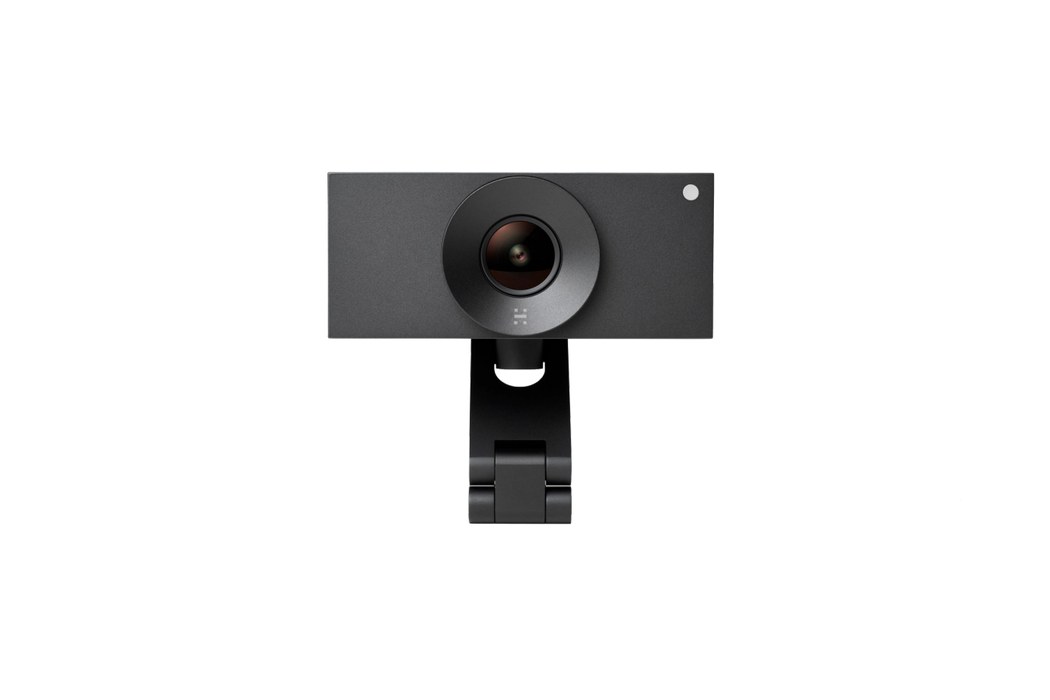
Huddly
Huddly is an Oslo-based company that builds AI-powered conference cameras for hybrid meeting rooms. By running computer-vision neural networks directly on the camera (edge AI), Huddly devices automatically frame speakers, switch angles like a TV director, and improve over time through software updates. Its products work with Microsoft Teams, Zoom and Google Meet, and range from the single wide-angle IQ to the L1 and S1 and the multi-camera Huddly Crew system marketed as the world's first AI director. Founded in 2013, Huddly listed on Euronext Growth Oslo in December 2023.
IntelliVision
IntelliVision is a San Jose-based developer of AI and deep-learning video and audio analytics software for smart cameras. Founded in 2002, its software runs on the edge, on-server and in the cloud to power face detection and recognition, license plate recognition, object detection and classification, intrusion detection, and driver-assistance (ADAS/DMS) systems. Sold primarily to camera makers (ODMs), chipset vendors, security integrators and OEMs, its analytics have shipped in millions of cameras across smart home, smart city, retail, banking/ATM, transportation and automotive markets. The company was acquired by Nortek Security & Control in 2018 and now operates as part of Nice.

Avanseus
Avanseus is a Singapore-based artificial intelligence company that builds predictive maintenance software for telecommunications and industrial IoT networks. Its flagship Cognitive Assistant for Networks uses a patented unsupervised learning algorithm to forecast network faults and degradations days in advance and to surface likely root causes, letting operators fix problems before customers feel them. Founded in 2015, the company was acquired by Accenture in February 2026 to strengthen Accenture's push toward autonomous telecom networks.

Azumio Inc.
Azumio is a Redwood City, California digital health company that builds AI-powered mobile apps and developer APIs for tracking heart rate, food, sleep, fitness and diabetes. Founded in 2011 out of the runaway success of its Instant Heart Rate app, Azumio's consumer titles - including Argus, Calorie Mama, Glucose Buddy, Fitness Buddy and Sleep Time - have collectively surpassed 100 million downloads. The company also licenses its computer-vision technology to businesses through the Calorie Mama / Food Lens food-recognition API and its Instant Diabetes Test and health-data platform APIs.
Blink Technologies, Inc.
Blink Technologies builds software-only eye-tracking and gaze-estimation technology that runs on the ordinary RGB cameras already in phones, laptops, cars, kiosks and CCTV - no special hardware, headset or dedicated sensor required. Using proprietary deep-learning models, Blink turns any camera-equipped device into a gaze-aware interface for touchless control, ad and retail analytics, driver-attention monitoring, authentication and 3D displays. Founded in 2018 with headquarters in Palo Alto and R&D in Haifa, Israel, the company raised a $14M Series A in 2021, bringing total funding to about $24M.

Cogniac Corporation
Cogniac Corporation is a Silicon Valley company building an enterprise-grade, no-code computer vision platform that lets non-experts train and deploy AI models on visual data. Founded in 2015 by Ruckus Wireless veteran Bill Kish and Amy Wang, Cogniac turns cameras and images into operational insight - inspecting products, detecting defects, monitoring safety, and automating document handling across manufacturing, transportation, automotive, government, and logistics. Backed by roughly $46M from investors including National Grid Partners, Cisco Investments, and Autotech Ventures, it counts BNSF Railway, Ford, Georgia-Pacific, Doosan Bobcat, and Trimac among its customers.
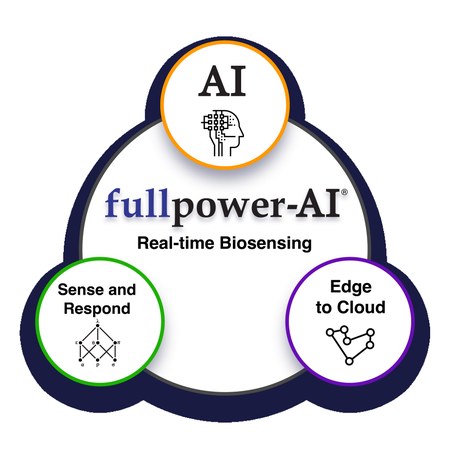
Fullpower-AI
Fullpower-AI is a Santa Cruz, California science-and-technology company that builds real-time, contactless AI biosensing for sleep, remote patient monitoring, and longevity. Founded in 2005 by camera-phone pioneer Philippe Kahn and Sonia Lee, it operates the Sleeptracker-AI platform and the KOA Large Action Model, powering more than 300,000 Tempur-Pedic smartbeds and over 1.5 million connected devices across 60+ countries, backed by 135+ patents and ISO 27001 certification.

GeoX
GeoX is an Israeli-founded geospatial AI company that turns aerial imagery, satellite data and ground-level images into detailed 3D models of individual buildings. Insurers, reinsurers, banks and public agencies use its property database - covering roughly 160 million US properties and expanding across Europe, Japan and Australia - to assess roof condition, elevation and exposure to fires, floods and storms without sending anyone into the field. The company raised a $19M Series A in 2024 (led by Flashpoint), bringing total funding to $23M.

Nullmax
Nullmax is an AI company building vision-only, map-free autonomous driving software for mass-produced cars. Founded in Silicon Valley in 2016 by former Tesla Autopilot engineer Lei Xu and headquartered in Shanghai, it develops MaxDrive, a chip- and sensor-agnostic driving stack, and Nullmax Intelligence (NI), an end-to-end, multimodal system that reads the road with cameras instead of lidar or high-definition maps. Its technology ships in production vehicles from major Chinese automakers.

Roboflow
Roboflow is a computer vision platform that gives developers and enterprises everything needed to go from raw images and video to production vision applications - dataset management, AI-assisted annotation, hosted training, low-code Workflows, and deployment to the cloud or the edge. Founded in 2019 by Joseph Nelson and Brad Dwyer, it is used by over a million developers and more than half of the Fortune 100, and maintains widely adopted open-source tools including Inference, supervision, Autodistill, and the state-of-the-art RF-DETR detection model.

SixSense
SixSense is a Singapore-based deep tech company building an AI platform that helps semiconductor manufacturers spot, classify and predict chip defects in real time. Founded in 2018 by Akanksha Jagwani and Avni Agarwal, its no-code software lets process engineers train and deploy computer-vision models on their own fab data in under two days - automating visual inspection, lot disposition and root-cause analysis. Used by chipmakers including GlobalFoundries and JCET, the platform has analyzed more than 100 million chips and raised roughly $12M to date, including an $8.5M Series A in 2025.
Superb AI
Superb AI is a computer vision AI company that builds an end-to-end MLOps and DataOps platform, letting teams label, curate, train, and deploy vision models on images, video, and 3D LiDAR data. Founded in 2018 and a Y Combinator alum, it uses AI-assisted automation to shrink the slow, manual work of preparing training data, and serves enterprise customers across autonomous driving, manufacturing, security, and public sector from offices in San Mateo and Seoul.