biometrics
(26)
Shufti wants to make proving you are you less of a production
A frustrating identity check helped inspire Shufti. Now the company is betting that businesses will buy verification, fraud checks and ongoing monitoring from the same place.

GBG wants to let the right people in
The British identity specialist grew by buying the machinery of digital trust. Now it must make those pieces work together - while a fresh setback in America tests its recovery.
Smartmatic’s $282 Million Test: Make Voting Easier
Los Angeles County hired Smartmatic to help turn a public voting-system design into an election-day reality. The result reveals what election technology can improve, what a touchscreen cannot fix, and why the paper still matters.

iProov Wants Your Face to Prove It Was There
A face can be copied. A moment is harder to steal. iProov uses light, biometrics and a watchful security team to check who is really on the other side of the screen.
Yoti Wants Your Face for One Second - And Almost Nothing Else
The British identity company spent years building a wallet for facts about you. Its breakout product asks for less: a glance at a camera, a yes-or-no answer, then deletion.

BluB0X Put the Security Desk in the Cloud - Now It Wants AI to Run the Building
The Andover company rebuilt doors, cameras, turnstiles and elevators as one cloud service. Its bet is that the winning security system will own less hardware, share more context and tell operators what happened before they ask.

Anoria Wants to Put a Number on Your Mood - Then Teach You What to Do With It
The ex-Apple team behind Anoria is betting that the next useful wearable will track the thing sleep scores and step counts only circle around: how you actually feel. The opportunity is intimate, useful and full of hard questions.
The Company Teaching Drug Trials to Stop Drowning in Their Own Data
A clinical trial can generate data from a hundred different sources. eClinical Solutions built the plumbing to make it all speak the same language - and now it is handing the busywork to AI agents.
Tools for Humanity
Tools for Humanity built a silver sphere to answer the internet’s suddenly urgent question: is anyone here actually human? Its real product is not the Orb, but a new trust layer stretching from irises to apps, blockchains and AI agents.
Aware, Inc.
Aware spent decades teaching machines to recognize a person. Now the small, public biometrics company is betting that the bigger business lies in deciding which identity system to trust - and when.
Astraea
Astraea is a San Francisco startup building an AI-native operating system for clinical trial biometrics. Its agentic platform turns raw study data and a protocol into FDA-ready outputs - SDTM and ADaM datasets, TFLs, and submission packages - compressing work that normally takes months into days while keeping humans in the loop for review and regulatory sign-off. Founded in 2026 by Stanford's Joshua Wang and Sanmay Sarada, the company is part of Y Combinator's Spring 2026 (P26) batch.
Didit
Didit is a San Francisco-based identity and fraud infrastructure company building one API for KYC, KYB, AML, biometrics, liveness and transaction monitoring across 220+ countries and 14,000+ document types. Founded by identical-twin brothers Alberto and Alejandro Rosas, it offers 500 free verifications per month forever and pay-as-you-go pricing from $0.33 per KYC check, aiming to become the identity layer for an internet where telling humans from bots is getting harder.

Dojah
Dojah is a Lagos-based identity verification and anti-fraud infrastructure company that helps digital businesses onboard users, verify identities, and stay compliant through a single API and no-code tools. It aggregates KYC, KYB, AML, biometric, document and address checks across Africa and beyond, letting fintechs, banks, and marketplaces confirm who they are dealing with in seconds. A Y Combinator W22 company, Dojah serves customers including OPay, FCMB, Cowrywise and Fincra.

Blink Technologies, Inc.
Blink Technologies builds software-only eye-tracking and gaze-estimation technology that runs on the ordinary RGB cameras already in phones, laptops, cars, kiosks and CCTV - no special hardware, headset or dedicated sensor required. Using proprietary deep-learning models, Blink turns any camera-equipped device into a gaze-aware interface for touchless control, ad and retail analytics, driver-attention monitoring, authentication and 3D displays. Founded in 2018 with headquarters in Palo Alto and R&D in Haifa, Israel, the company raised a $14M Series A in 2021, bringing total funding to about $24M.

Satschel, Inc.
Satschel, Inc. is a Whitefish, Montana-based financial technology company building frictionless compliance and investment infrastructure with blockchain, biometrics, and AI. Its Simplici platform compresses KYC, KYB, AML, accreditation, and e-signature into a mobile-first onboarding flow that runs in about four minutes, while its subsidiary Liquidity.io operates an SEC-regulated Digital Alternative Trading System for tokenized, traditionally illiquid assets.
SpeakIn Technologies Co.,Ltd.
SpeakIn Technologies is a voiceprint-recognition and identity-security company founded in Silicon Valley in 2015 and headquartered in Shenzhen. Using deep neural networks and its iVector engine, SpeakIn turns the unique physical signature of a human voice into a biometric key, offering both 1:1 verification (is this the right speaker?) and 1:N identification (who is speaking, out of many?). Its SDK and cloud APIs are used across banking, public security, and smart devices, with reported accuracy near 98% and customers including Tencent, Lenovo, ASUS, and China Merchants Bank.
Sensory, Inc.
Sensory is a Santa Clara-based company that builds on-device AI for voice, sound, and biometrics. Since 1994 its embedded software has shipped in more than three billion consumer electronics, from toys and wearables to cars and smart speakers, giving devices the ability to listen, see, and verify without sending data to the cloud.

Arctop
Arctop is a cognition company building software that decodes the human brain. Its AI platform translates electrical brain-activity signals from everyday wearables - headbands, earbuds, and VR/AR headsets - into real-time, actionable insight about focus, emotion, intention, and memory. Founded in 2016 by neuroscientist Dan Furman and engineer Eitan Kay, Arctop licenses its non-invasive brain-decoding software to developers and enterprises across health, entertainment, education, and government, positioning itself as the intelligence layer between brain-sensing hardware and the applications that use it.

ClinChoice
ClinChoice is a mid-size, global, full-service contract research organization (CRO) that helps pharmaceutical, biotech, medical device, and consumer health companies run clinical trials and bring drugs and devices to market. Founded in 1995 and headquartered in Horsham, Pennsylvania, the firm employs roughly 4,000 people across the Americas, Europe, and Asia-Pacific, offering clinical development, biometrics, safety/pharmacovigilance, regulatory affairs, post-marketing real-world evidence, and technology services. After rebranding from Fountain Medical Development (FMD K&L) in 2020 and raising a $150M Series E in 2022, ClinChoice has grown through acquisitions to serve six of the top ten pharma companies while focusing on emerging and mid-size biotech innovators.

Reveal Technology
Reveal Technology is a veteran-founded defense software company in Bozeman, Montana, building AI tools that work at the tactical edge - offline, under fire, and in real time. Its flagship products, Farsight (rapid geospatial intelligence from drone video) and Identifi (tactical mobile biometrics), are fielded with the U.S. Army, Special Operations Command, the Marine Corps, and allied forces. The company's pitch is simple: when the cloud disappears, the mission can't.

Metalenz
Metalenz is a Boston-based deep-tech company that replaces stacks of curved glass lenses with a single flat, nanostructured semiconductor chip called a metasurface. Spun out of Harvard's Capasso Lab, it is the first company to mass-produce meta-optics, shrinking cameras and sensors for smartphones, biometrics, and 3D sensing. Its flagship Polar ID brings polarization-based, payment-grade face authentication to devices at a fraction of the size and cost of existing systems.

Incode
Incode is an AI-powered identity verification platform that lets businesses confirm who is really on the other side of a screen — in under two seconds. Founded in San Francisco in 2015, the company has built a modular biometric platform used by banks, hotels, hospitals, and gaming companies across more than 190 countries. Its flagship product, Incode Omni, handles everything from document verification and facial recognition to AML screening and liveness detection, processing more than 100 million user verifications per year. Backed by General Atlantic, SoftBank, J.P. Morgan, and Capital One Ventures at a $1.25 billion valuation, Incode has been named a Gartner Magic Quadrant Leader for Identity Verification two consecutive years running.

Truora Inc.
Truora is a Latin America-focused identity and customer engagement platform that helps companies verify users, run background checks, and onboard customers - largely through WhatsApp. Founded in 2018 by Twilio and McKinsey alumni and backed by Y Combinator, Accel, and Propel, it powers KYC and fraud prevention for Rappi, Bancolombia, Mercado Libre, Didi, and hundreds of other LatAm businesses.
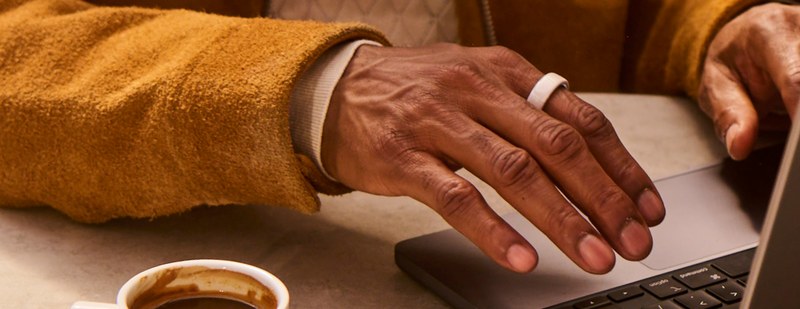
ŌURA
ŌURA makes the Oura Ring, a titanium smart ring that reads sleep, recovery, heart rate, temperature and activity from the finger. Founded in Oulu, Finland in 2013 and now co-headquartered in San Francisco, it has shipped more than 5.5 million rings, surpassed $500M in 2024 revenue and reached an $11B valuation in its 2025 Series E.
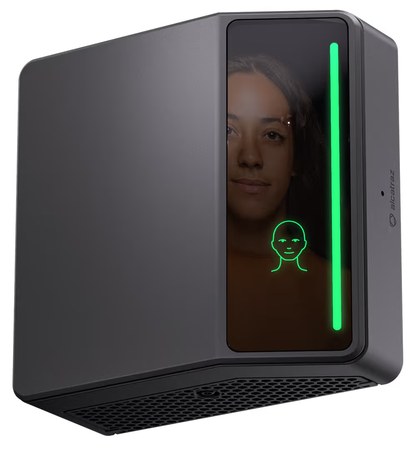
Alcatraz AI
Alcatraz AI builds the Rock and Rock X - AI-powered facial authentication devices that replace badges, fobs and PINs at the door. The Cupertino-based company combines edge computer vision, 3D depth sensing, and privacy-by-design encryption to authenticate people without storing their faces in the cloud, and is used by Fortune 100 firms, hyperscale AI data centers, major U.S. airports, and NFL teams.

Paravision
Paravision is a San Francisco-based Identity AI company building face recognition, liveness, deepfake detection, and age estimation tools used by governments, airports, banks, and stadiums worldwide. Rebranded from Ever AI in 2019 after topping NIST's facial recognition leaderboard, it sells ethically trained biometric SDKs to enterprises and Five Eyes partners.