Who They Are Now
It is 7:14 a.m. somewhere, and somebody is staring at their phone before their feet hit the floor. They are not checking email. They are checking a number. The number is between 0 and 100, it claims to know how well they slept, and it was produced overnight by a piece of titanium worth roughly the price of a nice dinner. The ring is called Oura. The number is called Readiness. The morning ritual has, quietly, become a small industry.
ŌURA - stylized with a macron, pronounced like the Finnish word for fate - is the company that built that ring. As of late 2025, more than 5.5 million of them are circling people's fingers. Revenue crossed half a billion dollars in 2024, doubled the year before that, and is on track to hit a billion in 2025. In October 2025 the company closed a $900 million Series E led by Fidelity at an $11 billion valuation, roughly double where it stood ten months earlier. CEO Tom Hale told CNBC he expects close to $2 billion in 2026 sales.
For a product with no screen, no notifications, and no obvious flash, that is an unusual amount of attention.
A wearable that you forget you are wearing has finally figured out how to make itself unforgettable. — Field note, YesPress
The Problem They Saw
The problem ŌURA exists to solve is mostly invisible. We spend roughly a third of our lives asleep, and until very recently we knew embarrassingly little about that third. Clinical sleep studies happen in laboratories with electrodes glued to your scalp. Consumer fitness trackers, which mostly live on the wrist, were optimized to count steps. They were good at telling you when you walked. They were vague about everything else.
Meanwhile, the most useful signals - resting heart rate, heart rate variability, skin temperature, the architecture of REM and deep sleep - are easiest to read at night, when the body is still, and from a place where blood flows close to the surface. The finger, it turns out, is one of the best places on the human body for that. The wrist is one of the worst.
This is the inconvenient detail almost the entire wearables industry skipped over. ŌURA did not.
The wrist won the first round of wearables. The finger may quietly win the second. — On the geometry of biometrics
The Founders' Bet
In 2013, in Oulu, a small city in northern Finland with a stubbornly large concentration of hardware engineers (it raised Nokia, and a great many of its alumni stayed), four of them - Petteri Lahtela, Kari Kivelä, Markku Koskela and Virpi Tuomivaara - filed paperwork for a company first called Jouzen. The name came from joutsen, the Finnish word for swan. They eventually replaced it with Oura, which is shorter and harder to mispronounce.
Their bet was straightforward and almost dismissively obvious in hindsight. If the best biometric signals are at the finger, build a ring. Make it pretty enough that people will keep it on. Make the battery long enough that they will forget to take it off. Then let the software talk to them in the morning.
For about eight years this remained a niche product beloved by a small cult of biohackers, professional athletes, and venture capitalists who liked to compare scores at breakfast. In March 2022, Tom Hale - a veteran of Adobe, HomeAway and Momentive - arrived as CEO. The cult started growing.
The founders did not invent any of the sensors. They simply put them in the right place, on the right finger, in the right shape. — On the quiet art of getting the form factor right
★ The Company Milestone Reel
The Product
The Oura Ring Gen 4 weighs about as much as a grape, is machined from aerospace-grade titanium, and contains what is essentially a small clinical lab. The hardware list, for those who like that sort of thing: ten LEDs across three wavelengths producing eighteen independent measurement pathways, an NTC infrared thermistor for skin temperature, a three-axis accelerometer and gyroscope for movement, and a Bluetooth Low Energy 5.1 antenna. It holds a charge for roughly eight days. It survives the shower.
What the wearer sees is much simpler. Each morning, three scores: Sleep, Readiness, Activity. Each between 0 and 100. The app whispers, rather than shouts. There is also a cycle tracking layer, a stress layer, an integration with Natural Cycles for fertility, and a relatively new on-device AI called Oura Advisor that explains, in plain English, why your numbers look the way they look.
The Lineup
Oura Ring 4
The flagship: titanium, 8-day battery, 18 biometric pathways, fully recessed sensors.
Oura App
Sleep / Readiness / Activity scores, cycle insights, stress, and personalized AI guidance.
Membership
Subscription unlocking long-term trends and the on-device Oura Advisor.
Oura for Business
Used by employers, the U.S. military, the NBA, and academic researchers.
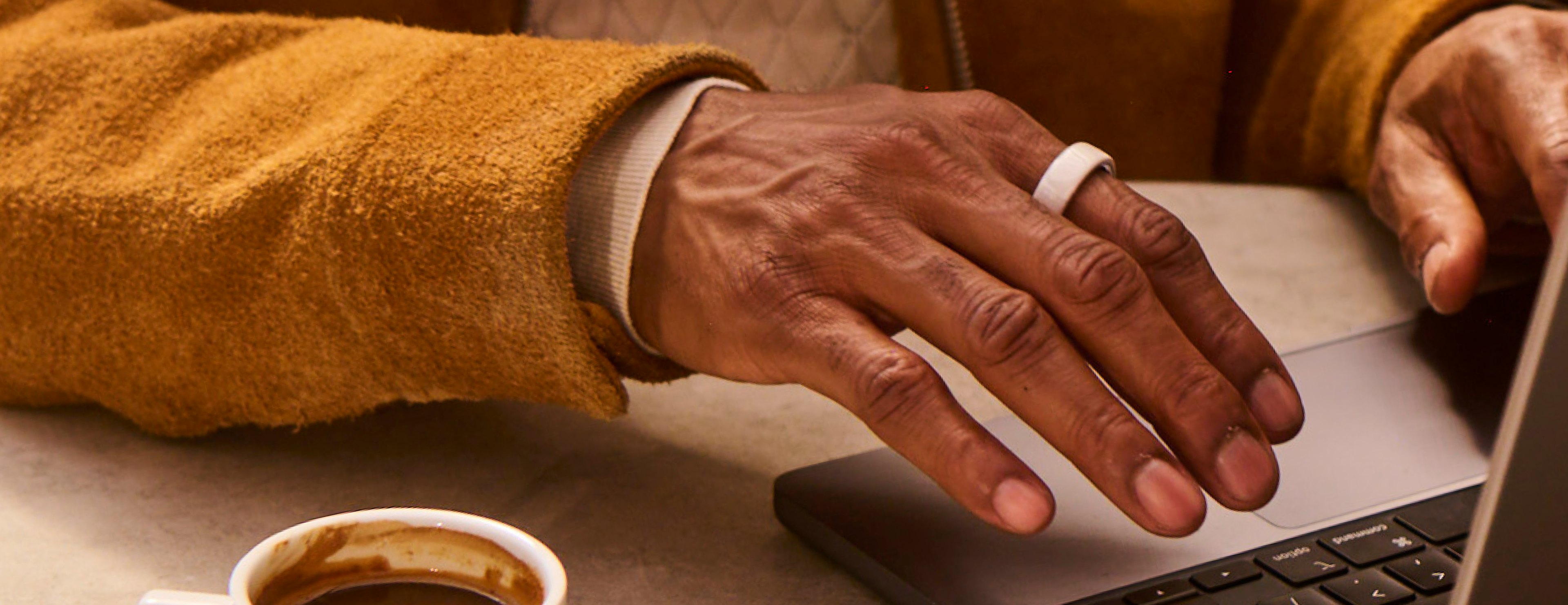
Fig. 1 — The ring is the smallest computer most people will ever willingly wear to bed.
★ Revenue & Rings: The Hockey Stick, Examined
Source: Businesswire, CNBC, company guidance. 2026 figure is the CEO's forecast and should be read as ambition with receipts.
The Proof
Numbers are easy to invent. Customers are harder. ŌURA has both. The U.S. Department of Defense distributed rings to military personnel for readiness and illness-detection research. The NBA put them on players during the pandemic-era Orlando bubble, and never quite took them off. Dexcom, the continuous glucose monitor company, invested in 2024 and integrated its data. Researchers at UCSF, West Virginia University and Stanford have used the device in published peer-reviewed studies on everything from menstrual cycle prediction to viral infection onset.
And then there is the more telling, sillier proof: the ring became a status object. Jack Dorsey was photographed in one. Prince Harry wears one. Kim Kardashian posts her Readiness Score. It turned out the most credible advertisement for a quiet medical-grade device was the people quietly wearing it.
The smartest thing ŌURA did was build a piece of medical equipment that people were willing to wear to a wedding. — On the unreasonable power of jewelry
The Mission
ŌURA's stated mission is to help people live healthier, longer lives by giving them ownership of their own biometric data. That last part - ownership - is the part the company is increasingly pointed about. The data lives on the device first. The membership exists in part so the business model does not depend on selling anything to anyone else.
In an era when most health companies treat your data as inventory, this is a notably Finnish stance. It is also, conveniently, a competitive moat. The more the rest of the industry leans into ad-supported wellness, the more ŌURA's pay-for-the-thing, keep-your-secrets posture looks like a feature instead of a quirk.
Headquarters Geography
The company runs from two cities. The engineering, hardware and clinical research roots stay in Oulu and Helsinki, where the founders started. The commercial, marketing and executive teams - including Hale - operate out of San Francisco. The line down the middle of the Atlantic is, by all accounts, the line between the company's two halves: Finnish precision, Californian narrative. The product sits exactly on top of it.
Five Things You Did Not Need to Know About ŌURA
- The original name, Jouzen, came from the Finnish word for swan, the national bird.
- The ring weighs roughly as much as a single grape.
- It can flag a rising body temperature roughly a day before you notice you are sick.
- It charges in about 80 minutes and lasts about a week.
- The Readiness Score is, by several accounts, the most argued-about number in the Bay Area group chat.
Why It Matters Tomorrow
The interesting question is not whether ŌURA can sell more rings. It can; the smart-ring category, almost single-handedly created by Oura, is now being entered by Samsung, Apple's R&D bench, and a long tail of hopeful imitators. The interesting question is what happens to consumer health when continuous, accurate, unobtrusive biometric monitoring becomes table stakes.
If the last decade of wearables was about counting things - steps, calories, minutes - the next decade is about explaining them. ŌURA has the data, the form factor, the AI layer that is now being shipped on-device, and a customer base that is already paying monthly to be told the truth about their own bodies. That is an interesting starting position. Insurers are watching. So are employers. So, increasingly, are doctors.
It is 7:14 a.m. again. Someone is still staring at their phone before their feet hit the floor. The number is still between 0 and 100. But the ring on their finger is doing something the wearable industry promised for a decade and almost never delivered: it is telling them something true, in private, before the day begins. The morning ritual is no longer the strange thing. The strange thing is that we used to wake up without it.
The Sources, The Socials, The Sundries
- Website: ouraring.com
- LinkedIn: linkedin.com/company/oura
- X / Twitter: @ouraring
- Instagram: @ouraring
- YouTube: @ouraring
- TikTok: @ouraring
- Press: ouraring.com/press
- Blog: The Pulse
- Tom Hale on Masters of Scale: mastersofscale.com
- Product demo (YouTube): Oura Ring 4 reviews
- CEO interview (YouTube): Tom Hale interviews
- CNBC / Series E: cnbc.com
- Wikipedia: Oura Health