b2b-saas
(24)
The RevOps Signal You Should Buy First
Segment records what people do in your world. 6sense looks for companies researching beyond it. If the budget allows only one, the right purchase depends on which blind spot is costing you revenue now.

You Don't Pick A CRM, Your Email Already Did
Dynamics 365 or Copper is not really a features fight. It is whether your company lives inside Microsoft or Google - and almost everything else follows from that one fact.

Why Most Sales Teams Quietly Buy Both DealHub and PandaDoc
DealHub prices the deal. PandaDoc formats the paperwork. Most buyers who go shopping for one end up needing the other - here is why the choice is rarely either-or.

Freshsales Is Better. Zoho Wins Anyway.
Freshsales is the cleaner, faster CRM most buyers prefer on the demo. Zoho keeps taking the deal because it is already sitting inside the software companies bought last year.
Seismic Won Regulated Sales, Then Merged With Its Rival
For years the choice between Highspot and Seismic split along one fault line: who could survive a compliance audit. Then, in February 2026, the two rivals stopped competing and agreed to become one company.

The Robots Fighting Over Your Sales Forecast
Clari and Aviso both promise to tell you what your quarter will close at. The real split is over who does the work - your reps clicking through a CRM, or software that acts on its own.

BoostUp Is Beating Clari By Being Cheaper, Not Better
The revenue-intelligence fight was supposed to be won on features. Instead, mid-market buyers keep picking the vendor that costs less and goes live in weeks.

Pendo and Rocketlane Split the Onboarding Job
Two products wear the onboarding label, but they solve different moments. Rocketlane organizes the human work before value arrives; Pendo helps users find value after they enter the product.

YesPress Wants AI to Quote Your Startup, Not Skip It
B2B buyers now open ChatGPT before they open Google. YesPress builds machine-readable newsrooms so answer engines cite your product instead of scrolling past it.
UpdateAI Beat Gong, Then Gainsight Bought It
The post-sales notetaker that customer success managers swore by went head-to-head with the giants, won a loyal following, and got absorbed into Gainsight's AI push in July 2025. Here is how a discovery interview turned into an acquisition.
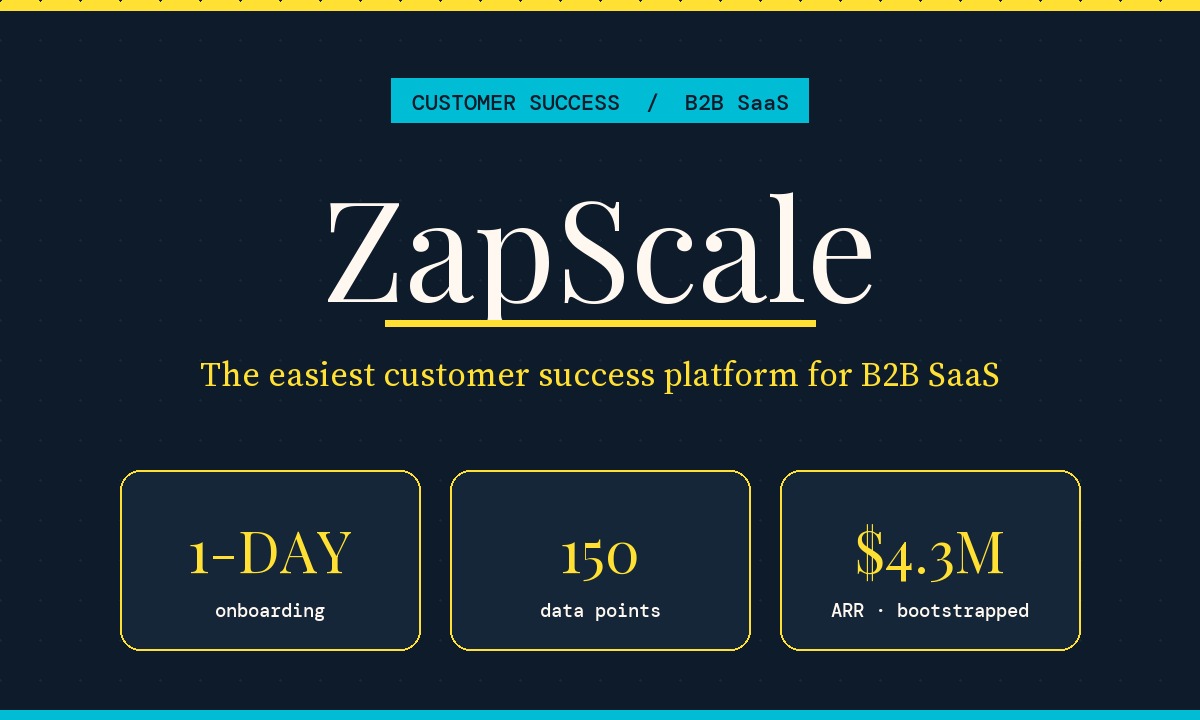
ZapScale Wants Your Customer Success Team Live Before Lunch
A bootstrapped B2B SaaS startup, run by a founding trio that already built and sold one company, is betting the whole category on a single idea - be the easiest tool to switch to and get you set up in a day. Here is how it stacks up against Gainsight and Chameleon.

Vitally Made Keeping Customers the Whole Game
The Brooklyn software company built a business on a plain bet: in B2B SaaS, the money isn't in the first sale, it's in never losing it. Here's how customer success turned into a category worth fighting over.

Rocketlane Bet That Customer Onboarding Was Broken
Three Freshworks alumni built a professional services platform on a simple hunch: the messy weeks after a deal closes decide whether customers stay. A decade later, that hunch has raised $105 million.

Arrows Ripped Out a Third of Its Product on Purpose
Two friends who lived two blocks apart built an onboarding tool, then bet the whole thing on HubSpot - cutting a third of the features to go deeper. It became one of the marketplace's most-installed apps.

Skalin Spots the Churn Three Weeks Before You Feel It
The Paris-built customer success platform reads product usage, emails and support tickets, then hands small teams an AI health score that flags a fading account before the renewal call goes wrong.

Birdeye and Qualified Took Opposite Roads to the Same AI Future
One crossed $100 million in revenue while barely touching venture money. The other got scooped up by Salesforce. Both are betting the future of marketing belongs to software that works on its own.

Plain and Gladly Are Both Trying to Kill the Support Ticket
Two startups, two very different customers, one shared enemy. Plain wants developers to forget the inbox; Gladly wants retailers to forget the case number. Here is what the end of the ticket actually looks like.

The Support Ticket Is Dying and Slack Is Holding the Knife
A new class of B2B support tools - Plain, Front, TeamSupport - is betting customers never wanted a help desk. They wanted an answer in the channel they were already in, and the old guard from BMC to USU is scrambling to catch up.

Why Customer Support Software Is Having an Identity Crisis
SAP, ServiceNow, Gorgias, Kayako, Supportbench and Thena are all chasing the same promise - support that resolves itself. Here is who is actually building it, and who is just bolting AI onto an old inbox.

The Six Tools Racing to Get Your Brand Into AI Answers
A new category of software has one job: making sure ChatGPT, Gemini and Perplexity name your company when a buyer asks. Five of them measure the gap. One writes the record that closes it.

TeamSupport Reads the Room Before Your Customer Rage-Quits
The Dallas B2B software company built its whole pitch on a quiet idea - that the first sign a customer is about to leave is buried in an ordinary support ticket. Now it wants AI to catch that signal before anyone hits cancel.
Help Desk Software Split in Two, and B2B Won
For twenty years every company bought the same ticket queue. Now B2B support has walked out of the inbox and into Slack, and a new class of tools is racing to catch it.
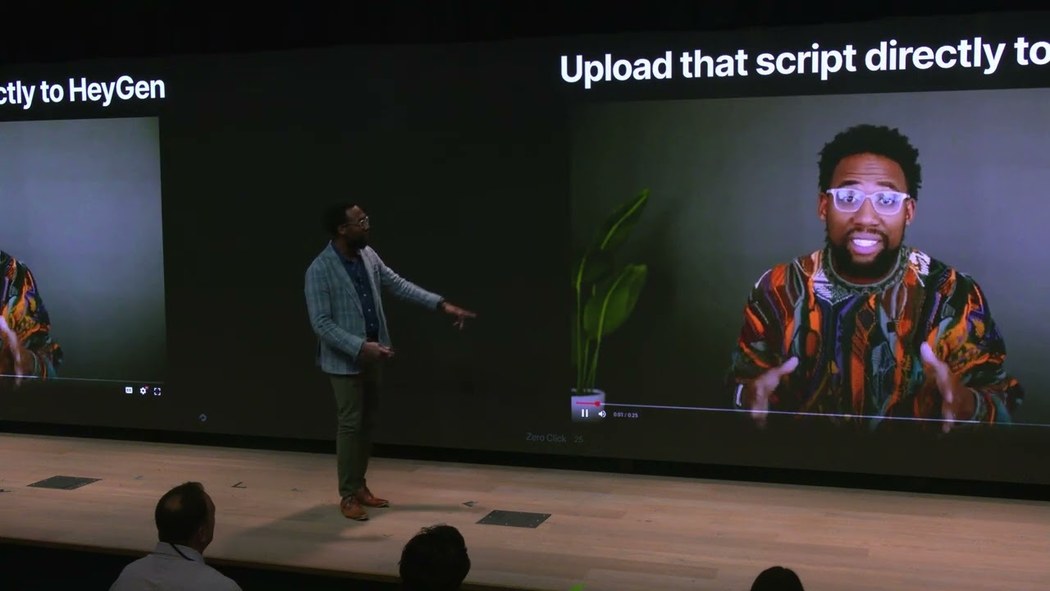
Content Distribution in the Age of AI — Ross Simmonds, Foundation Marketing
In a fast-talking, joke-laced keynote delivered at a Profound event, Foundation Marketing founder Ross Simmonds sets out to demolish what he calls one of the marketing industry's favorite lies: that AI-written content can never drive results. Playing amateur detective — 'Sherlock Homeboy' — he digs into CNET's much-mocked AI publishing experiment and finds that the disclosed AI-written pages still pull millions of annual visits, roughly 2,400 backlinks and about $1.3 million worth of organic traffic value. From there he lays out a free four-part framework — Research, Creation, Distribution, Optimization — arguing that marketers have spent a decade obsessing over content while forgetting the marketing half of 'content marketing.' Along the way he makes the data case that B2B review sites like G2, Capterra, TrustRadius and Software Advice are losing ground while Reddit, YouTube and LinkedIn dominate LLM citations, and he walks through the actual tool stack — ChatGPT, HeyGen, ElevenLabs, Descript, Canva, MidJourney, RunwayML, Distribution.ai — he uses to turn one asset into many. His closing plea is less about tools than temperament: have a growth mindset, keep experimenting, and create once, distribute forever.
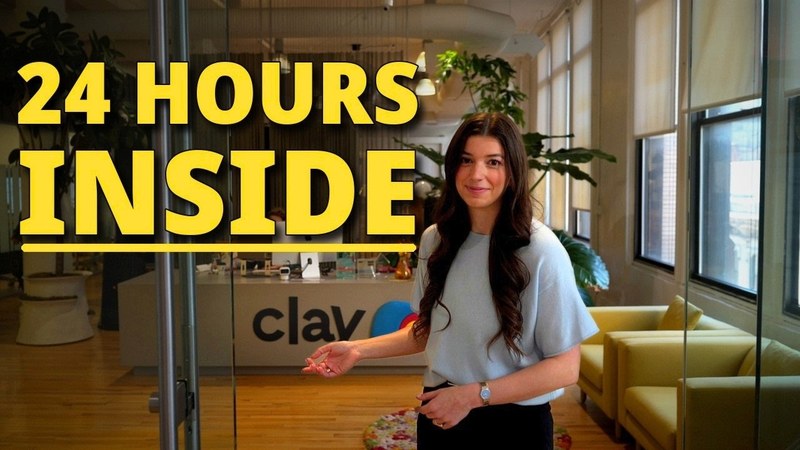
Inside Clay: What Is a Go-To-Market Engineer?
In this episode of 'Stories of Scale,' a host spends a full day inside Clay, the $5 billion New York startup that coined the term 'go-to-market engineer,' to figure out what this fast-growing role actually is. Shadowing Everett Berry, Clay's Head of GTM Engineering, along with teammates like Spencer, Varun (co-founder), and George, the video unpacks how GTM engineers blend engineering, marketing, and sales to build automated systems that find, understand, and reach customers. It also reveals Clay's two-team 'flywheel' — an internal pipeline team and a forward-deployed customer-facing team — that helped the company scale from five years of near-zero revenue to over $100 million and 16,000+ customers.