Story · SaaS & Support
Help Desk Software Split in Two, and B2B Won
For twenty years every company bought the same ticket queue. Now B2B support has walked out of the inbox and into Slack, and a new class of tools is racing to catch it.
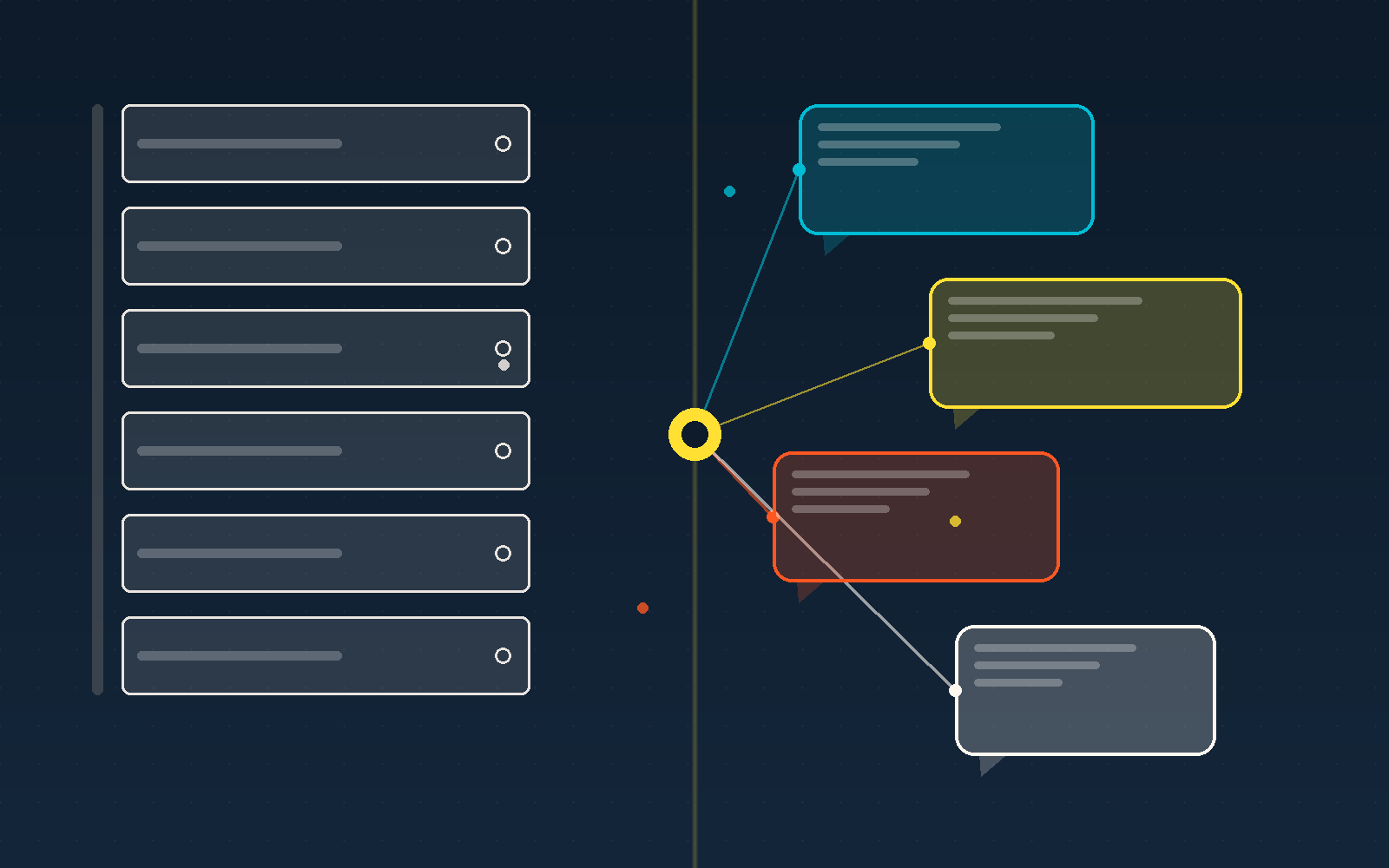
Open the settings page of almost any B2B company and you will find a support tool nobody quite remembers choosing. It came bundled with a plan, it processed email into tickets, and it worked. For about fifteen years that was the whole story of customer support software. One shape, one queue, one bill per agent per month.
That story is coming apart. Not because someone built a prettier ticket queue, but because the customers stopped showing up where the queue was waiting. Somewhere between the pandemic-era rise of shared Slack channels and the arrival of support bots that actually resolve things, the market for helping customers quietly fractured into two. The old tools kept the consumer half. A restless group of newcomers grabbed the B2B half and started building it differently.
The names on each side are familiar even if the split is not. Zendesk, Kayako, ServiceNow and SAP anchor the incumbent world, all built to absorb enormous volumes of tickets from customers you will never meet. Facing them: Pylon, Thena, Halo Service Solutions and ProProfs, each making some version of the same bet - that support for other businesses is a different job than support for consumers, and deserves a different tool.
01 / THE OLD SHAPEWhy one queue fit everyone
Zendesk, founded in Copenhagen in 2007, did something useful and slightly boring. It took the support inbox and made it a system. Every email became a ticket, every ticket got a status, and managers finally got a dashboard. G2 still ranks it the number one product for customer service. Twenty thousand companies pay for it. The model was so clean that everyone copied it, and for a long time copying it was enough.
The catch sat inside the pricing. You paid per agent, per month, and the bill grew with your headcount. That math rewards volume and punishes nuance. It made perfect sense for a retailer fielding ten thousand near-identical questions about a shipment. It made much less sense for a software company whose twelve biggest accounts each needed a named human who understood their setup.
ServiceNow took the same machinery in a different direction, toward internal IT. Incident, problem and change management, all in one platform, priced for the enterprise and administered by specialists. Halo Service Solutions, a British company that has quietly been around since 1994, built HaloITSM to do the same ITIL 4 job for roughly half the licence fee, sometimes a third of the total cost once you strip out the per-module charges. Same product category, minus the tax.
The tools kept the inbox. The customers moved to the channel.
02 / THE NEW SHAPESupport moved into the channel
Here is the observation the newcomers built on, and it is almost too simple to charge money for: your biggest business customers already talk to you somewhere. A shared Slack channel. A Teams thread. A Discord server for the developer crowd. They are not going to open your help center, find the right category and fill in a form. They are going to write "hey, this is broken again" where they already are.
Pylon looked at that and built, in its own words, an AI-native support platform for B2B rather than reheated B2C. It pulls requests from Slack Connect, Microsoft Teams, Discord and email into one place, then wraps them in the things a post-sales team actually needs: a ticketing system, a chat widget, a knowledge base, account context and an AI bot that does the pre-work of routing and clarifying. The pitch landed. In August 2025 a16z and Bain Capital Ventures co-led a $31M Series B, taking total funding to $51M, against 750-plus customers and two years of 5x revenue growth. More than 150 of those customers arrived by leaving Zendesk, Intercom or Salesforce Service Cloud.
Thena, founded in 2022 by Ankit Saxena, Govind Kavaturi, Mike Molinet and Unmukt Raizada, took a lighter position. It raised $5M from Lightspeed and First Round Capital to turn Slack and Teams conversations into structured, routable tickets, then hand them back to whatever system a company already runs, including Zendesk and Salesforce. One company wants to replace the queue. The other wants to feed it better. Both agree the channel is now the front door.
The Incumbent Half
Built for high-volume, anonymous, consumer-scale support.
- Zendesk · the universal ticket queue
- Kayako · lean, context-first support
- ServiceNow · enterprise ITSM
- SAP · support inside the suite
The B2B-Native Half
Built for named accounts talking in Slack and Teams.
- Pylon · full B2B support platform
- Thena · Slack-to-ticket routing
- Halo · ITSM without the ServiceNow tax
- ProProfs · simple, cheap, self-serve
03 / THE MONEYPricing flipped from seats to outcomes
The quieter revolution is in how these tools charge you. When a human answered every ticket, paying per human made sense. When a bot resolves half of them, per-human pricing starts to look like paying for a factory line that no longer runs.
The numbers now back the shift. Across the industry, AI agents deflect more than 45% of incoming queries before a person is involved; in retail and travel the figure climbs past 50%. Median tier-one deflection sits around 41% for enterprise programs, with the top quartile near 59%. Zendesk itself grew AI ARR from nothing in 2023 to $200M at the end of 2025, and has told investors it is aiming for up to $500M in 2026. The queue is becoming a bot, even inside the company that made the queue famous.
Watch how the pricing follows. Kayako, one of the older names, now runs a flat $79 a month plus $1 per AI-resolved ticket. Read that sentence twice. You are no longer buying seats. You are buying resolutions. It is a small change in a pricing table and a large change in what a support tool is for.
Where the ticket goes now
Approximate share of tier-1 support queries, 2026 industry snapshot
You are no longer buying seats. You are buying resolutions.
04 / THE TAKEAWAYWhat the split is really telling you
It would be easy to file this under "AI eats another category" and move on. That reading misses the more useful lesson, the one a founder could actually copy. The newcomers did not win by being smarter about support. They won by noticing that two jobs had been jammed into one tool, and by picking the job the incumbent could not serve well without cannibalizing itself.
Zendesk cannot easily abandon per-seat pricing; too much revenue depends on it. ServiceNow cannot easily be cheap; its whole enterprise motion assumes a large implementation. Those are not failures of vision. They are the gravity that comes with a big installed base, and that gravity is exactly the opening a challenger squeezes through. Halo is not smarter than ServiceNow. It is just willing to charge a third as much. Pylon is not a better ticket queue. It just lives where the conversation already happens.
For a company choosing a tool today, the decision has gotten simpler in one way and harder in another. Simpler, because the question is no longer "which help desk," but "who is my customer and where do they talk." If you run high-volume consumer support, the mature incumbents still do the heavy lifting better than anyone. If your revenue sits in a few dozen named accounts who message you in Slack, the B2B-native tools were built for your exact shape. Harder, because the safe default - buy the thing everyone else bought - is no longer safe. The category it belonged to has split underneath it.
The ticket did not die. It walked out of the inbox, wandered into a chat channel, and got a bot for company. Everything else on this page is just the software industry running to catch up with where the customer already went.
Questions people actually ask
Why is support software splitting into two markets?
Consumer support is high-volume and anonymous; B2B support is relationship-driven and happens in shared Slack or Teams channels. Tools optimised for one are a poor fit for the other, so the market is separating into consumer-scale incumbents and B2B-native challengers.
What makes Pylon and Thena different from Zendesk?
Both are built around messaging channels like Slack and Teams rather than an email inbox, and both start from AI rather than bolting it on. Pylon offers a full B2B support platform; Thena focuses on routing channel conversations into a structured workflow.
Is ServiceNow really the same category as Zendesk?
Not quite. ServiceNow is mainly IT service management - internal incident, problem and change workflows - while Zendesk grew up in external customer support. Halo competes with ServiceNow on ITSM at a lower cost; Pylon and Thena compete more with Zendesk on external B2B support.
How is AI changing support pricing?
AI deflects a growing share of tickets, so pricing is shifting from per-agent seats toward per-resolved-ticket models. Kayako, for example, charges a flat monthly fee plus a small charge per AI-resolved ticket.
Should a company switch off its legacy help desk?
It depends on where customers actually talk. Teams with heavy Slack or Teams engagement and named accounts benefit most from B2B-native tools; high-volume consumer operations may still be better served by established platforms with mature automation.