ambient-ai
(15)
Nabla wants your doctor to look up
Before Nabla sold AI to doctors, it hired 50 of them. The lesson became a business: take the paperwork out of the conversation, then tackle the work that follows.

Augmedix wants the doctor to look up
It began with Google Glass and a remote scribe. Now part of Commure, Augmedix is betting that the most useful thing AI can give a doctor is time to pay attention.
Eleos Health takes on therapy’s second shift
The session ends. The paperwork carries on. Eleos Health is building AI for the notes, checks and billing chores that follow community-based care - and its most useful lesson came from leaving the office.
The Operating Room Had a Memory. Aimbient Gave It a Voice.
A surgeon built a black box for the operating room. A decade later, the company is trying to make every procedure teach the next one - while persuading clinicians that a camera can be a coach rather than a cop.
The EHR Bet ModMed Made 16 Years Ago - and Why AI Makes It Riskier
ModMed taught doctors to shape software for their own specialties. Now nearly 50,000 providers, a $5.3 billion private-equity deal and one million AI-assisted visits are testing how far that idea can travel.
RXNT Bet on Boring Healthcare Software - Then Built a $54 Million Business
A Palm Pilot, an SBA-backed loan and one ugly lesson from the IRS became a 26-year lesson in building durable SaaS: solve the dull workflow first, listen when customers ask for the next one, and keep the price visible.
Vetnio
Vetnio is a Swedish AI copilot that automates the paperwork of veterinary medicine. It listens to consultations between vets and pet owners, writes structured clinical notes, drafts client communications, and offers science-backed diagnostic prompts - giving clinicians back roughly two hours a day. Founded in 2024 by longtime friends Arman Karegar and Max Henry Xie, it is one of the few European veterinary companies backed by Y Combinator (W25).
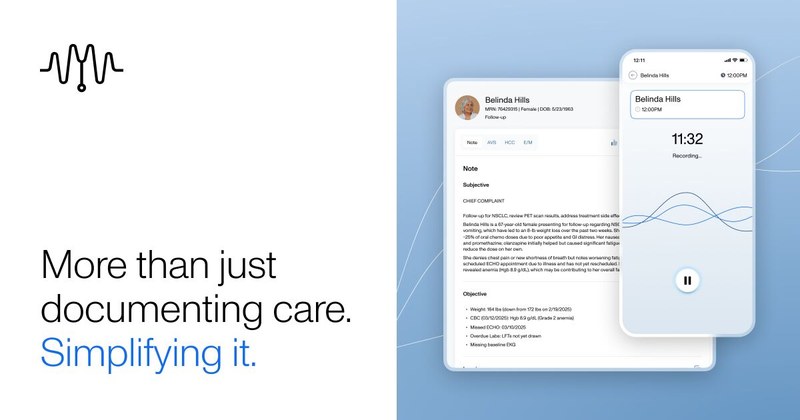
DeepScribe
DeepScribe is a San Francisco-based health-tech company building an ambient AI medical scribe that listens to natural doctor-patient conversations and turns them into complete, structured clinical notes in real time. Founded in 2017, the company has narrowed its focus to oncology, where it says it serves roughly 90% of U.S. community oncology organizations, and layers on tools for coding, pre-visit prep, and specialty-specific customization. The pitch is straightforward: let clinicians look at their patients instead of their keyboards, and cut the after-hours documentation that drives burnout.

Oath Surgical
Oath Surgical is a Portland, Oregon-based healthtech company building a full-stack, AI-native system for outpatient surgery. It owns and operates its own ambulatory surgical centers while developing OathOS, an ambient clinical intelligence platform that analyzes surgical video, audio and operational data in real time to reduce administrative burden and support value-based, surgeon-led care. Founded by physician and former Intuitive Ventures head Oliver Keown, the company has raised roughly $35M and partners with NVIDIA, McKesson Ventures and FPV Ventures.
Canvas Medical
Canvas Medical builds programmable EMR infrastructure for the companies reinventing how care gets delivered. Its ONC-certified electronic medical record pairs a FHIR API and a Workflow SDK so clinicians and developers can extend the chart like software, then layers AI agents - led by the open-source Hyperscribe ambient copilot - that listen, document, place orders, and prep claims in real time. Founded in 2015 in San Francisco, Canvas powers primary care, behavioral health, weight loss, longevity, and other modern clinics that want their EMR to bend to their workflows instead of the other way around.
Health Note
Health Note is a healthcare AI company that automates the administrative work surrounding a clinical visit. Founded by physician Joshua Reischer, MD, its platform collects patient information before an appointment through conversational texting and AI voice agents, then turns that data into structured EHR documentation and pre-written clinical notes. The goal is to cut the paperwork and phone-tag that drives physician burnout, shorten check-in times, and let care teams spend more time with patients and less with screens.

Abridge
Abridge builds generative AI that listens to patient-clinician conversations and turns them into structured clinical notes and billing-ready documentation in real time. Deployed across 150+ U.S. health systems and integrated deeply with Epic, the company has become the dominant pure-play ambient AI scribe in healthcare, valued at $5.3B after a $300M Series E in June 2025.

Ambience Healthcare
Ambience Healthcare builds an ambient AI platform for clinicians - an AI medical scribe and coding assistant that listens to patient visits, drafts structured notes in seconds, and pushes compliant ICD-10/CPT coding back into Epic, Cerner, and athenahealth. It is used by Cleveland Clinic, UCSF Health, Houston Methodist, Memorial Hermann and dozens of other systems.
Apella
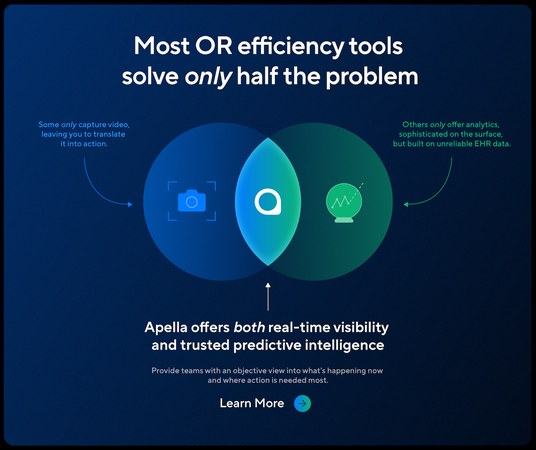
Apella is a San Francisco-based healthcare AI company using ambient video, computer vision and machine learning to run hospitals' operating rooms better - automatically detecting up to 14 surgical case events, forecasting case durations, and writing structured data back to the EHR so surgical teams can serve more patients without staying late.

Freed
Freed builds an AI medical scribe that listens to patient visits and writes clinical notes for doctors. Founded in 2022 by ex-Meta engineers Erez Druk and Andrey Bannikov, the company is used by 20,000+ clinicians and raised a $30M Series A led by Sequoia Capital in March 2025.