Teodor Grantcharov had an unfashionable idea for a surgeon: watch the tape. In an operating room, the official record can tell you who was there, which procedure was performed and when someone entered a milestone. It is much less capable of telling you why a handoff stalled, whether the team heard a warning, or how the room actually moved through the day. Grantcharov, a surgeon and researcher, began treating surgery as a performance that could be observed, reviewed and improved. The result was Surgical Safety Technologies and its OR Black Box.
- Aimbient records and analyzes activity around medical procedures, then returns usable timelines, live room signals and review tools to hospitals.
- Its first identity was the OR Black Box. The July 2026 rename followed a move into scheduling, documentation, education and more procedural spaces.
- The hardest feature may be governance: recordings have to help a team learn without becoming a tool for blame.
The aviation analogy was obvious enough to sell the idea. Flight recorders preserve what happened when human memory is least reliable. Surgery has equally consequential moments, but the record is scattered across machines, notes, schedules and people. Aimbient's wager is that a synchronized account of the room can make the next decision better. The company now calls that account procedural intelligence. The name is tidy; the room, usually, is not.
What the room knows
The Aimbient Suite combines in-room video and audio with device signals, clinical context and hospital systems. Purpose-built AI identifies events and patterns in that stream. Before a case, the company says it can help forecast schedules and staffing. During the case, it can detect milestones and update a live view of room status. Afterwards, teams can inspect a timeline, review video and look for recurring delays, communication problems or departures from a checklist. The use cases now stretch from operating rooms to cath labs, trauma bays, endoscopy, interventional radiology and labor and delivery.
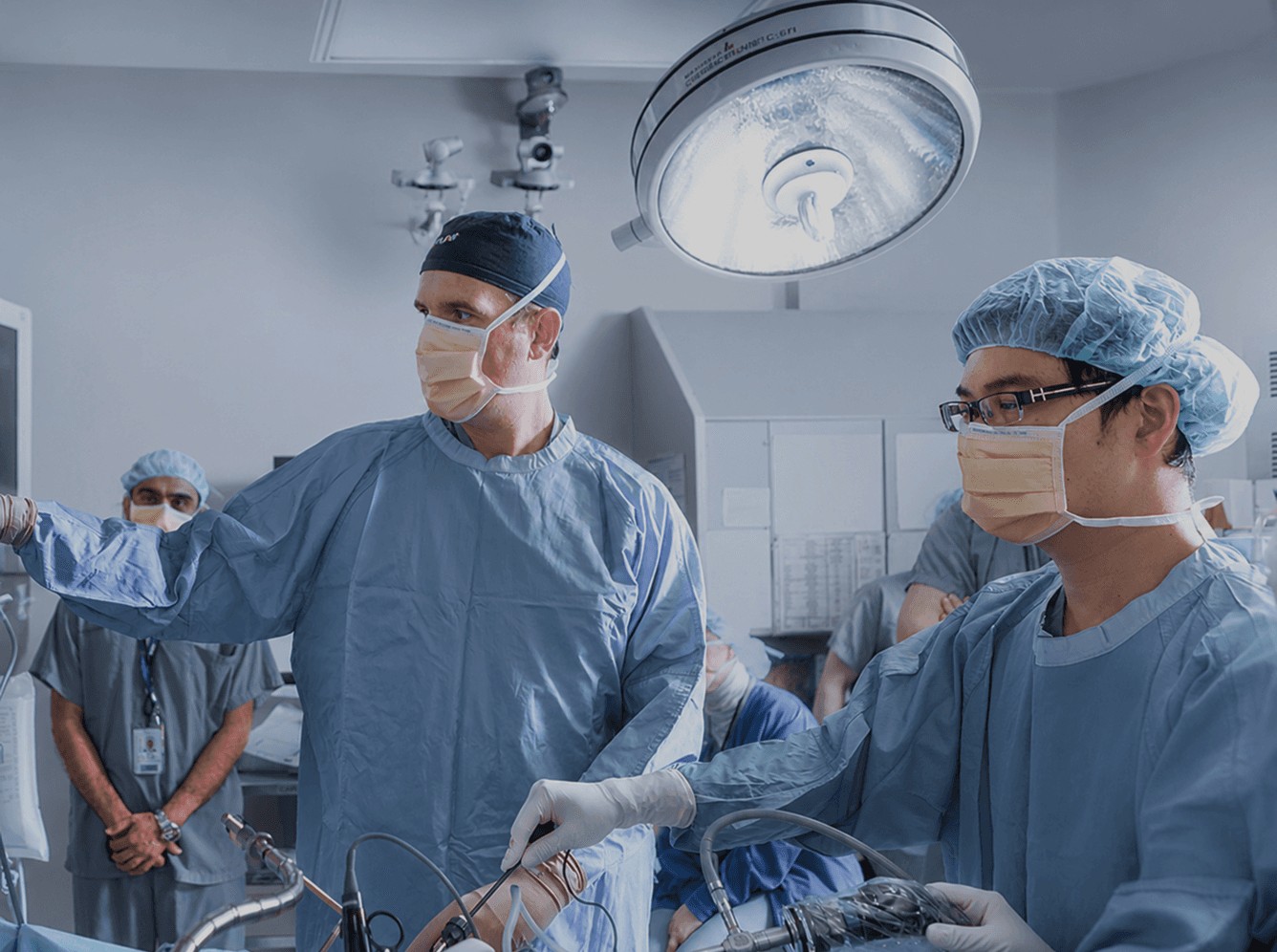
A concrete example arrived in 2025: software that automatically detects and timestamps events such as wheels-in, anesthesia start and procedure start, then passes those timestamps to an electronic health record. A nurse who no longer has to reconstruct a timeline after the fact gets time back; a coordinator gets a room status based on an observed event rather than a late manual entry. The company developed and tested the EHR interface with Stanford Medicine. That is the unglamorous part of AI that often matters most: somebody in the next room can act sooner because the clock is right.
Use case history and room context to improve forecasts and staffing.
Detect milestones, update status and coordinate handoffs.
Find process patterns, coach teams and refine the next case.
The company also released Room State and Explorer mobile apps in 2025. One puts operating room status closer to the people moving between cases; the other brings surgical video into a review and education workflow. These are different jobs built on the same underlying record. That shared capture layer is Aimbient's answer to a crowded market of scheduling dashboards, video systems and point tools. Apella is a close alternative in operating room sensing and workflow; Proximie connects surgical rooms and teams through video and data. Aimbient's distinctive pitch is the full arc of a procedure: the room as a source of safety evidence, operational timing and teaching material at once.
The replay is political
One could install cameras and still learn nothing. People behave differently when they believe a recording may be used against them. That is why Aimbient's culture claims deserve as much attention as its model count. Its stated rule is “process, not person”; the company describes the video as clinical game tape and promises non-punitive use. It lists de-identification, role-based access, audit logs and retention controls as part of its trust standard. These controls are not decorative. A nurse or surgeon has to believe the terms before the room will produce an honest record.
“We built this technology because, as surgeons, we knew we couldn’t improve what we couldn’t objectively measure.”Teodor Grantcharov, founder and CEO, 2026
That concern appeared early. Public accounts of black box deployments describe staff anxiety about privacy, discipline and litigation. The first thing that can fail is therefore not a camera or a classifier; it is the agreement about how the footage will be used. A sensible rollout begins with a narrow improvement question, an explicit review process and clinicians who help write the rules. The same machine can look like a coach in one hospital and a surveillance system in another. The difference is institutional, not optical.

A black box grows up
SST raised a $15 million Series A in May 2023, led by U.S. Venture Partners and Santé Ventures, to expand automation and commercial deployment. At the time, it described installations in surgical rooms, trauma centers and simulation centers across North America and Europe. In a 2025 retrospective, the company said it had added a dozen hospital partners during that year, recorded more than 100,000 complete surgeries and captured 4.5 million hours of audiovisual data in the cloud. These are company figures, useful as a measure of its claimed operating scale rather than a substitute for a hospital's own evaluation.
The 2026 rename from Surgical Safety Technologies to Aimbient captures a change in ambition. “Black box” suggested an instrument that explains a disaster after it happens. The company now wants its system to help teams act before and during a case, and to extend beyond surgery itself. The FAQ says the platform name became Aimbient Suite for precisely that reason. Its broader mission is to make procedural care a continuously learning system - a phrase that will mean little unless the next Tuesday morning schedule runs more smoothly than the last one.
There are signs of both reach and restraint. The company points to Stanford as a long-term collaborator; public coverage also identifies Duke and Mayo Clinic among users of the earlier OR Black Box. Kyabirwa Surgical Centre in Uganda adopted the system in 2025, with training and telemedicine among the aims. That range matters. The same case record may solve different problems for a large academic campus and a regional surgical center. Aimbient sells to hospitals and health systems through enterprise briefings, with deployments that combine room capture, software and integrations. The economic test for a buyer is therefore local: does the system reduce a specific delay, improve a defined review process or remove enough manual work to justify installing and governing it?
The useful part to copy
Aimbient's most portable idea needs no black box. Start by comparing the official account of a process with what actually happened. Pick one event that people repeatedly enter late or reconstruct from memory. Make it observable; agree on who may see it; then use the result to change one workflow. In a hospital, that could be room turnover, checklist adherence or a trauma debrief. Elsewhere, it might be a handoff or an incident review. The principle is the same: a better record becomes valuable only when the team can safely do something with it.
The company is still making the case that one architecture can serve all of procedural care. That is a large claim, and a sensible buyer will judge it room by room. The smaller claim is easier to believe. Human beings are poor at reconstructing busy, high-stakes work from memory alone. The operating room always had a story. Aimbient is trying to make it one the next team can learn from.