The most unsettling sentence in Avail Medsystems' story has no medical jargon in it: the company had 50 contracted MedTech organizations, and then it closed. The first fact was announced in August 2022. The second arrived in November 2023, when a financing round the company needed did not materialize. Between those dates sits a useful warning about the distance between a product that works and a business that can afford to keep putting it in rooms.
- Avail put a camera-equipped, wheeled console in procedure rooms so distant experts could watch, speak and annotate live.
- Medical device companies paid for access through a subscription model; Avail reported 50 contracted MedTech organizations by 2022.
- After Avail shut down, Mendaera bought substantially all its assets in March 2024 and said it would support existing console users.
- Mendaera's own Focalist system now adds robotic guidance to ultrasound-based needle procedures. The two products address different parts of the same workflow.
The room had an audience problem
An operating room is full of people who need to be there and people who wish they could be. A device specialist may need to coach a team on an unfamiliar instrument. A surgeon may want another physician's judgment. A medical educator may need to show a case to students. Moving every helpful person into the room costs travel, space and time, and sometimes the person with the answer is simply elsewhere.
Avail's answer was a mobile console with high-definition cameras, a display and connections to in-room imaging. A remote participant on an iPad or laptop could select views, move the cameras, speak to the team and mark up an image. The 2021 version advertised 30x camera zoom. Its Portal handled schedules and availability. The point was not to operate on a patient from a distance; it was to let another set of eyes and a voice join the people who were.
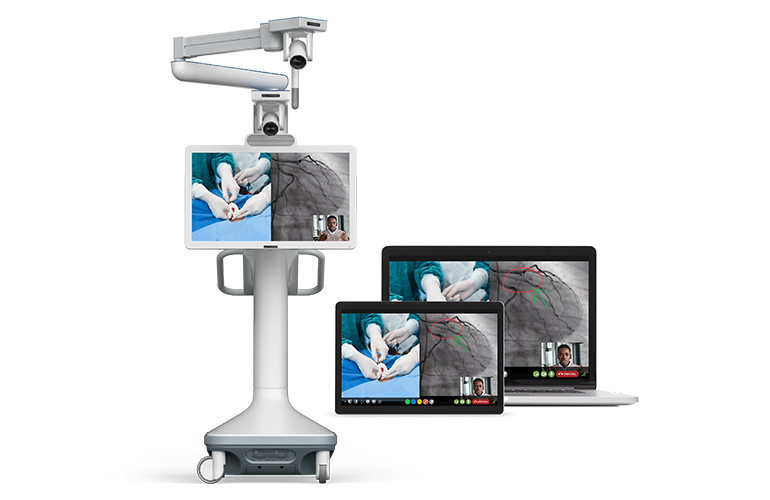
The model changed who paid. Hospitals and surgery centers could host consoles without buying the equipment outright, while device companies bought time on the network. Smith+Nephew signed on in 2020 to offer remote support and education. Medtronic Neurovascular later struck a deal involving hundreds of consoles for stroke procedures. For a company selling into a setting where each new box needs trust, training and support, this was an unusually tangible kind of traction.
A crowded room still needs capital
Avail raised $100 million in a 2020 Series B led by D1 Capital, following earlier Series A and A-1 financing totaling $25 million. By June 2021 it reported 135 employees, up from fewer than ten in July 2018. The company left an incubator for a larger Santa Clara headquarters. It had the shape of a scaling company: a growing network, major device partners and a product made for a pandemic-era world that restricted visitors to procedure rooms.
The shape was not enough. Reporting on the November 2023 shutdown said Avail could not close another funding round needed to sustain growth. The public record does not settle whether a different price, a slower rollout or a longer cash reserve would have saved it. It does settle the order of events: adoption came first; financing failed next.
“The acquisition will allow us to work more closely with the clinical community and accelerate the development and adoption of our platform.”Josh DeFonzo · Mendaera co-founder and CEO
Mendaera announced the purchase in March 2024. Its CEO said the transaction included “substantially all” of Avail's assets and that Mendaera would support people already using the consoles. Some Avail employees joined it. The large Medtronic agreement did not move with the technology. That distinction matters: Mendaera bought a capability and a way into clinical workflows, not an untouched version of Avail's business.
A second company, a different instrument
Mendaera was founded in 2020 by Josh DeFonzo and Jason Wilson, both veterans of Auris Health's medical robotics work. They chose a part of medicine that rarely gets the large-robot treatment: routine needle-based procedures. Biopsies, organ access, vascular access and pain injections can begin with a small act requiring large skill. A clinician must turn a moving ultrasound image into a precise path through tissue, while minding depth and nearby anatomy.

Its Focalist system is a handheld robotic guidance device that couples to a compatible ultrasound probe. The clinician selects a target; software helps establish a trajectory and tracks depth as the needle advances. The FDA cleared the Mendaera Guidance System in July 2025 for guiding placement of common interventional devices during diagnostic or therapeutic procedures. That is a specific clearance, not a license to claim every possible robotic or AI use. Focalist entered a limited U.S. launch in urology that year.
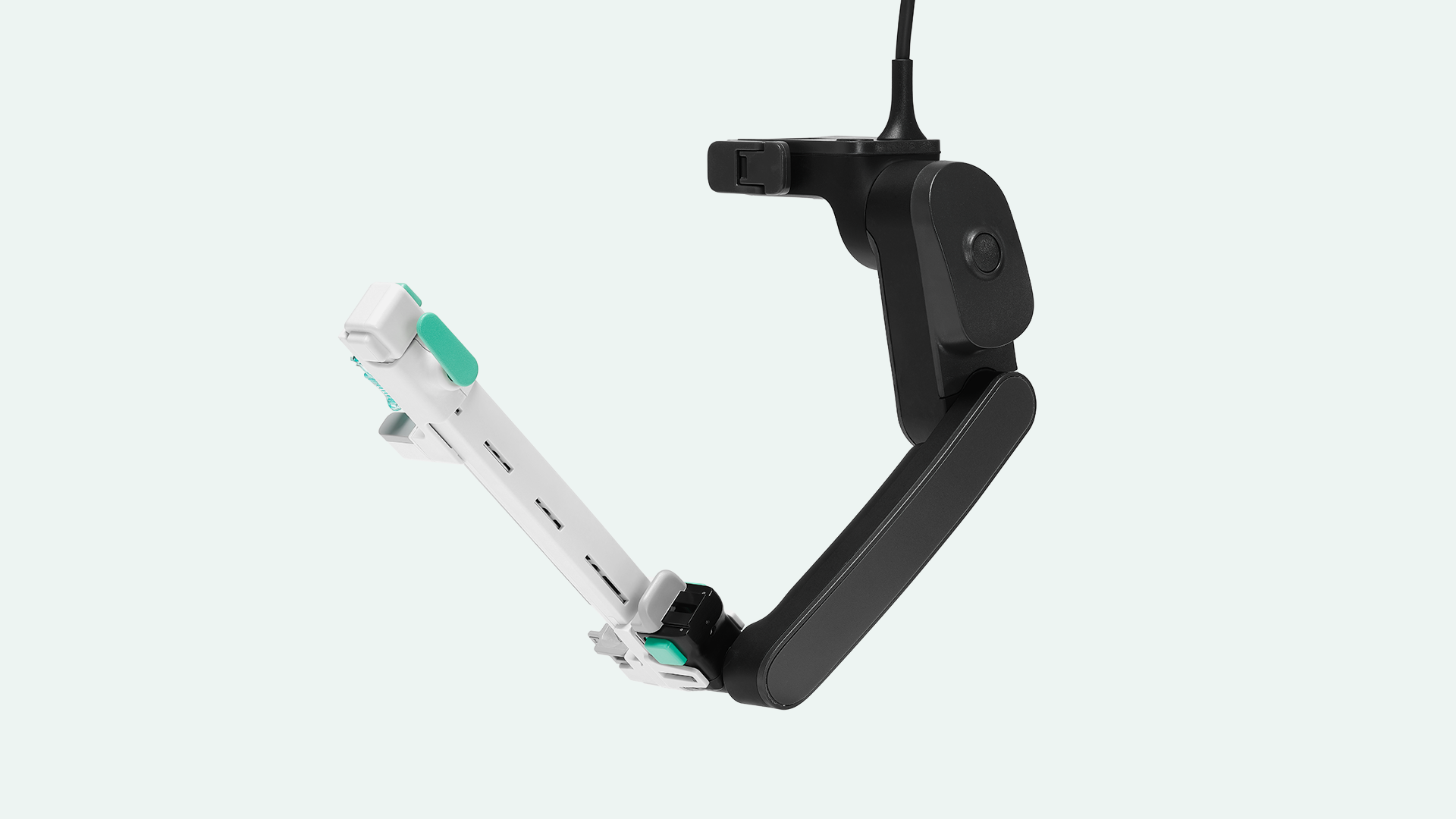
This is Mendaera's interesting wager. Avail distributed observation and conversation. Focalist assists the local act of placing an instrument. The company says those abilities can eventually work together, but the public clinical evidence concerns Focalist itself. One should not confuse the promise of a connected portfolio with proof that every piece has been integrated into a single routine procedure.
The first evidence is encouraging, and small
Urologist Karen Stern at Mayo Clinic Arizona performed the first Focalist procedures Mendaera announced, using it for kidney access during stone surgery. In 2026, a prospective study in the World Journal of Urology reported technical success in 60 of 61 ultrasound-guided procedures performed by 11 physicians on 46 patients. There were no device-related adverse events. The procedures included organ access, vascular access and pain management injections; participants were trained for 45 minutes.
Those are useful early measurements, with limits that ought to travel with them. The study took place at one center over nine days, and it measured feasibility and technical performance. It does not establish how the system changes long-term outcomes, staffing costs or performance in every hospital. In September 2026, UAB described urologist Kyle Wood's use of the technology for kidney-stone access, another glimpse of the workflow beyond the study setting.
Mendaera has raised $24 million in a 2023 Series A and $73 million in a 2024 Series B. Butterfly Network agreed to pair its ultrasound technology with Mendaera's robotic system. Those sums belong to Mendaera, just as Avail's $125 million of announced financing belongs to Avail. Combining the two into one grand funding total would make for a better poster and a worse account of what happened.
The lesson that travels
For clinicians, the appeal is plain: remote expertise when the room needs it, and more guidance when a needle's path is hard to judge. For device companies and health systems, the practical test is harder. A tool must fit scheduling, sterility, imaging equipment, training and the economics of a busy procedure room. Avail showed that remote collaboration could attract major partners. Its collapse showed that contracts alone do not pay for every console and every step of a rollout.
The part others can copy is the sequence of attention. Find the awkward moment in an ordinary workflow, build for that moment, and ask who benefits enough to pay for it. Then test the cost of putting the product into every room where it is supposed to help. Mendaera's bet is that a difficult first step in a common procedure is worth a smaller robot, and perhaps a distant colleague on the screen. Avail left it a window. What happens through that window now depends on the hand at the bedside.
Keep looking
Product details, company updates and the clinical record.