Consider a gust of wind. It arrives without consulting the software department. At a wind farm, one turbine’s changing conditions can matter to its neighbours, while a remote control room wants to know what the machinery is doing. A collection of perfectly respectable computers must somehow become a coordinated machine.
In 2012, Siemens announced that it had standardized on Real-Time Innovations’ communication software for its next generation of wind-power systems. The arrangement covered arrays of up to 500 turbines and networks ranging from local connections to satellite links. The problem was bigger than sending messages quickly. It was making useful information travel through a system whose parts had different jobs, different connections, and very little interest in waiting.
- What it sells: Connext software that shares real-time data among machines and applications.
- Who buys: teams building cars, surgical robots, defense systems, and industrial equipment.
- Why pay: integration tools, engineering support, and safety evidence around an open standard.
- The decision: whether licensing costs less than the infrastructure work your own engineers would inherit.
RTI occupies an easily overlooked corner of computing. It makes middleware: software between the applications doing the visible work. A turbine is photogenic. Middleware is more likely to get an architecture diagram. Yet the diagram describes a question that turns up wherever software meets the physical world: who knows what, and when?
Information with an expiry date
RTI’s Connext platform is built around Data Distribution Service, or DDS, an open standard for sharing data. Applications publish information and subscribe to what they need. They can communicate directly, without requiring a central message broker in the path. A new component can participate through the data model instead of requiring a new custom connection to every existing component.
The important distinction is that different information deserves different treatment. A stream of measurements might favour freshness. An event might require reliable delivery. DDS provides quality-of-service policies to express those choices. In Connext, a deadline can flag a missing expected update; a lifespan can prevent expired samples from being delivered. A computer can receive a perfectly accurate description of something that no longer matters. Timing belongs in the design.
Connext Professional adds security, integration, development tools, and operational monitoring. Its product family includes Drive for vehicles, Micro for constrained systems, Cert for safety-related requirements, and TSS for FACE-conformant aerospace architectures. The buyer is usually an engineering organization responsible for a whole system, with several suppliers and a production deadline of its own.
Before the robot could talk
RTI began in 1991 with robotics researchers from Stanford. Its first product was ScopeTools, a debugging and visualization tool for distributed real-time systems. By 1995, the business included consulting focused on Wind River’s VxWorks, and middleware called NDDS, an earlier name for its Connext implementation.
The order is revealing. The company learned to help engineers see a system, then to help its parts communicate. Chief executive Stan Schneider had managed a Stanford robotics laboratory. Chief technology officer Gerardo Pardo-Castellote developed the original Connext software and became CTO in 1998. He also became a principal author of the DDS and related standards. RTI’s expertise extends into the rules by which competing implementations communicate.

That history gives RTI a particular market position. DDS is available from other suppliers, including open-source projects such as eProsima Fast DDS and Eclipse Cyclone DDS. RTI therefore has to sell more than access to an idea. Its commercial case rests on the implementation, the surrounding tools, support, and evidence needed to take a demanding system into service.
The expensive part of free
Voyis, which builds underwater imaging systems, supplies a useful account of that decision. In a customer announcement published in February 2026, RTI said Voyis had encountered limitations with alternative open-source implementations, particularly in debugging and maintaining complex distributed systems. Voyis chose Connext for the data architecture of its Discovery and Observer Vision Systems.
The difficulty described was infrastructure maintenance. The appeal of the switch was tooling, documentation, and expert support. Voyis engineers wanted to concentrate on their vision systems. Underwater vehicles add an unforgiving constraint: they operate with limited bandwidth and can be disconnected. Depending on a convenient cloud connection would make a poor starting assumption.
This is one customer’s experience, not a verdict against open-source DDS. The economic lesson is narrower and more useful. A license fee belongs beside the hours spent tracing faults, integrating components, and sustaining a product. Software that costs nothing to obtain can still assign your engineers a substantial second occupation.
Designs worldwide
RTI’s reported footprint across distributed systems. A count of designs, not a count of customers.
The surgeon, the car, and the camera
In June 2024, Levita Magnetics selected Connext for its MARS surgical robotic system. One detail in the announcement is unusually concrete: RTI’s Routing Service helped connect two different communication protocols. The contribution was an integration mechanism for a robot whose controls and visualization needed to work together.
Levita’s example makes the product intelligible. An engineer can use Connext to assemble modules, move data between them, and connect existing technologies. The robot remains Levita’s work. RTI supplies part of the communication infrastructure beneath it. The value appears when adding or changing a component becomes less of a reconstruction project.
XPENG’s requirement was broader. In January 2025, it selected Connext Drive for the core communication technology of its next-generation vehicle architecture, with adoption announced to begin in 2026 production models. The carmaker wanted a unified framework across designs ranging from entry-level to high-end vehicles. That is an architectural purchasing decision: a common data foundation for a varied product range.
“RTI Connext Drive stood out as a flexible, highly-reliable and production-proven middleware.”
Yu Peng, Vice President at XPENG
NVIDIA offers another view of the same work. Its July 2024 technical walkthrough describes a Holoscan and Connext reference application with separate processes for capturing video, performing body-pose estimation, and rendering results. DDS carries the data among them. The walkthrough also describes adding AI to existing medical equipment through a sidecar architecture. Intelligence can be introduced alongside equipment rather than requiring every part to be replaced.
What matters about this data?
For a changing measurement, decide how old a sample may become before it is useless. A lifespan policy can prevent expired data from being delivered.
Illustrative design questions. Actual policies depend on the application.A rehearsal for the real world
In June 2026, RTI announced that REGENT uses Connext across simulation, testing, and onboard communication for its all-electric seaglider. Its engineers use tools including Admin Console, DDS Spy, and Connext AI to observe behaviour and troubleshoot. Recording and replaying operational data gives a development team something valuable: a way to revisit what the machine actually did.
The reusable idea is to keep a consistent communication framework across development stages. A simulation, a test rig, and a vehicle are different environments. Carrying the data architecture between them can help engineers investigate a problem without translating the entire system anew. It also makes observability part of the build, rather than a favour requested after something goes wrong.
RTI introduced Connext AI in April 2025 as assistance for design, coding, configuration, and debugging. Connext Professional 7.7 Long-Term Support followed in April 2026. These developments extend a familiar business: help engineers build distributed systems and understand them. AI assistance still leaves the engineer with the job of checking the result.
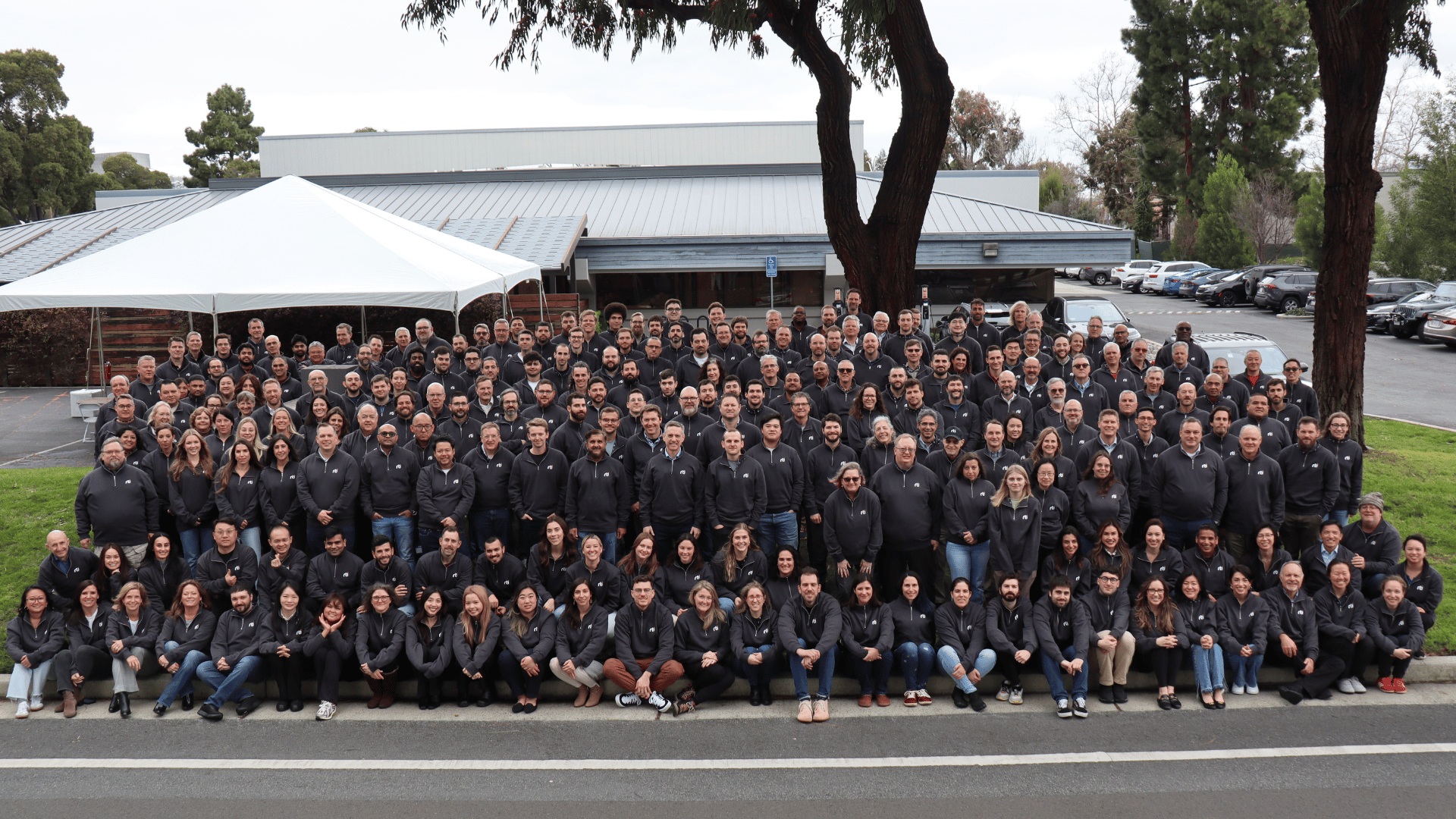
RTI calls its internal culture “1RTI,” emphasizing inclusion and communication across its workforce. In May 2026, it reported a fourth appearance on Fortune’s Best Workplaces in the Bay Area list, at No. 34. The company also reported that 93% of its U.S. employees had described it as a great place to work in the preceding year. Those are workplace measures, not proof of a software outcome, but retaining specialist knowledge matters in a business that sells engineering help.
Buy the problem you actually have
RTI publishes per-user commercial licensing, with buyers requesting a quote. It says distribution of applications using its core products is royalty-free. There are free entry and evaluation options, alongside renewable academic licenses for noncommercial use. Services cover onboarding, design guidance, optimization, analysis, and mentoring. The purchase is software plus access to accumulated experience.
For a prospective customer, the sensible first move is to specify the data: its rate, useful lifetime, required delivery behaviour, and consequences of loss. Then test on representative hardware and networks. Disconnect components. Slow a receiver. Record what happens. Compare the licensing proposal with the engineering work each alternative creates. A tiny telemetry project may have little reason to buy this much infrastructure.
Safety adds another boundary. Connext Cert supplies middleware and supporting evidence for requirements including ISO 26262 and DO-178C. The surrounding vehicle or aircraft still needs its own system engineering and certification work. Neither an open standard nor a commercial product removes the need to validate timing, configuration, and failure behaviour.
RTI’s appeal grows where there are many parts, frequent changes, demanding timing, and an expensive route to production. The interesting thing about its business is how little of that appeal depends on the machine being fashionable. A wind farm and an AI-enabled robot can both be undone by information arriving after the useful moment. The gust, meanwhile, has already moved on.