A small shadow appears on a lung scan. It may be harmless; it may be cancer. The patient needs a sample, and the physician needs to thread a tool through a branching airway to collect it. Here is the mischief: the scan is a picture from yesterday, while the patient is breathing today. An elegant robotic route through the old picture can end in the wrong place.
Noah Medical, founded by Jian Zhang in 2018, built its Galaxy System for that discrepancy. The company makes a robotic bronchoscopy platform that helps physicians reach peripheral lung nodules, refresh the nodule's position with imaging during the procedure, and check where the biopsy tool ends up. Its customer is the hospital or health system; its daily user is the interventional pulmonologist and the team around the bronchoscopy table.
- The job: help biopsy small, hard-to-reach lung nodules through the airways.
- The trick: combine robotic navigation, live target updates, and tool-in-lesion confirmation.
- The sale: a hospital platform paired with single-use scopes and accessories; public list pricing is unavailable.
- The scale: Noah reported more than 16,000 U.S. procedures by September 2026, plus its first commercial procedure in Asia.
The map is not the territory. In the lung, it may not even be today's map.
Before a robotic bronchoscopy, a CT scan creates a route to the suspicious nodule. During the procedure, anesthesia, breathing, instrument pressure, and changes in lung volume can alter the relationship between that route and the actual tissue. Clinicians call the mismatch CT-to-body divergence. Then there is a second, more intimate problem: the scope may point correctly while the biopsy tool deviates as it enters tissue. A physician needs more than a robot that can follow instructions. The physician needs evidence that the instructions still describe the patient.
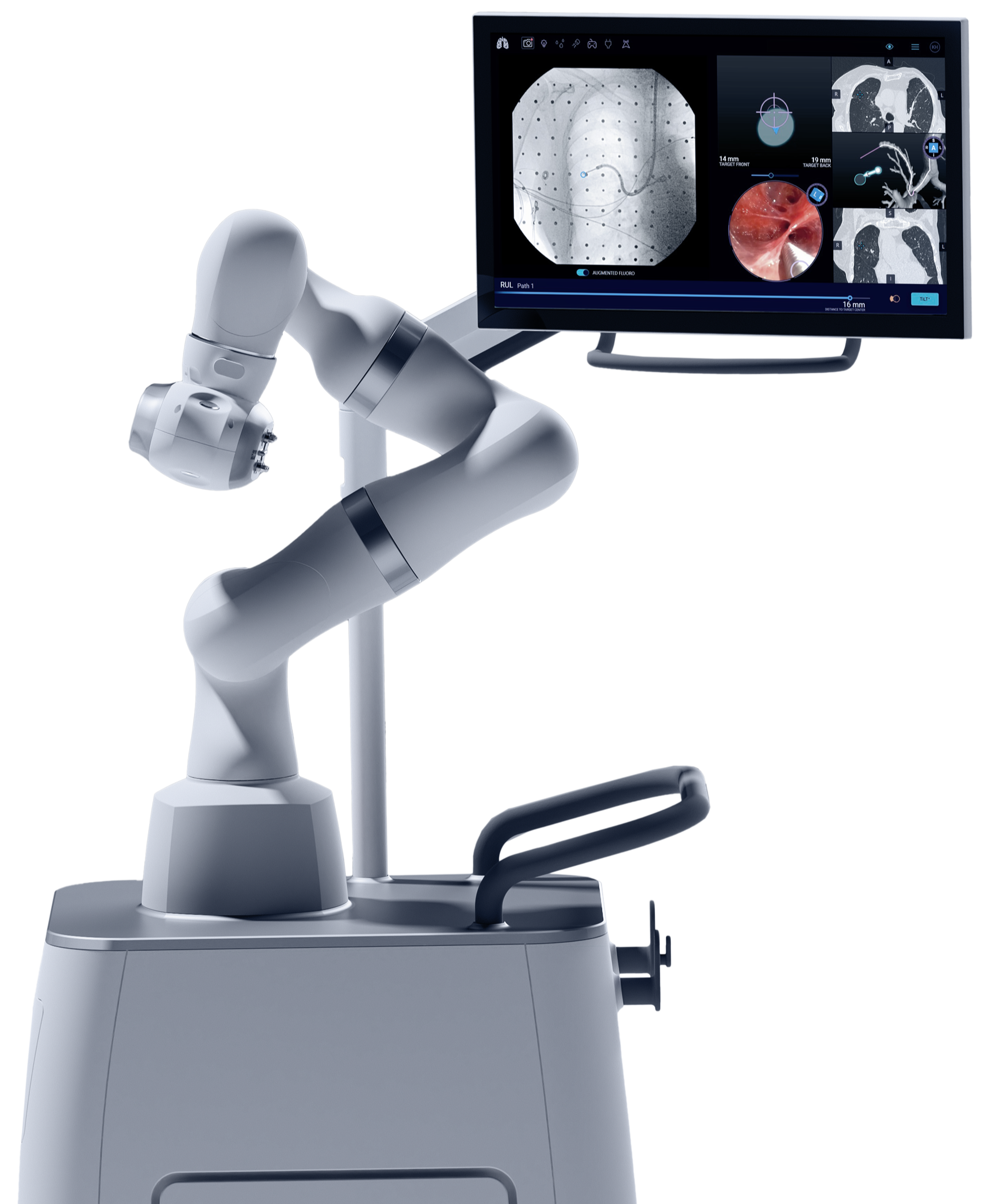
Galaxy's TiLT+ technology takes images from a compatible C-arm in the procedure room and reconstructs an updated three-dimensional view of the target. Augmented fluoroscopy places the target on live X-ray images, helping the physician make small corrections as tools advance. Noah describes this as embedded imaging, an apt phrase: the image belongs to the act of navigation instead of arriving as a separate verdict after it.
That order matters. A successful trip to the neighborhood is not proof that the sample came from the house. In lung biopsy, a false negative can leave a patient with uncertainty and another procedure. Galaxy is designed to put the final placement question in front of the physician while there is still time to move the tool.
A costly problem, an undisclosed price
Zhang was employee number two at Auris Health and had worked at Intuitive Surgical. He has said he started Noah because customers were dissatisfied with the clinical value of earlier medical robots. That account is useful because it explains the product's unusual center of gravity. The company did not need to make the arm the hero. An engineering executive later said Noah used off-the-shelf components, including the robotic arm, to focus effort on custom imaging hardware and software.
The company began in a Redwood City garage, concentrated on research and development during the pandemic, and moved into larger San Carlos premises in 2021. FDA clearance arrived in March 2023; a $150 million Series B followed in April, led by SoftBank Vision Fund and co-led by Prosperity7 Ventures. The first U.S. clinical use came at University of Chicago Medicine that May. Those dates trace an expensive path from a plausible idea to a device that can be used in a hospital.
What a hospital pays for Galaxy has not been published as a standard price. The purchase decision is wider than a sticker price anyway: compatible imaging, room setup, training, disposable scopes, and procedure volume all enter the arithmetic. Galaxy uses a single-use bronchoscope, with a 2.1 mm working channel for biopsy tools. A fresh scope each case removes the cleaning and reprocessing steps required for a reusable one, while adding a per-case consumable. Noah also emphasizes a compact single-cart design and compatibility with existing C-arms, a pitch to hospitals that already own much of the imaging infrastructure.
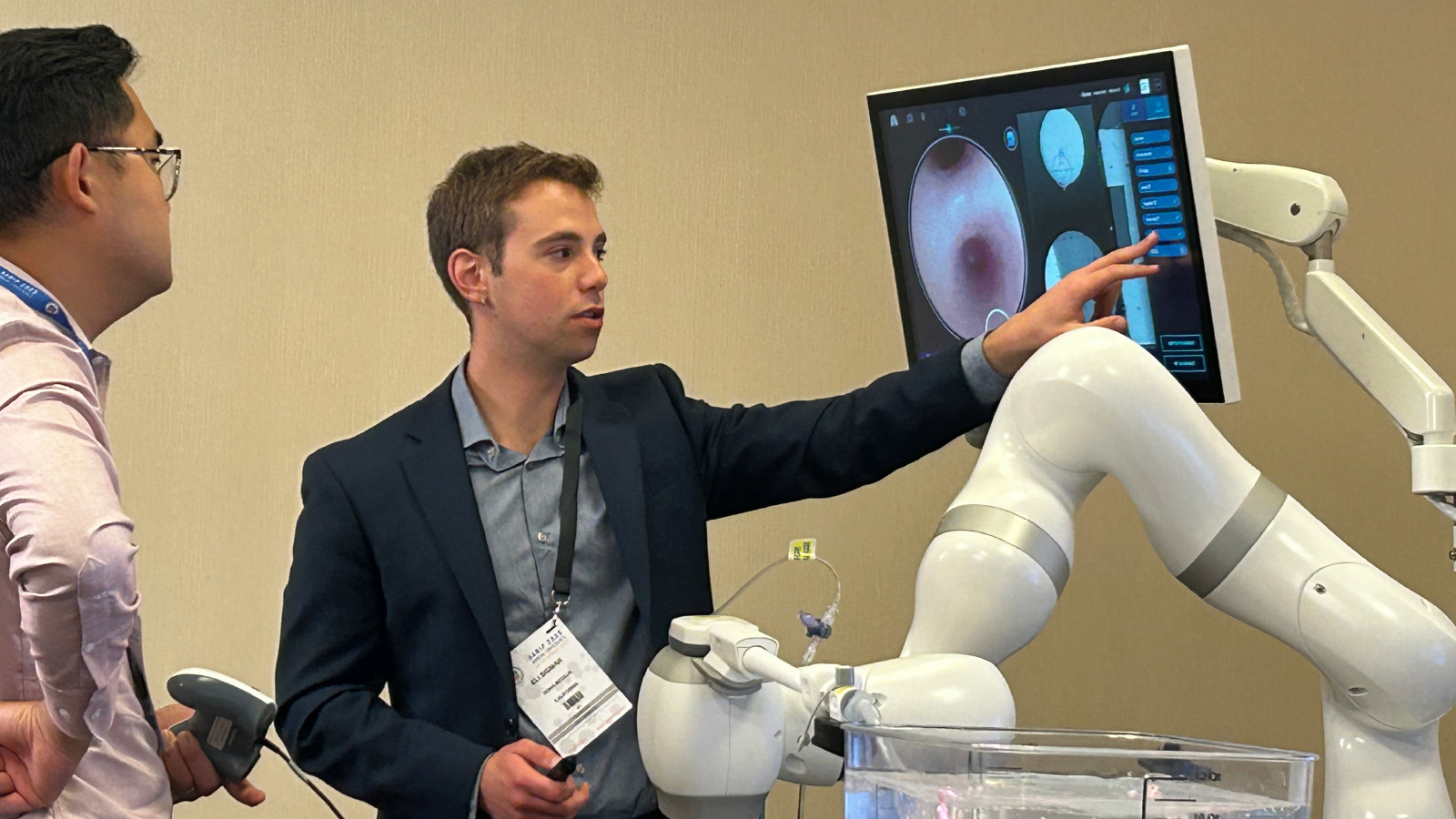
“The Galaxy System is the first robot for peripheral lung navigation that includes integrated imaging.”Kyle Hogarth, MD, University of Chicago Medicine, 2023
The test is in the sample
An FDA clearance establishes the device's permitted use; it does not promise that every biopsy will find cancer. Clinical data ask a narrower question. In the prospective multicenter MATCH 2 study, experienced Galaxy operators reported a 96.7% diagnostic yield under a strict American Thoracic Society definition. A separate Cleveland Clinic experience reported a 90% strict yield in 100 consecutive cases, with nodules averaging 12.9 millimeters. These are encouraging results within their own study settings, not a head-to-head verdict over every competing system.
MATCH 2, experienced operators
100 consecutive Cleveland Clinic cases
company reported, September 2026
Study percentages come from different patient groups and should not be compared as if they were a randomized contest.
The distinction matters in a market with formidable alternatives. Intuitive Surgical's Ion and Johnson & Johnson's Monarch both guide physicians to peripheral nodules. Conventional navigational bronchoscopy, CT-guided needle biopsy, and surgery can also be appropriate, depending on the patient and the lesion. Noah's specific argument is that integrated imaging and a disposable scope make the whole workflow more dependable and manageable. A hospital has to test that argument against its own case mix, staff, imaging equipment, and costs.
A software update with a physician's choice inside
In August 2026, Noah launched Galaxy II software. The new dual-mode imaging lets physicians choose high-definition digital tomosynthesis or cone-beam CT during a case. The first is designed for efficient, lower-dose imaging; the second remains available when a case calls for more detail. The update also addresses tool-tissue divergence and image artifacts. It is an admission built into the product: no single imaging method is right for every difficult nodule.
By September, Noah was reporting more than 16,000 U.S. procedures. On September 29, Prince of Wales Hospital in Hong Kong performed the first commercial Galaxy procedure in Asia, after having used the system clinically in 2023. The company's stated mission reaches beyond lung diagnosis to early treatment through endoluminal technology. What exists today is more specific and more interesting than a broad promise: a platform built around the instant when a doctor must decide whether to take the sample or adjust the tool again.
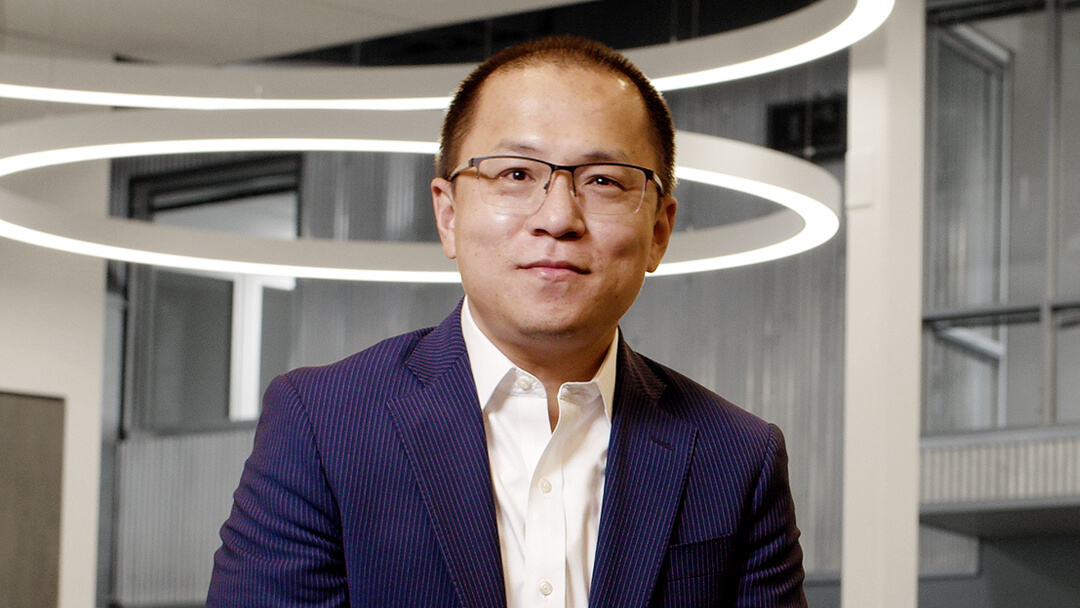
Jian Zhang / founder & CEOHis earlier work at Intuitive Surgical and Auris Health gave him a view of first-generation medical robots. Noah's stated response was to make clinical value and workflow part of the engineering brief, not just the sales brief.
There is a lesson here for people building products far from medicine. A navigation system should check the world it navigates; a sales workflow should verify that the customer actually got the promised result; a software tool should expose its own uncertainty at the point of action. Noah Medical's bet is that the most valuable feature of a robot may be the moment it lets the human change course.