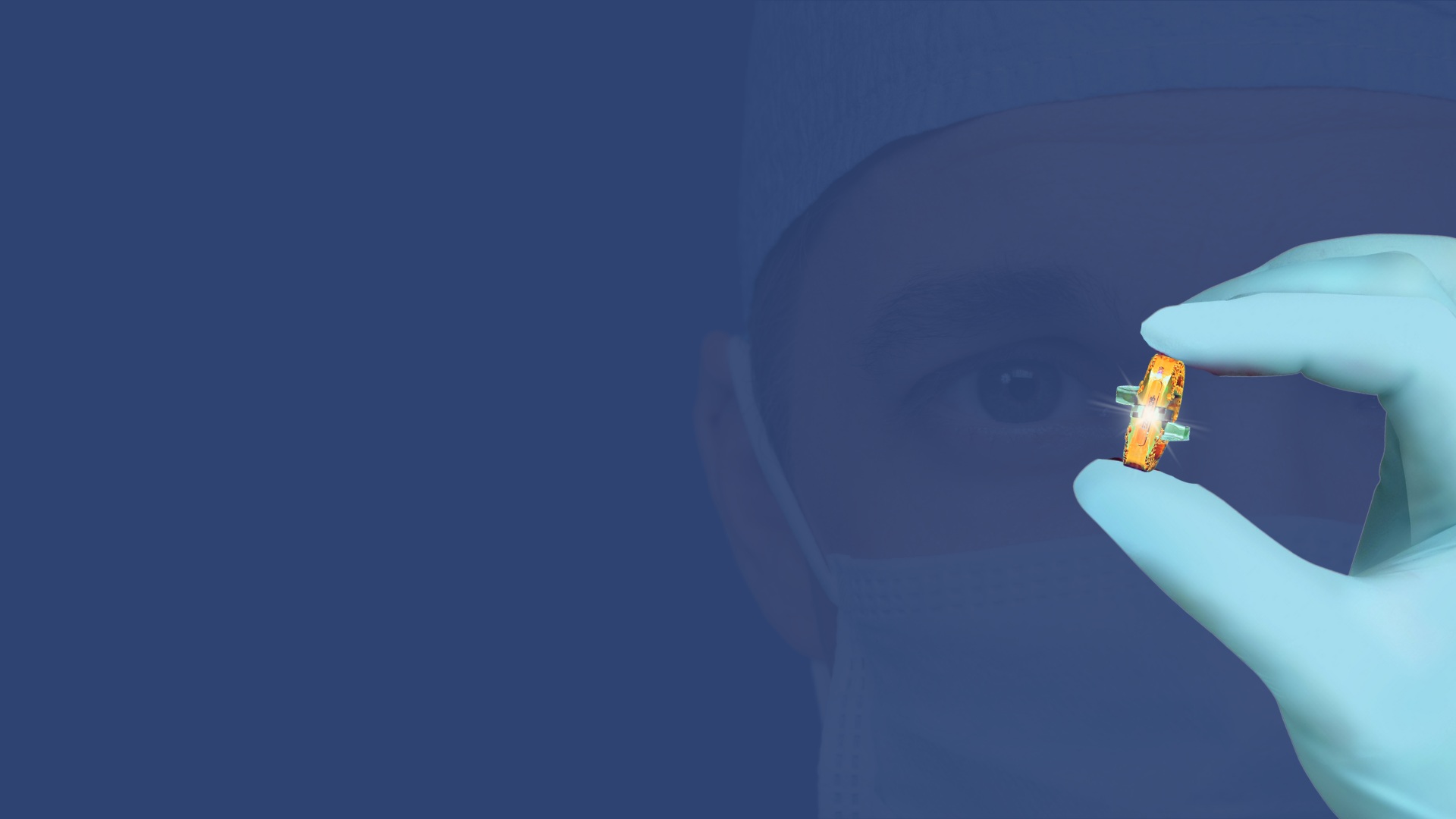
The sacroiliac joint is easy to ignore until it is not. It sits where the spine hands the body's load to the pelvis, a modest seam between the sacrum and ilium. When that seam becomes painful, ordinary actions - sitting, climbing stairs, turning in bed - can become negotiations. VYRSA Technologies saw a business inside that overlooked hinge. The Pennsylvania startup did not chase a dozen anatomical territories. It built a compact company around one joint, three surgical approaches and a gold-colored implant small enough to pinch between two gloved fingers.
Founded in 2021 by veteran device operators Daniel Pontecorvo and Terry Harvey, VYRSA sold tools for minimally invasive SI-joint fusion. Its customers were not consumers shopping for relief online. They were interventional pain physicians, spine and orthopedic surgeons, hospitals and ambulatory surgery centers deciding how to stabilize a joint in skeletally mature patients with degenerative sacroiliitis or SI-joint disruption. This was B2B hardware in the most literal sense: implants, instruments, physician training and the reimbursement machinery that makes a procedure commercially repeatable.
The cage with two concealed elbows
The flagship VYRSA V1 - now called Nevro1 - is a 3D-printed titanium cage placed through a posterior minimally invasive approach. Its porous surface and openings are designed to accept bone graft and support bone growth. The clever part is inside. Two sharpened titanium anchor plates remain housed in the implant during insertion, then deploy laterally through the ilium and sacrum. The cage occupies the joint; the anchors transfix it. One component is meant to create immediate axial and rotational stability while leaving an opportunity for long-term fusion.
That architecture separated V1 from two familiar alternatives: posterior implants that sit within the joint without crossing both bones, and lateral systems that typically drive multiple implants across the pelvis. VYRSA's pitch was not that every surgeon should use the same route. It was that a posterior route could still achieve transfixation. The company paired the V1 with two other products so it could follow physician preference rather than wage a religious war over approach.
V1 / Nevro1
A porous titanium cage whose integrated plates cross into the ilium and sacrum.
Pro / NevroPro
A cortical allograft in several lengths, paired with joint preparation through an inferior-inlet route.
Fix / NevroFix
3D-printed titanium screws intended to stabilize and compress the joint as an adjunct to fusion.
The Pro system addressed a less glamorous problem: many posterior allograft products were adapted from shapes originally intended for other spinal procedures. VYRSA offered anatomy-specific sizes and instruments for decorticating the articular surface and preparing a fusion bed. Fix supplied the lateral screw option. Together, the trio covered posterior integrated fixation, posterior allograft and lateral fixation, plus a hybrid workflow combining joint preparation, fixation and compression.
The extra screw became the product roadmap
V1's first regulatory configuration carried an awkward footnote. The underlying Camber SI system received FDA 510(k) clearance in September 2022, but its use included supplemental SICONUS fixation. In practice, the all-in-one implant was not yet entirely all-in-one. That is the useful answer to what failed first: not the cage or the anchors, but the promise of procedural simplicity. The integrated system still brought a separate lateral screw into the room.
The team did not abandon the design. It used more testing to make the case that the built-in fixation could do the job. In February 2024, after Nevro had acquired VYRSA, the FDA cleared a revised Camber SI system under K233972. Nevro said the clearance permitted Nevro1 to be used without the supplemental fixation screw. The product changed by subtraction: fewer implants, one posterior incision and a cleaner explanation for the surgeon.
Cadaveric SI-joint specimens in the 2024 comparative biomechanics study.
Approaches compared: posterior integrated transfixation, posterolateral threaded implant and lateral triangular rods.
The supporting evidence was mechanical, not magical. A peer-reviewed 2024 study tested 12 cadaveric specimens through flexion-extension, axial rotation and lateral bending, then used computational models to compare bone removal and potential fusion area. The integrated posterior system produced motion reduction equivalent to lateral triangular rods across the tested planes. The researchers also reported that it removed the least bone volume and left the most surface area for fusion among the compared approaches.
A cadaveric biomechanics study can compare fixation and geometry. It cannot prove how much pain a living patient will lose, how quickly that patient will recover or how durable the result will be over years. Those questions require clinical follow-up.
A startup designed to become somebody else's portfolio
VYRSA's legal name was Interventional Pain Technologies, Inc., doing business as Vyrsa Technologies. Its public identity was less bureaucratic: a small, surgeon-oriented device maker in King of Prussia, Pennsylvania. LinkedIn placed it in the 11-to-50 employee range before the acquisition. Pontecorvo brought decades in spine and orthopedic devices and had co-founded Camber Spine; Harvey brought implant-industry operating experience and a taste for reducing procedural friction. The board added established orthopedic executives, including former Vertiflex chief Earl Fender and former Synthes Spine president John Moran.
The company also made a capital-efficient choice. Instead of inventing every piece from zero, VYRSA acquired a worldwide exclusive license to Camber's SI technology in late 2022 and renamed it VYRSA V1. The underlying work had started earlier: Camber adapted integrated fixation experience from lumbar implants, developed its SI system in 2020 and spent roughly two and a half years in biomechanics work around the FDA submission. VYRSA wrapped that technical asset in a focused brand, a broader SI portfolio and a commercialization story.
The acquisition math / November 2023
The milestone portion was tied to development and sales goals. Nevro later reported $60.1 million of net consideration for accounting purposes, which is not the same thing as a disclosed standalone valuation.
On November 30, 2023, Nevro paid $40 million at closing and agreed to as much as $35 million more in cash or stock if development and sales milestones were achieved. Nevro was known for spinal cord stimulation, not fusion hardware, but it already called on chronic-pain physicians. VYRSA supplied an adjacent procedure, three products and access to reimbursement under SI-fusion codes. Nevro supplied a national commercial engine. By early May 2024, it said more than 220 physicians had participated in SI-joint fusion training sessions that year.
This was the business model after the deal: sell implants and procedure kits to hospitals and ambulatory surgery centers, teach physicians the workflow, help offices navigate coverage and let an existing pain-sales force make a second useful stop. The portfolio was renamed Nevro1, NevroPro and NevroFix. Then ownership moved once more. Globus Medical completed its $250 million acquisition of Nevro in April 2025, placing the former VYRSA line inside a much larger musculoskeletal company.
04 / Steal thisThe narrow-anatomy playbook
Choose a problem, not a format
VYRSA organized around the SI joint, then offered several approaches. It did not force every customer into one technique.
License the difficult layer
Camber had already carried the implant through years of design and testing. VYRSA concentrated its limited time on positioning and adoption.
Turn a caveat into the next release
The supplemental screw weakened the simplicity claim. Removing it created a measurable product improvement and a fresh regulatory event.
Build evidence that answers the buyer's question
The comparison centered on motion, bone removal and fusion area - engineering differences a surgeon or acquirer could evaluate.
Make distribution part of product design
Nevro's customer overlap, physician training and reimbursement support turned a promising implant into a scalable procedure business.
There are limits to copying it. A licensed-technology strategy fails when the license is narrow, revocable or too expensive; when the founding team cannot translate borrowed IP into a coherent product family; or when the buyer's sales force does not actually call on the right clinicians. In medtech, elegant hardware also stalls without clearance, coverage, training and reliable supply. A reimbursement code may open a door, but hospitals still examine evidence, workflow and economics.
The procedure itself is not universal. Nevro1 is indicated for SI-joint disruption and degenerative sacroiliitis in appropriate patients. The manufacturer's safety information lists contraindications including infection at the operative site, deformity, tumor resection, failed previous fusion and material allergy or intolerance. Severe osteoporosis can undermine fixation for screw systems, and individual anatomy can dictate approach. The VYRSA playbook works under disciplined conditions: a well-defined diagnosis, suitable anatomy, a trained physician and a health system willing to support fusion. It is not a general answer to back pain.
05 / The handoffsFour names, one focused asset
Camber builds the system
An SI implant and delivery workflow emerge from integrated-fixation technology first used in lumbar devices.
VYRSA opens shop
Pontecorvo and Harvey form a company devoted to minimally invasive SI-joint fusion.
Clearance and license
The Camber SI system clears the FDA; VYRSA takes a worldwide exclusive license and calls it V1.
Nevro buys the portfolio
The price is $40 million upfront with up to $35 million tied to milestones.
The standalone version arrives
A second clearance removes the supplemental screw, while comparative biomechanics land in a peer-reviewed journal.
Globus buys Nevro
The former startup's products enter a global musculoskeletal platform.
VYRSA's enduring lesson is not “build a medical device and flip it.” The company made itself legible. One painful joint defined the market. Three approaches defined the portfolio. A removable screw defined the roadmap. Comparative mechanics defined the claim. And a buyer's existing sales force defined the scale. By the time Nevro arrived, it did not have to imagine what VYRSA might become. It could see exactly where the small gold cage fit.