The question arrives before the stitch. A surgeon has removed a section of bowel and must reconnect what remains. The camera supplies an excellent picture of the tissue. But the decision depends on something less obliging than appearance: whether enough blood reaches the edges that must heal together. A clearer picture of the surface does not necessarily answer that question. Activ Surgical has built a business around the information hiding inside it.
- ActivSight adds dye-free perfusion imaging and ICG fluorescence to compatible surgical equipment.
- Advanced visualization changed decisions in 7 of 40 cases in an Ohio State study.
- The company offers subscription-based ownership without a capital purchase.
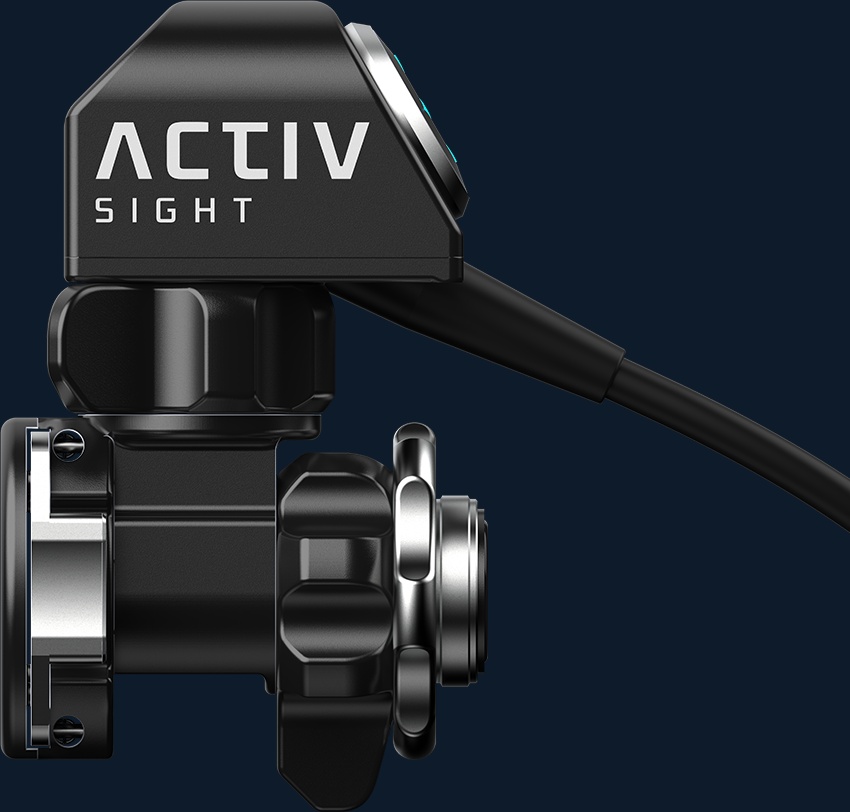
Its product, ActivSight Intelligent Light, is a module that sits between a laparoscopic camera and its scope. It supplies another view of the surgical field, showing physiological information alongside anatomy. The idea has a certain economy: an operating room need not acquire an entirely new surgical system to ask its existing one a better question.
A different picture, not merely a prettier one
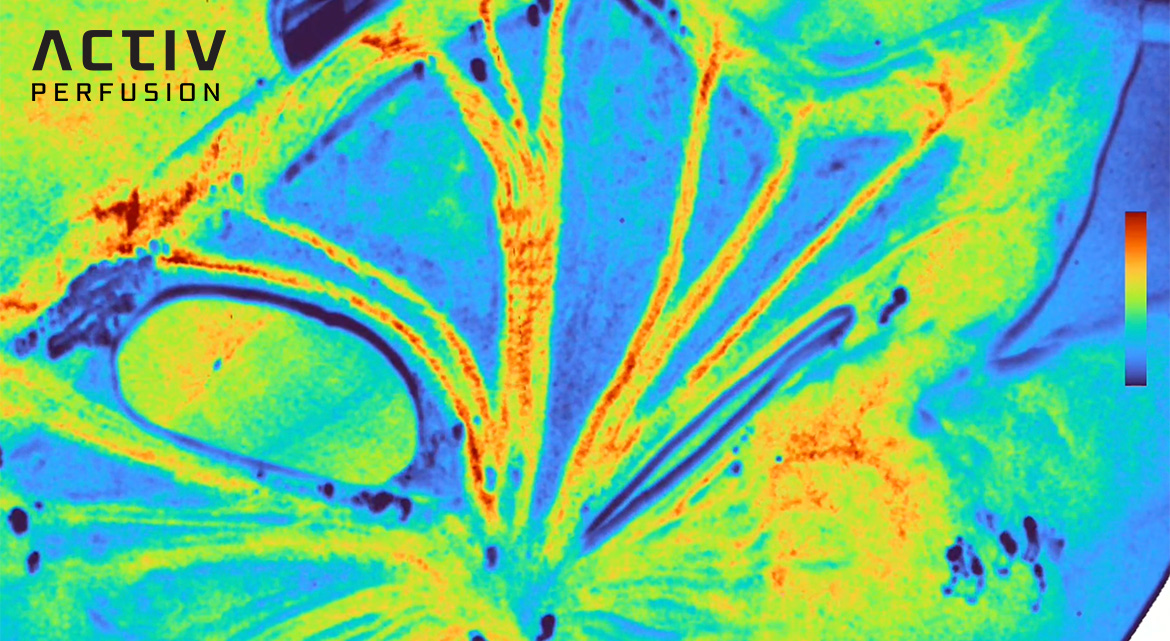
ActivPerfusion, the dye-free mode, uses laser speckle contrast imaging. Coherent light scatters from moving red blood cells; the resulting interference pattern provides information about tissue blood flow. Software turns that signal into a visual display. The surgeon can request another assessment during the procedure without another dye injection. The distinction is between seeing what tissue looks like and seeing something about how it is functioning.
ActivSight also includes ActivICG, a fluorescence mode using indocyanine green. Dye-free does not mean dye has been banished from the premises. The two modes answer related questions through different sensing methods. The device’s cleared uses include perfusion assessment and fluorescence visualization of specified bile ducts. For the latter, it supplements standard white-light imaging and, when indicated, cholangiography.
This places Activ Surgical in intraoperative imaging and decision support, alongside alternatives such as Intuitive’s Firefly and Stryker’s PINPOINT fluorescence systems. Both use ICG. ActivSight’s particular proposition is dye-free perfusion assessment plus fluorescence in a modular device. Compatibility still matters: hospitals need to check their actual equipment configuration rather than treat “hardware-agnostic” as a promise about every machine.
Seven decisions are worth examining
In a study at The Ohio State University Wexner Medical Center, forty adults underwent minimally invasive left-sided colorectal surgery. Researchers compared white-light imaging with advanced visualization using laser speckle and ICG. The additional information changed intraoperative decision-making in 17.5 percent of cases. Put less abstractly, seven operations contained a decision that changed after another way of seeing became available.
Cases with a decision change using advanced visualization.
17.5% is a decision-change measure, not a complication-reduction rate.
The study appeared in Diseases of the Colon & Rectum in 2024. It was not powered to detect differences in anastomotic leak rates. That qualification gives the finding its proper size. Changed decisions demonstrate that information can matter to a surgeon. Establishing that those changes prevent complications requires a different level of evidence. A useful image and a proven improvement in outcomes are separate achievements.
The AI that clears the screen
In January 2023, Activ Surgical announced its first AI-enabled case, performed by Ohio State colorectal surgeon Matthew Kalady. The demonstration had a pleasingly specific purpose. Ordinary ActivPerfusion displayed perfusion across the scene; the colorectal AI mode restricted the overlay to colon tissue, suppressing distracting signals from elsewhere. Here, software’s contribution was selective attention. A surgeon already has quite enough to look at.
“There was a clear difference in visualization during AI mode.”
Matthew Kalady, MD · January 2023 case announcement
The company’s wider ActivEdge platform combines sensing and software with ambitions for augmented reality, machine learning and surgical intelligence. NVIDIA has supported its development through Inception and Clara AGX technology. Yet the concrete AI example is narrower than an autonomous operation: an overlay that helps a human concentrate. That specificity makes the story easier to assess than a grand prediction about robots.
The bill comes as a subscription
The financing was substantial. Activ Surgical announced a $45 million Series B led by Cota Capital in September 2021. A $15 million Hikma Ventures-led extension followed in March 2022, taking that round to $60 million. Those dollars financed development and commercialization; they are not a hospital’s purchase price. ActivSight’s commercial offer is subscription-based ownership with no capital purchase.
$60 million combined Series B financing
For a hospital, that changes the procurement conversation. Recurring spending still needs justification through utilization, training and clinical value. For the company, it creates a reason to remain useful after installation. The clinical users include teams connected to UTHealth Houston, Memorial Hermann, Ohio State and West Penn Hospital. The customer is an institution; the decisive moment belongs to someone holding an instrument.
Investor LRVHealth now reports more than 1,500 surgical cases on its portfolio page. That is a useful sign of use beyond a single demonstration. It remains a reported milestone rather than a count of paying hospitals, and gives no shortcut to proving that every procedure benefits.
The expertise spans those worlds. Founder and surgeon Peter Kim developed the underlying technology over seven years with more than $13 million in non-dilutive grants, according to his company biography. Manisha Shah-Bugaj, an Olympus veteran, became CEO in December 2022 as Activ Surgical moved from research and product development toward commercialization. Getting a device to work and getting it into routine practice demand different kinds of competence.
A fellow takes the view home
The international story supplies a human detail. Mohamad Rassoul Abu-Nuwar learned to use ActivSight during a fellowship at the AHN Esophageal Institute in Pittsburgh. On December 24, 2023, he used its perfusion mode in a bariatric revision at Abdali Hospital in Amman, Jordan. Activ Surgical announced the procedure the following January. Training had carried the technology across borders before a press release described the journey.
The lesson other builders can borrow is practical: fit the equipment people already use, investigate a decision they actually face, and teach the person who must trust the result. Activ Surgical’s mission is to reduce complications through better information. Its most persuasive opening is smaller and more immediate: give a surgeon another observation at the moment it might change a choice.