Breaking
Benjamin Arnold runs a dozen medical-device startups at once from Solana Beach 25+ device launches and counting COR = "center of rotation" - the engineering term, literally Portfolio spans surgical robots, spinal fixation, smart fracture screws, wearable rehab Cornell engineering, twice over Benjamin Arnold runs a dozen medical-device startups at once from Solana Beach 25+ device launches and counting COR = "center of rotation" - the engineering term, literally Portfolio spans surgical robots, spinal fixation, smart fracture screws, wearable rehab Cornell engineering, twice over
Profile / Medical Devices

Benjamin Arnold

He named his company after the fixed point an object spins around. Then he became it - the hub for a whole orbit of orthopedic and spine startups.

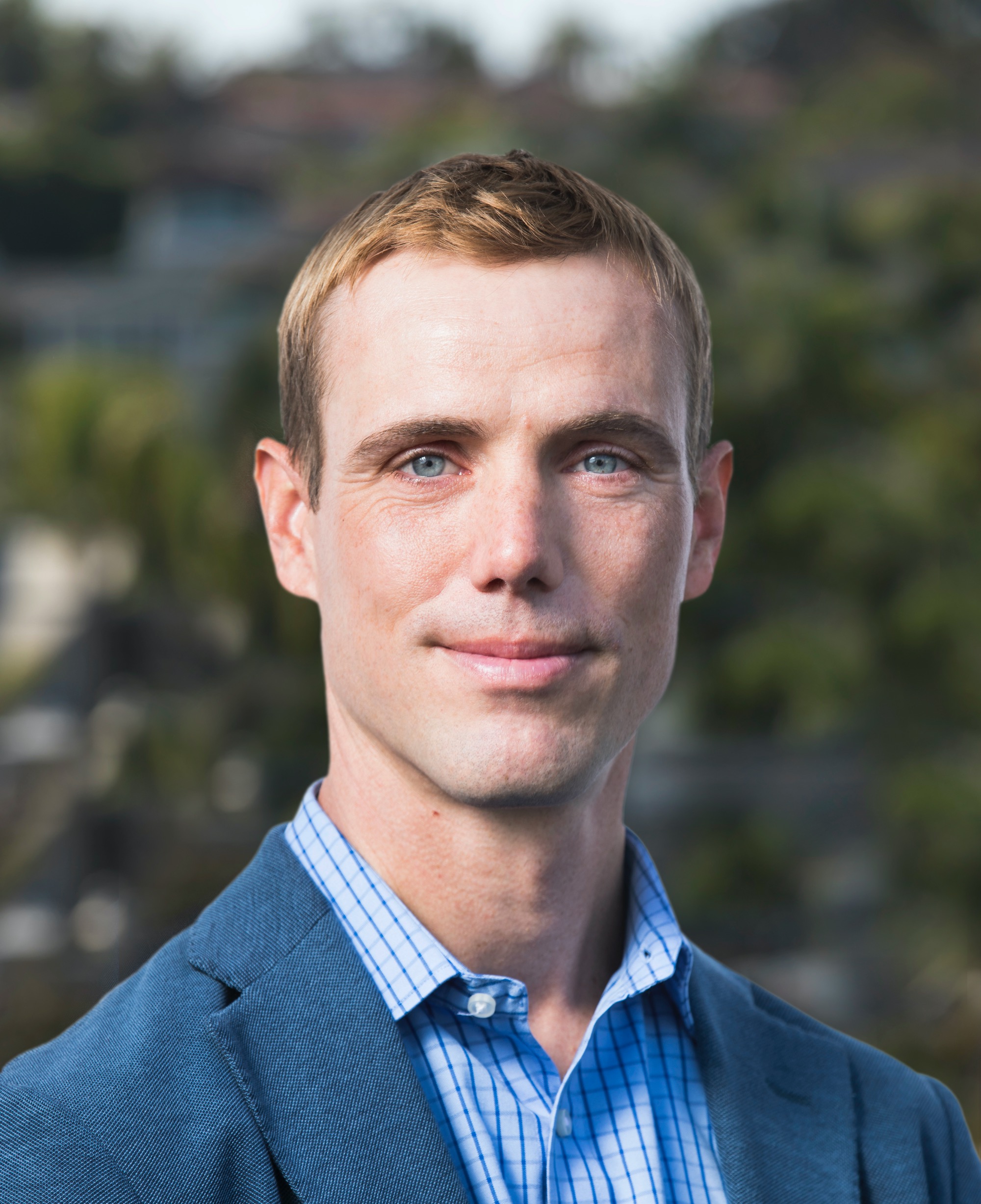
Benjamin Arnold, CEO of COR Medical Ventures

Benjamin Arnold, MS. CEO and co-founder, COR Medical Ventures. Solana Beach, California.

Share LinkedIn X Facebook Instagram
25+
Devices Launched
~12
Portfolio Companies
2
Cornell Degrees
3
Spine Giants On His CV
The Operator

The hub of a device factory

Walk into COR Medical Ventures expecting a single product and you will leave confused. There isn't one. There are about a dozen.

Benjamin Arnold is the co-founder and CEO of COR Medical Ventures, a venture studio tucked into Solana Beach, just up the coast from San Diego. It is not a typical startup. Most founders pick a problem, build a thing, and spend a decade on it. Arnold built the machine that builds the things - a studio that takes a surgeon's frustration, or a corporation's orphaned patent, and runs it down the long, regulated road to a device that a hospital will actually buy.

The name is the tell. "COR" is shorthand for center of rotation, the engineering term for the fixed point around which a body turns. In an implant, it is the spot the mechanics resolve to. In Arnold's company, it is the role he plays: the still point at the middle of a dozen moving companies, each spinning on its own axis, all of them pulling from the same shared pool of regulatory, prototyping, and fundraising muscle.

That structure has three arms. A consulting practice that sells the hard-won know-how directly. A venture studio that co-founds and incubates new device companies. And a distribution operation that gets cleared products into the field. Put together, they cover nearly the entire distance between a clinical need scribbled on a notepad and a product on a sales rep's table.

Arnold's own job description is unglamorous and enormous: technology assessment and strategy on one side, internal operations and planning on the other. Translation - he decides which ideas are worth chasing, then makes sure the chasing actually happens.

"Our goal is to partner with individuals to advance healthcare by bringing the next generation of medical devices to market."

COR Medical Ventures, mission statement
The Engineer

Cornell, then a tour through spine's big three

Before he was assembling companies, Arnold was assembling implants. He holds both an undergraduate and a master's degree in engineering from Cornell University, and the resume that followed reads like a tour of the spine industry's most serious addresses.

He worked in product development at DePuy Spine, part of the Johnson & Johnson orthopedics empire. He led the Development Technology Team at NuVasive, the San Diego company that spent the 2000s and 2010s rewriting how spine surgery is done. And he consulted for Synthes Spine, the trauma-and-spine powerhouse later folded into J&J. Three of the biggest names in the field, all on one CV.

The throughline is volume. Over those years, Arnold led product development teams to more than 25 successful medical device launches. That number matters more than any single product, because in medical devices the failures vastly outnumber the launches. A device that clears the FDA, survives manufacturing scale-up, and reaches a patient has already beaten long odds. Doing it 25 times is less luck than method.

He has put his own name on the paperwork too. A 2018 FDA 510(k) filing, K181076, lists Benjamin Arnold as managing member of Responsive Arthroscopy LLC - the regulatory fine print that comes with actually shipping hardware rather than just advising on it.

The Portfolio

Eleven bets, one studio

The clearest way to understand Arnold is to look at what his studio is building. It does not read like a focused thesis. It reads like a medical trade show floor - which is the point. A studio spreads its risk across many shots rather than betting the house on one.

Surgical Robotics

Channel Robotics

Handheld, AI-powered robotic surgical platform for endoscopic procedures. Five issued patents, a working device, raising seed.

$20B+ endoscopy market
Spinal Fixation

Sail Fusion

Spinal fixation for sacroiliac joint dysfunction via a posterior mini-open approach. Commercially available.

$885M SI joint market, 16% CAGR
Interbody Fusion

Spine Innovation

A multi-planar expandable interbody fusion system. 510(k) cleared with three issued patents.

$2.3B interbody sector
Fracture Hardware

Meduloc

Intramedullary fixation for small long-bone fractures using patient-specific Nitinol implants. Three issued patents.

$372M addressable
Orthopedics

Delta Orthopedics

A simplified hinge-knee system for distal femoral fractures. Cadaveric testing done, FDA pre-subs complete.

$208M hinged knee market
Soft Tissue

Point Break Orthopedics

Soft-tissue fixation for rotator cuff and Achilles repairs. Seed funding closed, provisional patents filed.

$7.4B global market
Surgical Tools

Osheru (Ziplyft)

A minimally invasive eyelid procedure that cuts surgery time from 60 minutes to 10. Already commercial.

$3.71B, growing to $5.2B
Combination Product

Osteal Therapeutics

Drug/device combinations for periprosthetic joint infections. In Phase 3 trials with six issued patents.

$1.8B+ U.S. market
Consumer Health

Avira (Veera)

Wearable breast pump technology, headed to U.S. markets under the brand "Veera" - meaning female warrior.

$2.5B market
Digital Rehab

Sensor Therapeutics

Wearable biofeedback devices for post-operative musculoskeletal rehab, starting with rotator cuff repair.

Post-op rehab
Sports Medicine

Tesa Medical

Rapid soft-tissue tensioning via patented CordaSet technology for ACL/PCL reconstruction. Pre-510(k).

$800M U.S. market
The Path

How he got to the center

DePuy Spine

Product development at the Johnson & Johnson orthopedics arm - the early grounding in how spine hardware gets made.

NuVasive

Led the Development Technology Team at the San Diego company that reshaped modern spine surgery.

Synthes Spine

Product development consultant for one of the most respected names in spine and trauma.

Responsive Arthroscopy LLC

Named managing member on FDA 510(k) clearance K181076 in 2018.

COR Medical Ventures

Co-founder and CEO of the Solana Beach venture studio - consulting, incubation, and distribution under one roof.

The Method

Why a studio, not a startup

The conventional medical-device story is a tragedy waiting to happen. A surgeon has a brilliant idea. The surgeon raises money, builds a one-product company, and then spends years discovering that the idea was the easy part - that regulatory strategy, quality systems, prototyping, and manufacturing are each their own discipline, and that running out of money before clearance is the default outcome.

Arnold's answer is to pool the boring, expensive parts. The regulatory know-how, the prototyping shop, the quality systems, the fundraising relationships - these live at the center and get shared across every company in orbit. A surgeon-inventor walking in with a sketch does not have to build all of that from scratch. They plug into a hub that has done it 25 times before.

It is a quietly contrarian bet. Most venture money wants focus - one company, one product, one story. Arnold is wagering that in a field this technical and this regulated, breadth is the edge. The studio can run a Phase 3 drug/device trial and a handheld surgical robot and a wearable breast pump at the same time, because the constraint was never imagination. It was always execution. And execution, unlike inspiration, scales when you centralize it.

The proof points are accumulating. Several portfolio companies - Sail Fusion, Spine Innovation, Osheru - are already commercial or FDA-cleared. Others sit mid-pipeline with issued patents and defined regulatory paths. In 2024, COR put capital into Sail Fusion, the kind of follow-on move that signals a studio backing its own winners rather than just spinning out and walking away.