ai-data-centers
(22)
Michael McNamara Bet the AI Boom Would Run Into a Power Problem
Before AI made electricity the technology industry's favorite constraint, Michael McNamara was working on a stranger idea: data centers that behave less like stubborn factories and more like courteous guests of the grid.

AmberSemi Left the Wall Socket for AI’s Hottest Seat - Right Under the Chip
The Dublin semiconductor startup paused its solid-state circuit-breaker push to chase a nastier bottleneck: moving enormous current into AI processors without wasting it across the motherboard.

Applied Digital Is Building AI's Landlord Business - One Megawatt at a Time
The AI race is usually told in chips and models. Applied Digital is betting that the harder business is underneath them: securing power, pouring concrete and keeping densely packed machines cool for decades.

Galaxy Built Wall Street for Crypto. Then It Went Hunting for Megawatts.
Galaxy spent years building institutional rails for digital assets. Its second act is more physical: turning Texas land and power into AI infrastructure, while bringing the same machinery to banks, funds and individual investors.

The Marketer Who Sells Certainty in an Uncertain Grid
She has rebranded a fintech unicorn, a 240-year-old bank, and now the fuel cells keeping AI data centers awake. The common thread: making the invisible feel inevitable.
The Chips Between a Battery and Everything It Wants to Become
onsemi does its most consequential work in the awkward space between raw electricity and useful motion. Its power chips and sensors are becoming the quiet architecture behind electric cars, factory robots and AI data centers.

The Bloom Box Was Built for Mars. AI Made It Urgent.
Bloom Energy spent a quarter-century turning a NASA-inspired ceramic fuel cell into an onsite power business. Now the grid bottleneck - and AI's appetite for electricity - has made the once-futuristic Bloom Box a very practical machine.
Riot Platforms, Inc.
Riot spent years turning cheap electricity into Bitcoin. Now the same land, substations and cooling know-how are being repackaged for AI - a pivot that could make the power connection more valuable than the mine.
Seyed Madaeni
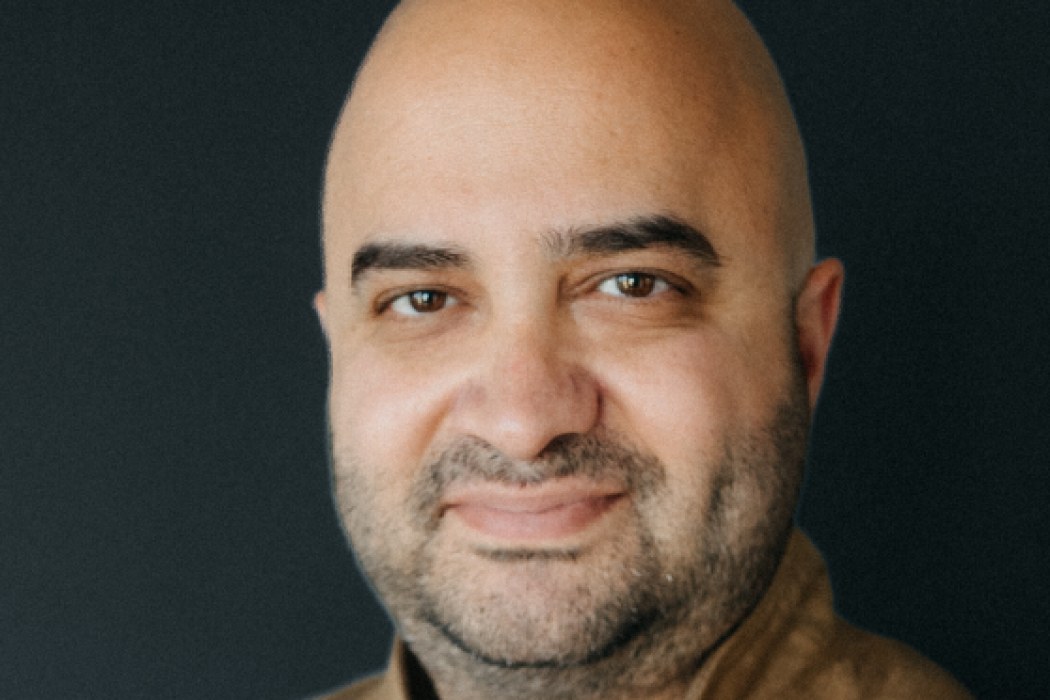
Seyed Madaeni is the co-founder and CEO of Verse, a San Francisco energy-software company that uses AI to help large enterprises and AI data centers buy, plan, and dispatch clean power. A systems engineer with a PhD from Ohio State, he spent a decade building grid-scale market software at PG&E, SolarCity, Tesla, AMS, and Fluence before starting Verse, which raised a $54M Series B led by Bessemer in June 2026 with backing from NVIDIA and GV.
Stefan Pastine
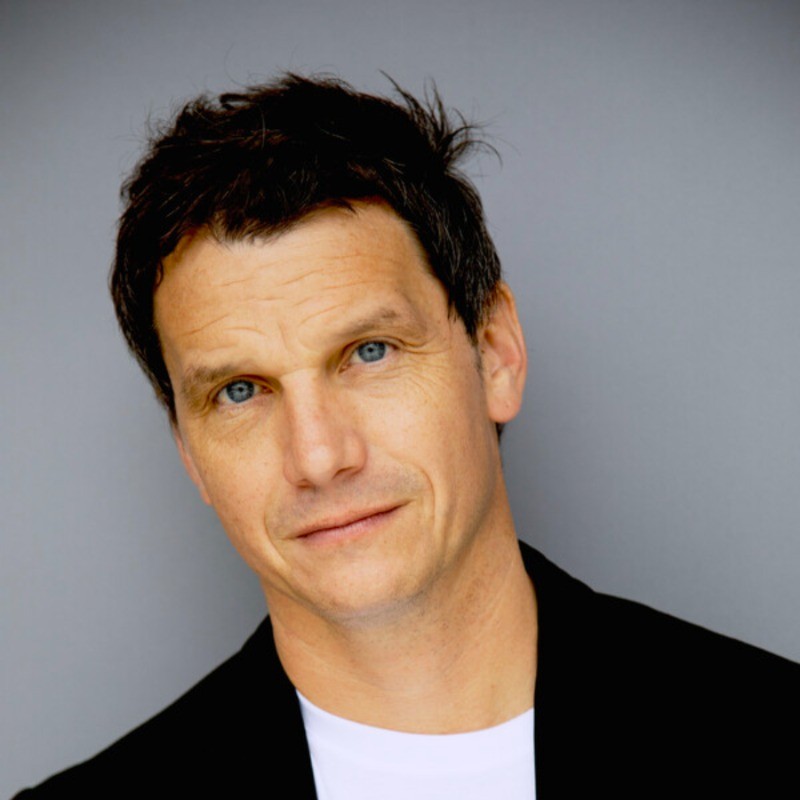
Stefan Pastine is an American chemist, inventor and deep-tech founder who builds materials most people never think about but every device depends on. After earning a PhD in organic chemistry from Columbia and doing postdoctoral work at UC Berkeley, he founded Connora Technologies to make recyclable epoxy resins, which was acquired by Aditya Birla Chemicals in 2019. That same year he founded Thintronics, a Bay Area startup developing next-generation dielectric insulator films for printed circuit boards and semiconductor packaging. His pitch is deceptively simple: the insulator, long ignored while engineers obsessed over transistors, is the overlooked bottleneck for faster, cooler AI data centers - and Thintronics wants to unseat a Japanese giant that has held 90% of the market for three decades.
Digital Power Optimization, Inc.
Digital Power Optimization (DPO) is a New York-based energy services company that builds and operates 'power-first' flexible data centers at renewable power plants. Its on-site data centers - running bitcoin mining and AI workloads - consume electricity only when it is curtailed, wasted, or undervalued, then curtail during peak demand so power can be sold back to the grid. The model lets hydro, wind, and other generators capture over $100/MWh from otherwise stranded power while helping stabilize the grid.

NetBox Labs
NetBox Labs is the commercial company behind NetBox, the widely used open source network source of truth that engineering teams rely on to document, model, and automate their networks and infrastructure. Founded in 2023 by CEO Kris Beevers, the New York-based company builds commercial products - NetBox Cloud, NetBox Enterprise, NetBox Discovery, and NetBox Assurance - on top of the open source project, helping Fortune 500 enterprises, hyperscalers, AI data center operators, and government agencies replace spreadsheets and manual processes with an automation-ready model of their infrastructure.

Lumotive
Lumotive is a Redmond, Washington optical-semiconductor company that turns beam steering into a chip. Its patented Light Control Metasurface (LCM) technology uses thousands of tunable liquid-crystal optical resonators etched into a CMOS die to steer light electronically - no moving parts - powering solid-state LiDAR, 3D sensing, and, soon, optical switching for AI data centers. Spun out of Intellectual Ventures and Bill Gates-backed metamaterials research, the company sells programmable beamforming chips like the LM10 to sensor and systems makers rather than building full LiDAR units itself.

OpenLight
OpenLight is a Goleta, California silicon photonics company building the world's first open silicon photonics platform with integrated lasers. Spun out of Juniper Networks in 2022, it licenses a validated process design kit (PDK) and designs custom PASICs - photonic application-specific integrated circuits - that combine lasers, modulators, amplifiers and detectors on a single chip for AI data centers, datacom, telecom, LiDAR and quantum computing.

Thintronics
Thintronics is a San Francisco-based advanced materials company reinventing the humble insulator - the dielectric films that sit between the copper layers of every chip and circuit board. Founded in 2019 by chemist Stefan Pastine, the company designs new insulating materials from the molecular level up, aiming to deliver faster, lower-loss, lower-power interconnects for AI data centers, high-speed networking, and RF/millimeter-wave systems. Its pitch is pointed: challenge the Japanese incumbent Ajinomoto, which has held more than 90% of the dielectric build-up film market for three decades, with a US-made alternative built for the terabit age.

Mohamed Badawy
Mohamed Badawy is the founder and CEO of Scalvy, an Austin-based hardware startup building modular 'Power Neuron' electronics that replace centralized inverters, chargers and DC-DC converters in electric vehicles, energy storage and AI data centers. A former tenured associate professor at San Jose State University who founded and directed its Center of Power Electronic Converters, he left academia in 2024 to commercialize the modular architecture he had been researching. In March 2026 Scalvy closed a $13.9M Series A co-led by Silicon Badia with Azolla Ventures, Climate Capital and SkyRiver Ventures.
AheadComputing
AheadComputing is a Beaverton, Oregon semiconductor startup founded in 2024 by four former Intel CPU architects who left to build high-performance 64-bit RISC-V processor cores from a clean slate. Betting that the future bottleneck in AI and data-center computing is the CPU rather than the GPU, the company is designing a 'Big Core' out-of-order engine that maximizes per-core performance without the legacy baggage of x86. Backed by roughly $53M in seed funding from Eclipse, Toyota Ventures, Cambium and legendary chip designer Jim Keller, AheadComputing wants to prove that an open instruction set can deliver top-tier performance.

Build Block
Build Block is a Korea-founded real estate company that gives Korean investors and companies a single, end-to-end path into the U.S. property market. What began as a cross-border investment platform lowering the barrier for individual Asian investors has grown into a full-stack operator: brokerage, architectural design and permitting, construction management as a general contractor, and post-investment asset and facility management. Today it also builds the physical backbone of the AI economy - data centers and EPC plants for semiconductor, battery, and advanced manufacturing - for Korean firms reshoring to the United States.

Dave Welch
Dave Welch is the founder and CEO of AttoTude, a Menlo Park deep-tech startup building the world's first terahertz interconnect that runs over wire instead of fiber or photonics, aimed at unclogging the data-movement bottleneck inside AI and hyperscale data centers. A co-founder of Infinera, where he pioneered large-scale photonic integrated circuits, and former CTO at SDL, Welch holds more than 200 patents, has authored roughly 300 publications, and is a member of the National Academy of Engineering. In April 2025 AttoTude raised a $50M Series B, pushing total funding past $90M.
SCINTIL Photonics
SCINTIL Photonics is a Grenoble-based, fabless silicon photonics company building the world's first single-chip, DWDM-native laser source for AI data centers. Spun out of CEA-Leti and founded by Sylvie Menezo, its proprietary SHIP (Scintil Heterogeneous Integrated Photonics) process integrates lasers, modulators and detectors onto one manufacturable chip - powering its LEAF Light light engine for co-packaged optics that promises roughly one-sixth the power consumption of conventional pluggable optics. The company raised a $58M Series B in September 2025 with participation from NVIDIA.

Jimmy Jung
Jimmy Jung is the founder and CEO of BuildBlock, a cross-border real estate platform that lets Korean and Asian investors buy, build, and manage U.S. property without ever boarding a plane. A licensed professional engineer who once helped project-manage Google's new Silicon Valley headquarters, he turned the messy, intermediary-clogged process of overseas property investment into a single end-to-end pipeline: search, financing, LLC setup, construction, management, and tax. Founded in 2018 and headquartered in Seoul with U.S. offices, BuildBlock has expanded from residential brokerage into industrial plant and AI-infrastructure development.
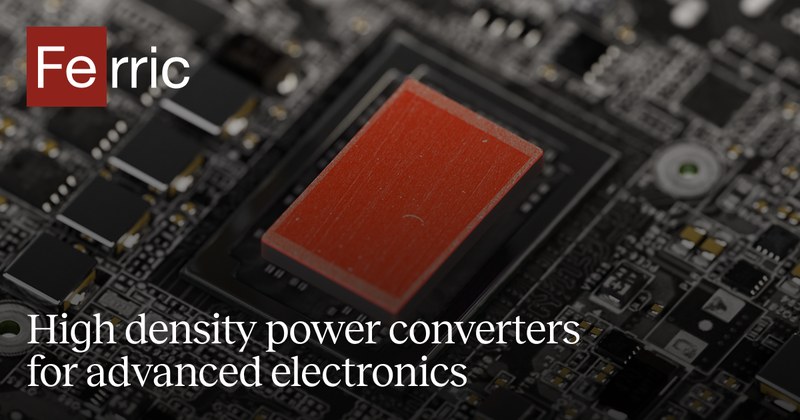
Ferric, Inc.
Ferric, Inc. is a New York semiconductor company that builds integrated voltage regulators (IVRs) - complete DC-DC power converters with thin-film magnetic inductors built directly into the chip. By shrinking power conversion down to silicon that can sit inside a processor package, Ferric cuts board space and bill-of-materials while improving energy efficiency, targeting the punishing power demands of AI accelerators, high-performance computing, and hyperscale data centers.