Inside an AI data center, the chips are fast. The trouble is the few meters between them. Every server rack that wants to talk to the next one runs into the same wall: cables that are too slow, too power-hungry, or too expensive to keep up with what the silicon can already do. Dave Welch built a company on that single, unglamorous sentence.
That company is AttoTude, headquartered in the Menlo Park area, and its claim is deliberately strange. Instead of pushing data through fiber and light - the technology Welch spent decades perfecting - AttoTude sends terahertz signals down a wire. Up to 40 meters. Using standard ASIC manufacturing, the same process the chip industry already runs at scale. No exotic photonics in the path. The pitch sounds almost contrarian coming from one of optics' most decorated figures.
Which is the point. Welch is not a man chasing a trend. He has watched the network run out of room before, and each time he has built the thing that made more of it. At SDL, where he served as Chief Technology Officer and VP of Corporate Development, he drove a technology strategy that led to a merger with JDS Uniphase. Then, in 2001, he co-founded Infinera and helped commercialize the large-scale photonic integrated circuit, putting dozens of optical functions onto a single chip and turning a research curiosity into an industry standard. He went on to serve as Infinera's President and Chief Innovation Officer.
So when Welch says the data center's interconnect needs reinventing, it carries the weight of someone who has reinvented it before. AttoTude's bet is that terahertz over wire can be faster, cheaper, more reliable, and more energy-efficient than the optical and electrical links that hyperscalers lean on today. The timing is not subtle: AI clusters are straining at exactly the seams AttoTude wants to stitch.
"Our THz platform represents a paradigm shift that solves critical bandwidth, power, and reliability challenges."
He did not build it alone. His co-founder is Joy Laskar, a former Georgia Tech professor counted among the five most prolific RFIC authors in the world, who founded RF Solutions and helped develop the power amplifier behind Intel's Centrino. Welch brings the optics and the company-building scars; Laskar brings the RF and millimeter-wave depth. Terahertz lives in the seam between their two disciplines, which may be exactly why two people from opposite corners of the spectrum had to be the ones to chase it.
It helps to understand what Infinera actually changed, because it explains why investors take Welch seriously now. For years, building an optical network meant assembling racks of discrete components, each transmitter and receiver a separate part to be wired and tuned. The photonic integrated circuit collapsed that complexity onto a single chip, the way the integrated circuit once collapsed rooms of electronics. Welch did not invent the idea in a vacuum, but he was central to turning it from a laboratory result into shipping product - and that distinction, between a demo and a deployable thing, is the one he keeps returning to. AttoTude is, in a sense, the same move applied to a different layer of the network: take something the industry assumes is hard or impossible, and make it manufacturable at scale.
His own framing of AttoTude is unsentimental. The company exists, in his telling, to address power, cost, and scale challenges in data center networking - three words that double as a checklist for what breaks first when AI infrastructure grows faster than the plumbing around it. He has spent enough time inside large engineering organizations to know that elegance loses to economics, which is why the emphasis on standard ASIC manufacturing matters more than any single performance number. A breakthrough that cannot be built cheaply is, to a builder like Welch, not really a breakthrough.
The capital has followed the credibility. AttoTude raised a Series A in 2024, then closed a $50M Series B in 2025 led by Mayfield, with The Westly Group joining and existing backers Sutter Hill Ventures, Canaan Partners, and Wing Venture Capital returning. Total funding has climbed past $90 million. In March 2026, test-and-measurement giant Keysight announced a collaboration to develop signal-analysis solutions for THz interconnects - the kind of partner you only attract when the physics is starting to look real.
The Series B was telling not just for its size but for who wrote the checks. Mayfield led, a firm with a long history in deep tech, and The Westly Group joined - a fund built around energy and efficiency, the exact angle on which AttoTude pitches itself. Sutter Hill Ventures, Canaan Partners, and Wing Venture Capital, all already on the cap table, came back for more. Returning investors are the quiet vote of confidence that matters most; they have seen the data the public has not. Peter Wagner, a founding partner at Wing, sits on AttoTude's board alongside Basil Alwan, the networking veteran who built TiMetra and ran businesses at Nokia. The board, like the founding team, is stacked with people who have shipped infrastructure the world actually ran on.
The recognition is unusual in its spread. Most engineers, if they are lucky, collect honors from one society. Welch's awards cross optics and electronics, and cross the Atlantic: the Adolph Lomb Medal, the John Tyndall Award, and the Joseph Fraunhofer Award from OSA; the JJ Thompson Medal for Achievement in Electronics from the UK's IET; the Ernst Weber Managerial Leadership Award from IEEE. He is a Fellow of both OSA and IEEE, and in 2016 he was elected to the National Academy of Engineering for his contributions to high-power semiconductor lasers and photonic integrated circuits. The citation is a tidy summary of a career: lasers and chips, made practical.
There is a reason the AI buildout makes his timing look prescient rather than lucky. As model sizes balloon and clusters spread across thousands of accelerators, the limiting factor is increasingly not how fast a chip computes but how fast results can be shuttled between chips and racks. Power budgets are strained, optical modules are expensive, and copper has long been written off past short distances. AttoTude's argument is that terahertz signaling, fabricated in standard ASIC processes and carried over wire, sidesteps several of those constraints at once. Whether it scales is the open question every deep-tech company faces - but the people betting on it, from Mayfield to Keysight, are not naive about the physics.
There is also a pattern worth naming in how Welch picks his fights. He does not chase the obvious frontier. When the world assumed networks would be built from discrete optical parts, he helped prove they could live on a chip. Now, when the conventional wisdom says copper is finished and the future is purely optical, he is the one insisting a wire still has range left if you push it to terahertz. Twice he has taken the position the room did not expect from a person with his pedigree, and twice the contrarian read came from deep familiarity rather than ignorance. That is the difference between a gambler and an engineer: the engineer has already done the math.
Welch's resume reads like a survey of how data has moved for the last forty years, and his next chapter is a quiet argument that the wire was never finished. The same engineer who taught the industry to trust light on a chip now wants it to give copper one more look - at frequencies most people associate with lab equipment, not rack-to-rack plumbing.
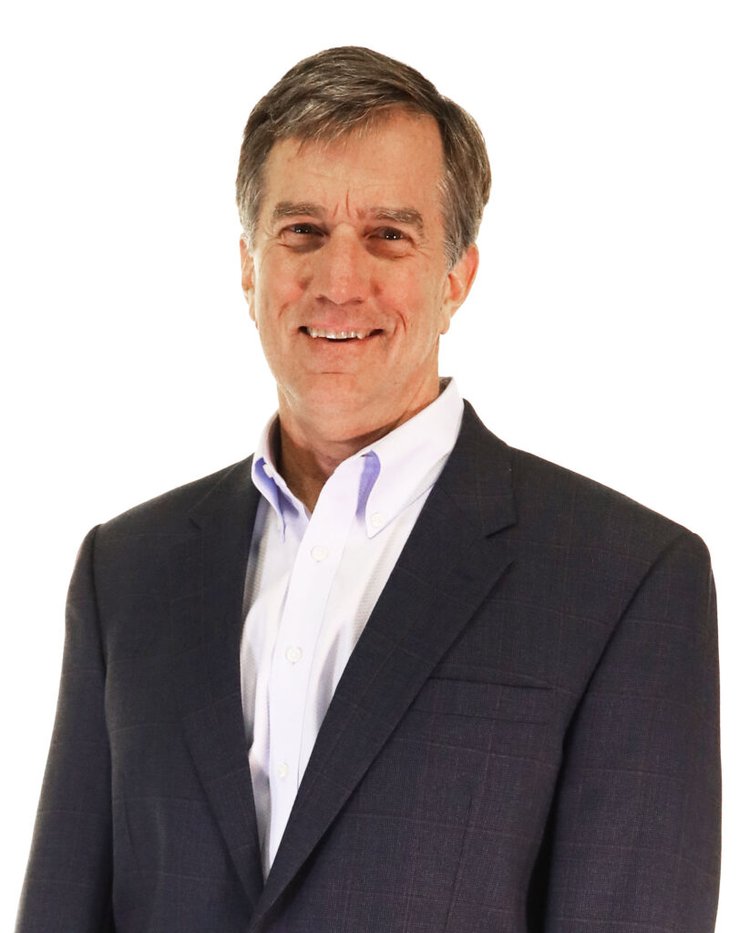 Dave Welch - the man who keeps showing up where bandwidth runs out.