accounts-payable-automation
(15)
Rossum Taught the Machines to Read the Paperwork Nobody Could Kill
The Czech-born document-AI company made peace with the invoice, trained a specialist model to understand it, and sold the result to enterprises drowning in exceptions. Coupa’s 2026 acquisition turns that stubborn paperwork layer into part of a much larger spend-management machine.
OneSource Virtual Put the Back Office Inside Workday - Then Bet the Company on Staying There
Most outsourcers ask for your data. OneSource Virtual sends its specialists into the system where that data already lives - a narrow Workday-only bet now moving more than $250 billion a year.

The $140 Billion Bet That Checks Aren't Dead - They're Just Badly Designed
AP Technology spent 37 years modernizing the payment method fintech forgot. Its useful trick is not killing the check - it is wrapping the check in software, controls and a choice of what comes next.
The 40-Year-Old PDF Plumber Teaching Enterprise AI to Read the Fine Print
Tungsten Automation spent four decades turning paper into data. Now it is betting that the same unglamorous discipline - OCR, exception queues, audit trails and ERP connections - is exactly what enterprise AI needs to become useful.

The Hotel Back Office Has a $13 Billion Tab. BirchStreet Wants to Make It Boring.
Hotels sell escape, then reconcile the invoices. BirchStreet built the unglamorous operating layer behind 8,489 hospitality locations - and its most useful lesson is that automation only works when suppliers, data and people arrive together.
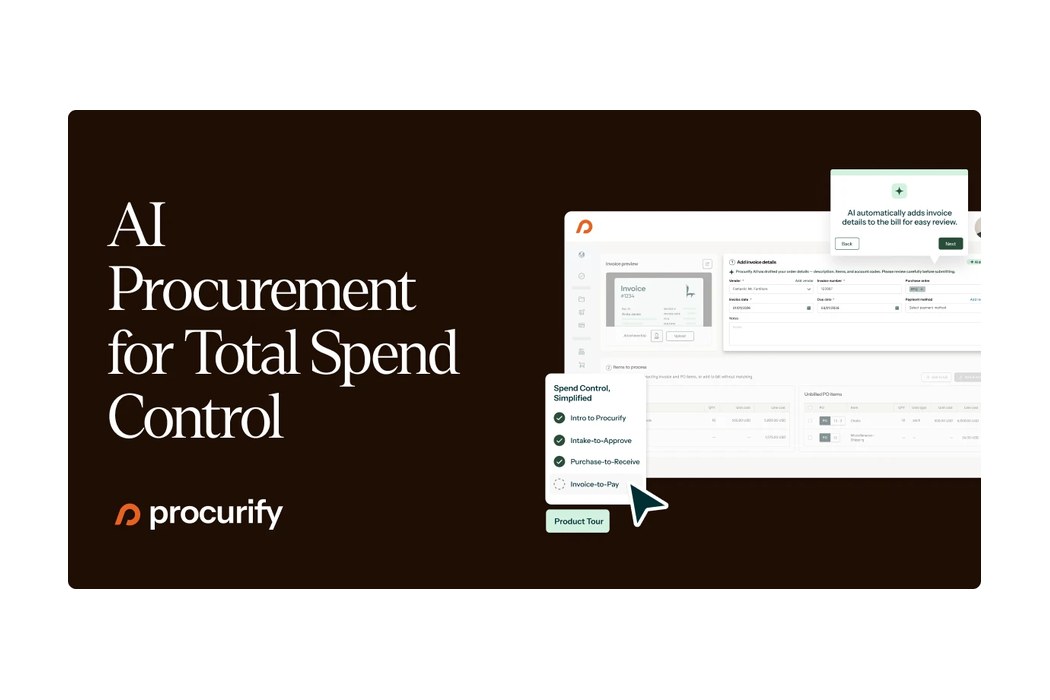
Procurify Wants to Catch Every Bad Purchase Before the Money Moves
The Vancouver company found a valuable gap between spreadsheets and enterprise procurement suites. Now it is betting that a decade of customer spend context can turn AI from a chatty assistant into a careful operator.

Navix Found $112 Million Hiding in Freight Paperwork - Here’s the Back-Office Playbook 3PLs Can Copy
Freight moves at highway speed. Its invoices often move like they are waiting for a fax. Navix built an AI audit layer to close that gap - and says customers have put $112 million in working capital back to work.
The 35-Year Fintech Bet That Made the Bar Tab Boring - and Built a Data Business
Fintech spent roughly 15 years winning state-by-state acceptance for electronic alcohol payments. Now the same plumbing connects 326,000 businesses - and offers a useful playbook for founders who mistake a boring workflow for a small market.
AppZen
AppZen built its business around an unglamorous but expensive corporate blind spot: the receipts, invoices and card charges that finance teams cannot inspect one by one. Now its AI is moving from flagging suspicious spend to resolving the work itself - while leaving the company’s existing finance stack in place.

MHC
For more than two decades, a quiet company in the Minneapolis suburbs has been running the paperwork that keeps large enterprises moving - the invoices, statements and payments most people never see.
Adaptive
Adaptive is a New York-based fintech building an AI-native financial platform for the construction industry. It sits on top of QuickBooks to automate the money side of building projects - reading incoming bills, matching them to the right job and cost code, routing approvals, tracking budgets and draws, managing vendor compliance, and processing payments. Founded in 2021 by Matt Calvano, Henry Bradlow, and Francisco Enriquez, the company serves custom homebuilders, general contractors, developers, and specialty trades, and raised a $19M Series A led by Emergence Capital in 2024.

Conexiom
Conexiom is a Vancouver-based B2B software company that automates the capture, correction, and analysis of sales orders and trade documents for manufacturers and distributors. Its AI-powered platform turns unstructured purchase orders arriving as PDFs, emails, spreadsheets, faxes, and even handwritten notes into 100% accurate, ERP-ready data, removing manual keying and the errors that come with it. Backed by roughly $170M in growth investment from Warburg Pincus, ICONIQ, and Luminate Capital, Conexiom processes hundreds of thousands of orders representing billions of dollars in transactions each year for customers such as Fastenal, Graybar, Parker Hannifin, and Arrow Electronics.

Aavenir
Aavenir is a Texas-based enterprise software company that builds AI-powered source-to-pay and contract lifecycle management (CLM) applications natively on the ServiceNow platform. Founded in 2019 by Jesal Mehta, the company uses AI agents, machine learning, and natural language processing to automate contracting, sourcing, invoicing, vendor onboarding, and obligation management so procurement, legal, and finance teams can cut cycle times, reduce risk, and gain end-to-end visibility across the vendor and contract lifecycle.
TERA
TERA is an AI-native spend management and finance automation platform that gives businesses a single command center for corporate cards, accounts payable, procurement, and payments. Built around a team of autonomous AI agents that capture receipts, code bills, enforce policy, route approvals, and post to the ERP, TERA aims to replace spreadsheets and manual finance ops with real-time, self-driving workflows. Founded by Madhu Tera in Acton, Massachusetts, the company markets itself to finance teams across healthcare, manufacturing, e-commerce, logistics, and agritech.
Boost Payment Solutions
Boost Payment Solutions is a New York-based fintech that quietly removes the friction from large commercial card payments. Founded in 2009 by payments veteran Dean M. Leavitt, Boost uses patented straight-through processing and a rules-based payment engine to let buyers pay with cards while suppliers get paid automatically, with the data and reconciliation already handled. Operating in dozens of countries and partnered with Visa and Mastercard, Boost has positioned itself as a leading independent infrastructure layer for B2B card payments.