At 15, Szymon Niemczura built a website for a local company and spent the money on Wi-Fi equipment. The hardware was expensive, the connection speeds would hardly impress a teenager today, and the purchase came with a useful fringe benefit: he became the local person who understood wireless networks. A small business transaction had bought him another subject to investigate.
There is something pleasingly literal about that beginning. Long before he co-founded Kontakt.io, a business built around little Bluetooth transmitters, he was already using paid work to get closer to the machinery of connection. The first customer financed the next experiment. Curiosity had found a way to submit an invoice.
His later career would require a different kind of connection. A device can transmit a signal with very little discussion. People need context, trust and a reason to care. As his companies grew, those human requirements became a recurring concern in his account of the founder’s job.
A successful company, and a reason to leave
Niemczura studied management and finance, graduating in 2010. His early professional record includes freelance web work and a business developing web applications. He then co-founded Codewise, initially a software house. This was a route into entrepreneurship through work that could be delivered to a client, with all the practical demands that implies.
The distinction matters. A software house has to turn somebody else’s request into something that works. A product business has to decide which requests deserve a repeatable answer. Codewise moved towards advertising technology, and the company’s direction changed along with its opportunities.
In his account of leaving, Niemczura described a commercially successful business with two people occupying the leadership space. Another partner was driving the new product ideas. His own interests were moving elsewhere. He chose to cash out and make room for a different arrangement.
It is an unusually useful episode in a founder’s biography. A company can be doing well while becoming a less suitable place for one of the people who started it. Recognising that requires a certain separation of the business from the ego attached to it. Leaving also creates a vacancy in the diary, which is where the next complicated idea tends to appear.
Plastic has opinions
In 2013, Niemczura co-founded Kontakt.io in Kraków with Rafał Janicki, Tomasz Kołek and Tomasz Koźmiński. The company developed Bluetooth beacons and the tools needed to build applications around them. By July 2014, it had secured $2 million from Sunstone Capital.
The proposition had several moving parts: hardware, a backend, an open API and software development kits. A small transmitter could become the starting point for someone else’s application. That gave the business a reach beyond any single use its founders might devise themselves.
A simplified view of the hardware-and-software relationship. The transmitter is one part of the job.
For someone coming from software, manufacturing supplied an education with physical consequences. Niemczura described learning about plastic injection moulds, choosing where to make electronics and constructing a flexible supply chain. These were everyday decisions with the power to determine whether an elegant idea could actually be shipped.
Plastic is a rather stern business tutor. It does not become a better shape because a meeting went well. Electronics and logistics add their own opinions. Kontakt.io still needed substantial software work, but now that work accompanied objects which had to arrive and function in the real world.
By March 2016, Niemczura was describing more than 15,000 customers in 120 countries. He also recalled a London marketing audience that had initially dismissed beacons, then returned with experience using them in campaigns. Persuasion had acquired a useful assistant: an application somebody had already tried.
Eighty people cannot all sit next to the founder
In June 2016, Kontakt.io’s growth was the subject of a Project Kazimierz conversation titled “Growing a Team from 2 to 80 in Two Years.” Niemczura confirmed an organisation of 80 people and described five offices, including Kraków, Berlin, New York, Mexico and Shenzhen.
Numbers like those tend to make a company sound neatly assembled. The organisation chart fits on a slide; the working day is less obliging. Every additional location introduces another place where someone needs information, a decision or an explanation of what matters most.
June interview
June interview
March interview
Historical figures from Niemczura’s early-growth interviews, rather than present-day company totals.
The conversation’s subjects included communication, leadership training and the changing role of the CEO. Leaders Island also invited him to discuss the managerial challenge of a rapid change in scale. Growth was becoming a subject he had to study as well as a result he was expected to produce.
That is where his repeated emphasis on delegation becomes concrete. A founder who wants capable colleagues has to leave them something worth being capable at. Hiring judgement and then requiring permission for every exercise of it is an expensive way to reproduce the founder’s own desk.
“Take as many chances as you can in terms of learning how to manage these people”
Szymon Niemczura · Project Kazimierz, 2016
Niemczura’s language about work also leaves room for enjoyment. Asked how he might spend a hypothetical windfall, he proposed a party for the company. It is a better detail than another solemn declaration that people matter. People occasionally like being together without an agenda and a document to edit.
Selling begins with listening
His Kontakt.io CEO tenure ended in early 2018. Another chapter followed at Talent Alpha, where he became a co-founder alongside Przemek Berendt and Mike Kennedy. The venture connected providers of technology talent with larger clients, giving his interest in people a direct commercial application.
There was a different practical question here. An organisation might need technical skills while a smaller services company had a team able to supply them. Making that connection work meant understanding what the client needed and what the available people could actually do.
A Leaders Island discussion brought Niemczura and Berendt together to talk about creating organisations and managerial competence. The subjects included the mistakes startup founders make, the difference between entrepreneurial and corporate management, and the work of establishing an unfamiliar brand. Experience had given them questions to compare.
By February 2020, Niemczura was describing the early sales operation at Talent Alpha after its November 2019 platform launch. His advice included small pilots, clear goals, training and regular review. He also offered a compact warning: “Nobody likes to feel like a sales target.”
A prospect can usually detect the moment a conversation becomes an exercise in processing them. His preference was to understand the need before presenting the answer. There is a practical generosity in that approach: the customer is allowed to remain a person with a task, rather than becoming a milestone in somebody else’s dashboard.
He had a less diplomatic wish, too: less bot spam on LinkedIn. Remember that detail. The next part of the story involves quite a lot of automation.
The next connection speaks
Niemczura now leads hellobot, which develops AI voice agents for business communication. Its promise concerns an ordinary irritation: calling a company and struggling to get a straightforward task completed. The company’s examples include vehicle enquiries and routine transport conversations.
The product has to work within the customer’s existing operations. An answer may require information from a calendar, a company database or another system. Speech is the visible performance; useful service depends on what the software can access and accomplish behind it.
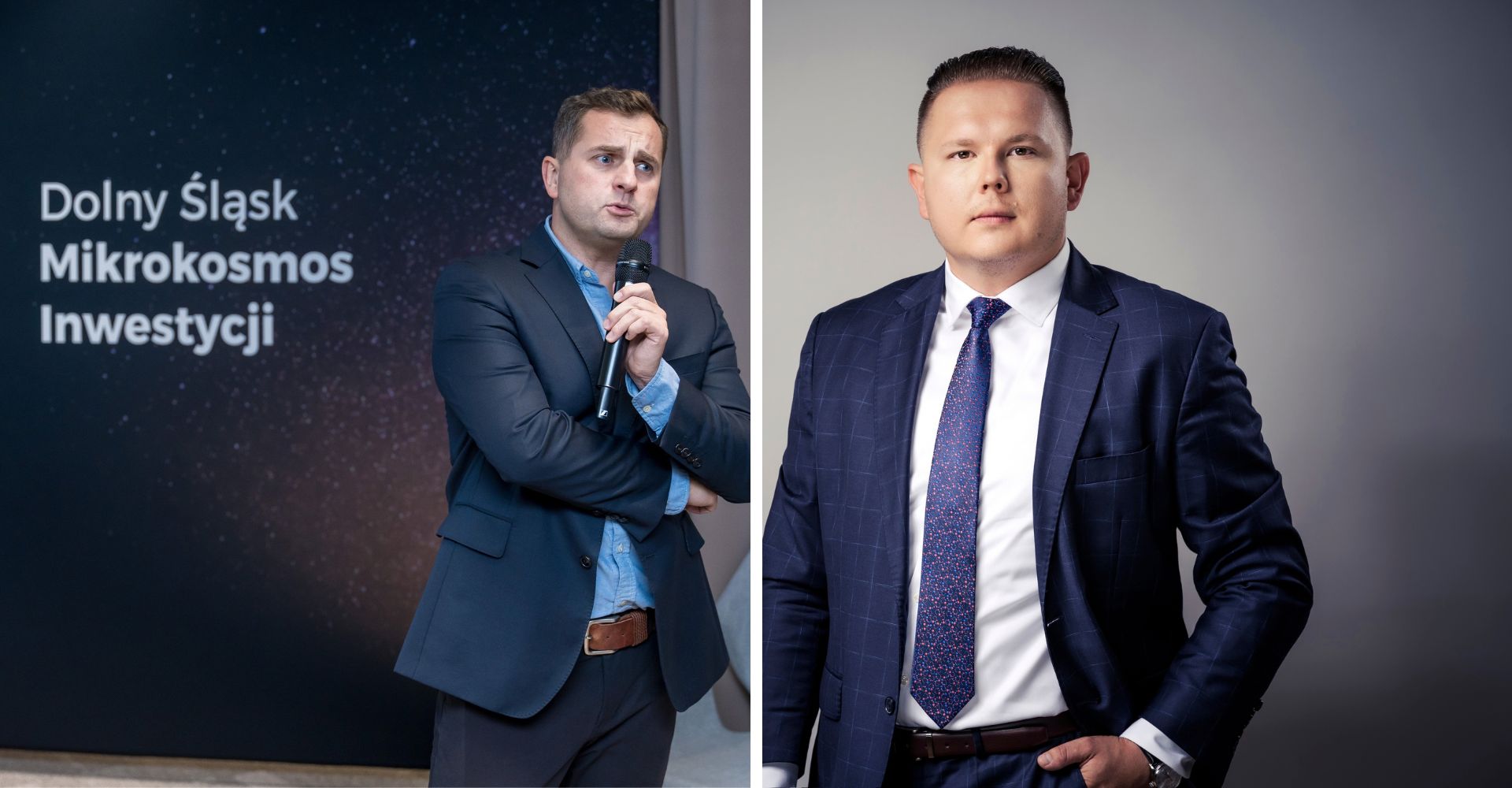
On October 5, 2026, hellobot’s move to Wrocław and PLN 5 million in funding from Lowercap and private investors were announced. At PKP Intercity, the company reported more than 50,000 calls handled, with 54 percent of matters completed without staff assistance.
Those figures give the current venture a more useful test than whether a synthetic voice sounds impressive during a demonstration. A railway passenger has a question about a ticket, a timetable or a bicycle. Completing that exchange is a small unit of success, repeated many times.
The company says the funding will support its team and European expansion. Niemczura’s career has brought him back to familiar work: getting a technical product into wider use, assembling the people to deliver it, and explaining the value in terms a customer recognises.
A little room to fly
Outside work, he has described himself as family-oriented, interested in documentary films and passionate about gliding. He has also compared startups with flying, particularly the freedom and sense of influence that both can offer. His alternative career choices included pilot and air traffic controller.
It is easy to see the appeal of the comparison without turning it into a theory of everything. Both occupations demand attention to circumstances. Neither is improved by pretending those circumstances can be wished away. A founder gets to make decisions while remaining answerable to what happens after them.
From wireless equipment to voice agents, Niemczura has kept returning to connections that make something possible. The more personal story concerns the responsibilities around those connections: when to stay, when to leave, what to learn and whom to trust with the next decision.
The teenager could buy the equipment himself. The companies required other people to help decide where the signal should go.