A solar panel does not ask for credit. The homeowner beneath it does. That small distinction explains Sunlight Financial, a company whose real territory lies between the enthusiasm of a home improvement sales pitch and the question that can end it: how will we pay?
- Contractors bring the customers; lending partners supply the money.
- Orange and Tangerine put financing inside the sales conversation.
- A 2023 restructuring exposed the risks behind a fast approval.
The original proposition was disarmingly practical. Put the loan application where the decision happens, often at the kitchen table. Let a contractor explain the project, present payment choices, and move the paperwork along without sending the homeowner away to arrange a separate loan. Every extra errand is another opportunity to postpone the roof.
The kitchen table becomes a checkout
Sunlight began in 2014, founded by Hudson Sustainable Group principals including Neil Auerbach and Wilson Chang. Its early focus was residential solar ownership: a homeowner could borrow to buy a system instead of leasing one. Tiger Infrastructure Partners supplied institutional equity in 2015. Orange, the proprietary financing platform, launched in early 2018.
This was a distribution idea as much as a lending idea. Contractors already had the customer and a reason to talk about money. Banks and credit unions had capital and an appetite for suitable borrowers. Sunlight connected them, applied credit expertise, and historically collected platform fees when loans were facilitated. The installer relationship supplied the introduction that a lender would otherwise have to find.
There is an important distinction for borrowers. Sunlight’s help center says customers pay the lender, whose identity appears in the loan agreement. The friendly interface and the institution receiving the monthly payment may be different organizations. Sunlight occupies the connecting tissue of the transaction.
Two citrus fruits, two sales pitches
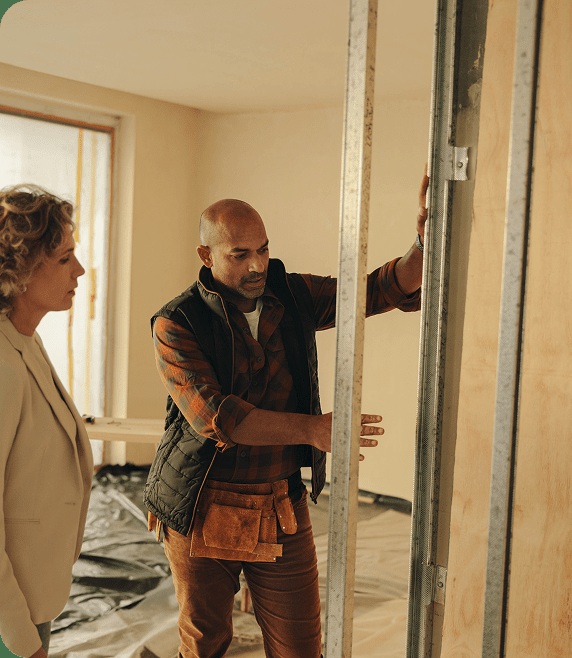
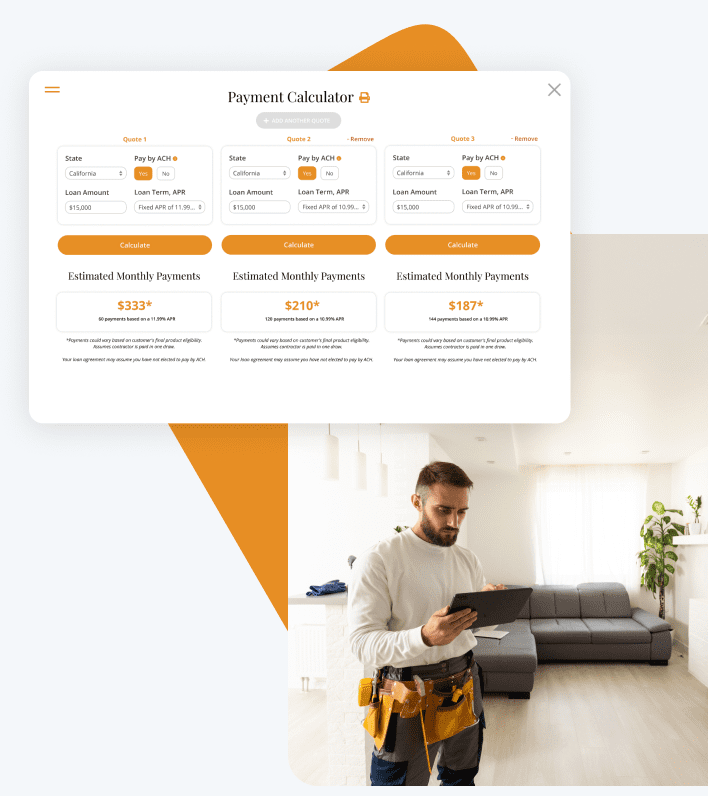
Today, Orange is pitched to established contractors who need to manage financing from application through funding. Sales teams can handle electronic documents, compare payment scenarios, and track their pipeline. The company advertises soft-pull approvals, with a hard inquiry delayed until funding. That makes exploring eligibility less consequential than immediately committing to a loan.
Tangerine addresses smaller and growing home improvement businesses. Its pitch is simpler: send a text or scan a QR code, offer financing, and pay no dealer fee. Sunlight advertises eligibility down to a 600 FICO score and terms up to 15 years. Those are advertised product parameters, not a promise that every applicant qualifies. No dealer fee also leaves the borrower’s interest and total repayment very much in the picture.
“What led us to Sunlight was the simplicity of the approval process”Dan Keebler, company-published customer testimonial
The distinction is useful. Orange sells operational control; Tangerine sells an easier entry point. Neither turns a renovation into an inexpensive purchase by itself. Both help a contractor keep the payment conversation attached to the job. That is the proposition against alternatives such as GoodLeap or a separately arranged bank or credit union loan.
The risk hiding between approval and installation
In June 2018, FTV Capital invested $50 million to support technology, products, and partnerships. In 2021, Sunlight’s proposed public-market combination carried an implied equity value of approximately $1.3 billion. The company completed the SPAC deal that July. Financing home upgrades had become a substantial business.
Then the machinery underneath the interface became visible. Sunlight’s 2022 annual report recorded a $32.4 million impairment after one large contractor became insolvent. The money had been advanced to that contractor. A homeowner’s willingness to repay could not repair the loss of a business expected to finish installations.
Impairment tied to one contractor’s insolvency in September 2022.
Sunlight responded by re-underwriting other advance-program contractors, cutting advance limits and per-job advance rates, increasing pricing, and removing some contractors’ eligibility. Here was a concrete change in judgment: the financing partner needed scrutiny alongside the household borrower.
Interest rates created a second problem. In its indirect channel, loans priced earlier could be sold later into a market demanding higher returns. Sunlight reported $22.7 million in negative platform fees from indirect loan sales in the fourth quarter of 2022. Fast approval had not eliminated the calendar. A delayed installation or loan sale could change the economics.
On October 30, 2023, Sunlight entered Chapter 11. It completed restructuring that December, with ownership passing to a consortium including a Greenbacker affiliate, Sunstone Credit, IGS Ventures, other investors, and Cross River Bank. The platform continued; the ownership changed.
A second act with more doors
In January 2024, Sunlight and Cross River announced the sale of approximately $300 million in solar loan assets. That figure describes a loan pool, not revenue or an equity funding round. In April, an IGS Solar pilot brought lease options alongside loans inside Orange, giving sales representatives another route through the affordability conversation.
By July 2025, Artemis had integrated Sunlight financing into its solar proposal software, allowing teams to compare loans, submit applications, and send contracts without leaving that workflow. Current Sunlight marketing reaches across roofing, HVAC, windows, decks, and remodeling. The homepage reports more than $12 billion in cumulative funded loans and 15,500 contractors served; these are company-reported totals, not annual activity.
What to borrow from the business
The transferable idea is to make payment a visible part of the service. Introduce options early, keep documents together, and make the next step obvious. Sunlight’s July 2026 sales guidance follows that logic from the discovery call through the invoice.
But clarity must include the whole price. In March 2024, Minnesota’s attorney general sued Sunlight and three other solar lenders, alleging misleading low-rate offers and concealed upfront fees. Those were allegations, not findings. A January 2025 federal order returned the case to state court without deciding its merits.
The practical test is whether the household understands the cash price, financed amount, interest, and total repayment, and whether the contractor and funding partner can deliver. When those conditions fail, a smoother application cannot rescue the project. Sunlight’s history makes that point unusually tangible: the decisive work continues long after the screen says yes.