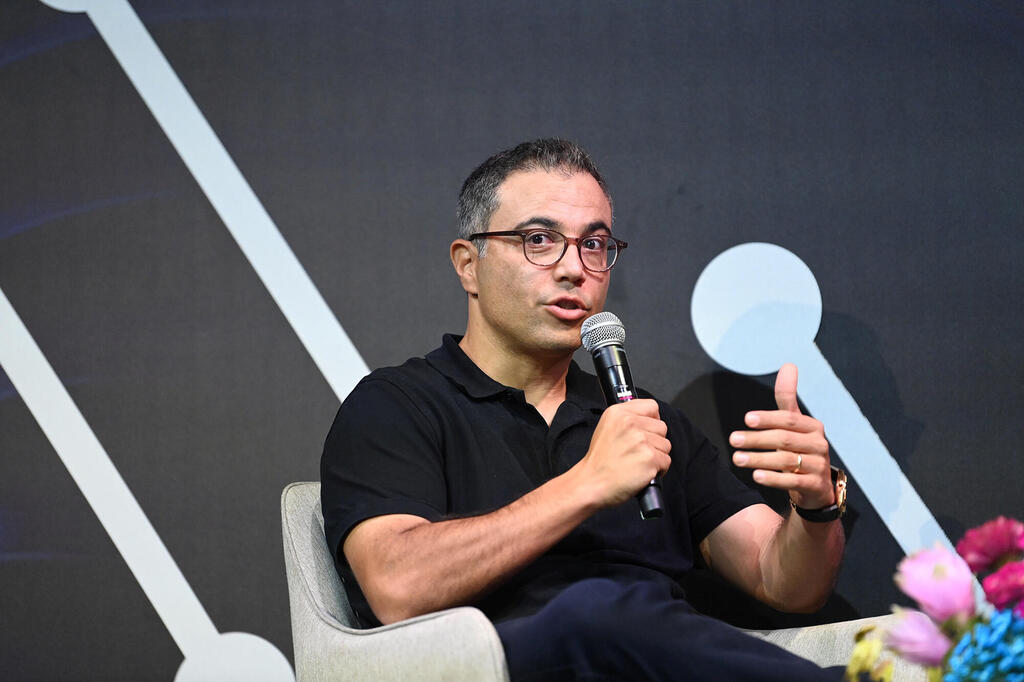
Avital Pardo had been trying to sell banks on artificial intelligence for years when a chatbot began helping with the introductions. At an AI conference in September 2025, the Pagaya co-founder described a change in his audience. Executives who had once doubted the technology were now using ChatGPT themselves. A product built for conversation had made another conversation easier: the one about letting algorithms participate in lending decisions.
There is a pleasing indignity here for a technologist. You can work on a difficult mathematical problem, build a company around it, and still need somebody else’s chat window to make the meeting go better. Pardo understood the usefulness of that turn. Familiarity had softened resistance. The people buying technology had finally acquired a personal reason to believe it could work.
His career gives that observation weight. He helped design Pagaya’s AI credit model and system, served as its founding chief technology officer, and is now co-founder and deputy chief executive. The technical work is central to his story. So is the distance between producing a useful prediction and persuading a financial institution to act on it. A model can be ready before its audience is.
Mathematics meets an application form
Pardo studied mathematics and physics at the Hebrew University of Jerusalem, then earned a master’s in mathematics. He graduated from the Israeli military’s Talpiot program and described roughly a decade of service, including work with large datasets in the Intelligence Corps. That was where his interest in data took hold. His later move into financial technology gave that interest a very particular object: the decision to lend.
At Fundbox, where he was among the early employees, he worked on algorithms in 2014 and 2015. He later explained that his task at the small Tel Aviv fintech was to automate the lending process. Working there helped him see how AI might expand access to credit. The journey from a mathematics classroom to a loan application looks less surprising when the common thread is deciding what information can tell you.
Credit puts an unusually practical question to a mathematical mind. Someone wants money now and promises to repay it later. The outcome arrives after the decision. The work therefore carries consequences beyond whether the calculation is elegant. Pardo’s chosen field attaches a household’s opportunity and an investor’s exposure to the same prediction. That makes the application form a demanding place to put a theory to work.
Three founders, two sides of the table
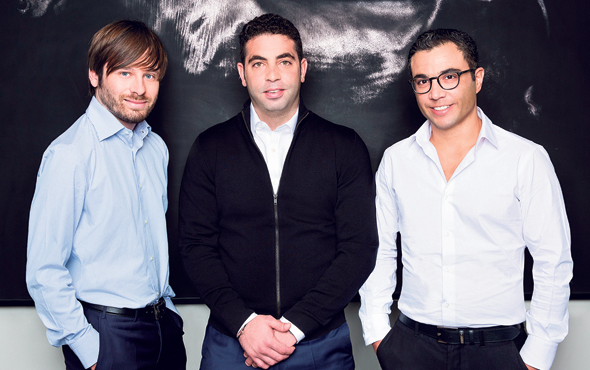
In 2016, Pardo co-founded Pagaya with Gal Krubiner and Yahav Yulzari. The division of experience mattered. Krubiner brought a background in banking and structured credit; Yulzari brought capital-raising experience; Pardo supplied the data-science expertise. Their business connected lenders and institutional investors, with technology helping assess the credit moving between them. The company’s structure made room for all three disciplines.
A lender already has customers and applications. An institutional investor has capital to deploy. Pagaya’s proposition was to connect those interests around loans that an originator might otherwise be unable or unwilling to fund. Pardo’s models belonged inside that arrangement. A better assessment could matter to several parties at once, provided the money and the institutional relationships were there to support it.
That last condition helps explain the three-founder design. A prediction on its own cannot finance a loan. Nor does available capital explain which applications deserve it. Seen this way, Pagaya was an attempt to make different kinds of expertise cooperate. The company asked a technical system and a financial system to arrive at a useful answer together, with each bringing something the other needed.
A prediction needs a route to a loan
- 01Lending partnerReceives the customer’s application
- 02Pagaya’s networkApplies AI credit analysis
- 03Investor capitalSupports loans through funding structures
Twenty people and a former AmEx chief
By August 2018, Pagaya had raised a $14 million Series B led by former American Express chief executive Harvey Golub and Oak HC/FT. The business then employed 20 people. It intended to use the new money to hire engineers, AI developers and salespeople. That list neatly describes the demands on a young company selling mathematics to finance: build the machinery, improve it, and find people willing to use it.
The same period brought institutional substance to the experiment. Pagaya had secured $75 million in debt financing from Citigroup earlier that year, and reported managing $250 million in capital. The enterprise already had to handle both software development and the movement of investment money, making the funding arrangements part of its daily business alongside the code.
There is a human-scale detail in the headcount. Twenty colleagues can fit into a fairly ordinary group photograph. Yet their business already required relationships with institutions whose names were familiar far beyond their office. Pardo’s work was growing inside that mismatch of scale: a small team building systems intended to participate in a much larger market.
A bell, followed by a market
Pagaya completed its merger with EJF Acquisition Corp. in June 2022. Trading on Nasdaq began on June 23 under the symbol PGY. Six years after the founding, Pardo’s work sat inside a public company. The listing gave the enterprise a new audience, including shareholders who would encounter its story through earnings, filings and a daily share price.
The debut also supplied an abrupt lesson in the difference between a company’s plans and the market’s timetable. Pagaya entered at an $8.5 billion merger valuation, and its shares fell more than 20 percent on their first trading day. Krubiner publicly emphasized the longer horizon of the investors who had supported the business. The market offered its own, much shorter response.
For Pardo, the episode placed the algorithmic work in a new setting. A founder can keep refining a system while investors change their opinion of the enterprise around it. The listing was a career milestone; the reception was a reminder that technical development and public valuation proceed on different clocks. Neither clock politely waits for the other.
A second look, built into the plumbing
Pagaya’s infrastructure connects to partners through an API, allowing its technology to work within existing lending operations. This is a consequential design choice for Pardo’s kind of business. A customer can remain with a familiar lender while another system participates behind the scenes. The technology’s usefulness need not depend on the borrower recognizing the technology company’s name.
The appeal of that arrangement is easiest to understand from the bank’s side of the table. Building a research organization, maintaining models and arranging investor capital are substantial undertakings. Pagaya offers a way to combine those capabilities through a partnership. The integration therefore belongs to the product’s story as much as the prediction does. An accurate answer needs a practical route into a decision.
The word access deserves care here. A model that expands the set of applications a lender can consider still has to distinguish among them. Approval has a price, a repayment obligation and a risk attached. Pardo’s ambition to make financial opportunities available to more people depends on those details. The useful second look is one that can support a loan, rather than merely produce a more cheerful screen.
The algorithm needs colleagues
Pardo’s public advice on running technology teams is strikingly concerned with ordinary workplace friction. In February 2024, he urged leaders to balance strategic goals with clearing internal bottlenecks. He wanted technical priorities to reflect what helps the business move forward. It is a practical concern for somebody whose work must travel through several teams before reaching a customer.
Later that year, he emphasized interpersonal skills as AI changed working life. His examples included communication, empathy, leadership and the ability to relate to different groups. He also advocated a shared workplace language when discussing collaboration across technical teams. These are his stated management priorities, and they give his technical career a less mechanical texture.
The fit with lending is easy to see. Engineers, commercial teams and people assessing financial exposure can use the same word while meaning different things. A founder who can make those conversations clearer has work to do even after the software runs. A mathematical education may help identify a difficult problem. Getting colleagues to agree on which problem needs attention takes another set of skills.
“My job was to fully automate the lending process.”
Avital Pardo, recalling his early fintech work, 2023
Who chooses the measure?
In May 2025, at the Dubai FinTech Summit, Pardo argued that the companies holding valuable data would benefit as large language models became more widely available. His view put the emphasis on information and the ability to use it. For a founder whose company works with credit decisions, that was a familiar concern in a newly crowded conversation.
By September, he was also raising a question about incentives. Announcing his essay on the AI industry, he asked whether the technology would serve users’ interests or keep them engaged. It is a useful question for someone who builds predictive systems. Once a team chooses a measure of success, it gives the machinery a direction. Choosing the measure is a human decision.
Those two public positions sit comfortably together. Pardo welcomes wider adoption while asking what adoption is meant to achieve. His career supplies a concrete test case: decisions about credit, made within institutions, connected to actual money. The outcomes matter more than the novelty of the interface. A system earns its place by helping somebody make a decision that holds up after the demonstration ends.
Pardo’s story began with learning to read data and grew into the task of making that knowledge useful to other people. Today his deputy chief executive role places him in the leadership of the company he helped found. The recurring challenge remains recognizable: find information worth acting on, build a way to act on it, and bring the people along. The bank meeting still matters. The chatbot can help with the introduction.