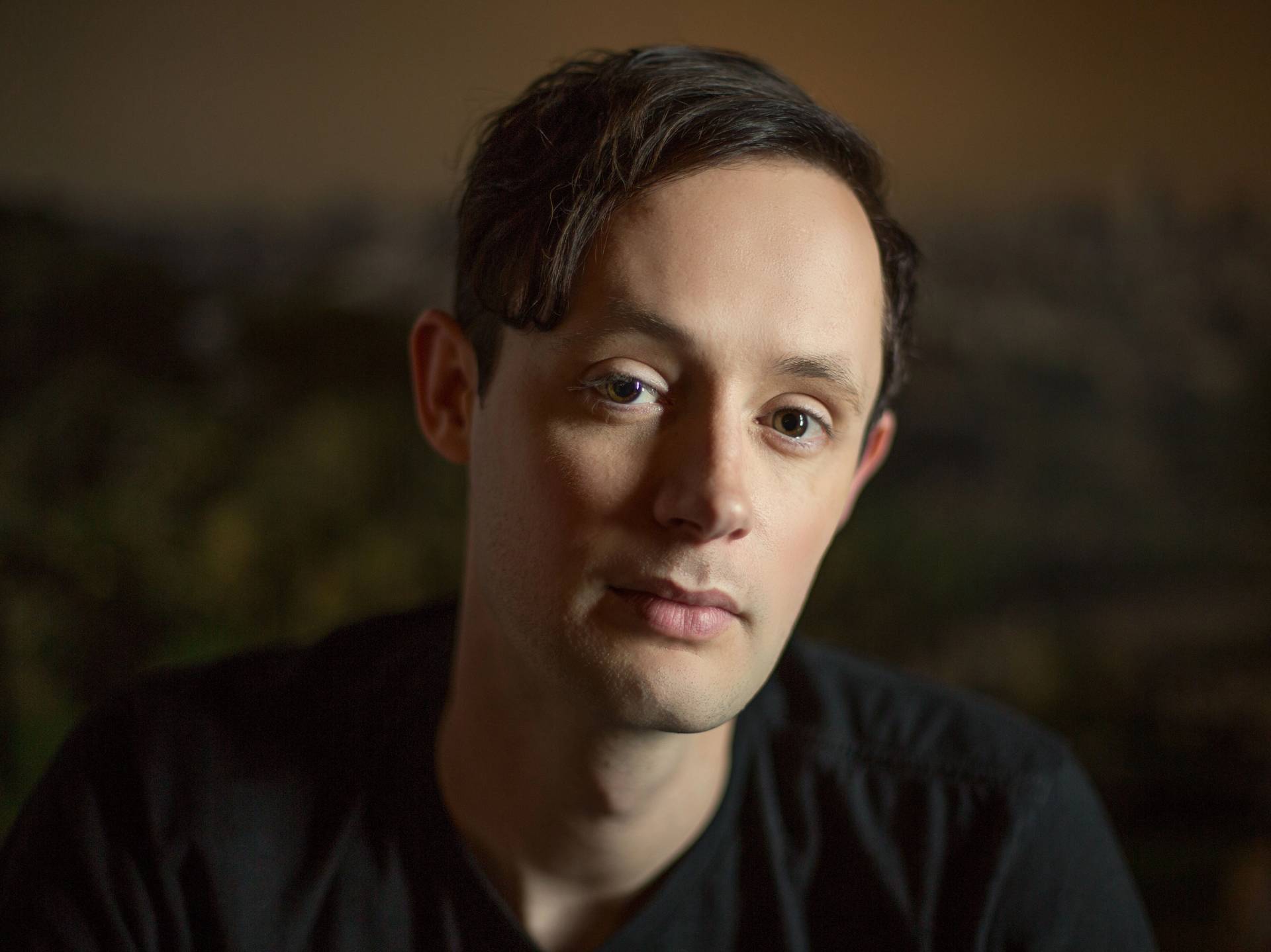
Profile
The Last Hedge Fund
Richard Craib grew up in South Africa, taught himself to code for fun, played chess and poker, and traded stocks as a hobby. He was the kind of student who made the Dean's List at Cornell while studying pure mathematics - not because the career path was clear, but because the structure of the problems was beautiful. Wall Street wasn't the plan. It became the laboratory.
At Prudential's M&G, the $15 billion asset manager, Craib built a global equity fund powered by machine learning. Working inside the machine, he saw a structural absurdity. The best predictive models might not belong to hedge funds at all. They might belong to a PhD student in Shanghai, a quant developer in Moscow, a data scientist in Lagos who'd never once set foot on a trading floor. The talent was distributed. The capital was not.
We saw a future where the way Millennium works is gonna seem outdated in 2030. Where you hire all these people, pay them a lot, and then they read the newspaper and code. I think it'll be looked back on in almost disgust by our grandchildren.
- Richard Craib, Founder & CEO, Numerai
In October 2015, Craib founded Numerai in San Francisco with a concept that still sounds improbable: encrypt your entire financial dataset, post it to the internet for free, and let thousands of anonymous data scientists build predictive models on top of it. Aggregate their predictions into a meta-model. Use that meta-model to run an actual hedge fund. Pay contributors whose models work. Burn the stakes of those whose models don't.
The encryption was the key insight. By obfuscating all features - companies, sectors, dates, geographies - Craib removed every advantage that Wall Street's information moat provides. A data scientist with no finance background could compete on pure modeling skill against the quants of Goldman Sachs and Renaissance Technologies, without ever knowing what they were predicting. The data was real. The labels were hidden. The game was clean.
Within the first year, 7,500 data scientists from around the world were submitting models. First Round Capital and Union Square Ventures wrote checks. Howard Morgan - one of the founders of Renaissance Technologies - backed it. Naval Ravikant and Paul Tudor Jones followed. By 2017, Craib landed on Forbes' 30 Under 30 list in finance. But the move that would define his legacy came that same year: Numerai launched its own cryptocurrency.
The Numeraire token - NMR - was not a fundraising instrument. Craib didn't sell it to investors. He gave it away to the data scientists who had already been contributing to the platform, distributing one million tokens to 12,000 people based on their tournament history. The mechanics were surgical: stake NMR on your model, earn rewards if it performs, lose your stake if it doesn't. Suddenly, every model submission was a financial bet. The incentives were perfectly aligned - no manager needed to evaluate anyone's work. The market did it automatically.
That structural insight - using a cryptocurrency not to raise money but to solve the principal-agent problem at the heart of asset management - is what separates Numerai from every other quant fund in the world. It's also what attracted JPMorgan Asset Management, which in August 2025 committed $500 million in capacity to the fund, nearly doubling Numerai's assets under management to close to $1 billion.
I started Numerai 10 years ago with a specific vision: to help AI reach the stock market, to eliminate the human capital wasted in the hedge fund industry, and to be investment capital - not arbitrage capital. Today, that vision is a reality.
- Richard Craib
The 2024 numbers made the case concrete. Numerai's flagship global equity hedge fund delivered a 25.45% net return, recording only one down month the entire year. This came after a difficult 2023 - the fund lost 17% - making the recovery all the more significant. In November 2025, Numerai closed a $30 million Series C round at a $500 million valuation, led by top university endowments. The investors Craib described as "long-term, deeply informed, and willing to back a very different model of asset management built for the 21st century."
The platform has since expanded. Numerai Signals, launched in 2019, sources original stock market signals from any dataset worldwide - letting quant teams at companies like PayPal monetize internal data intelligence without building a hedge fund. Numerai Crypto, launched in June 2024, extends the tournament model to cryptocurrency markets. The Discord server hit 7,000 members in 2025. In May of that year, Numerai completed its 1,000th tournament round, generating 1,000 unique meta-models from the collective submissions of thousands of anonymous contributors.
None of this looks like a traditional hedge fund because it isn't one. There's no analyst reading quarterly earnings. No portfolio manager with a Bloomberg terminal making conviction calls. The trading signal emerges from the aggregation of thousands of independent models, built by people who have never met each other, in countries Craib has likely never visited, by methods his team has never reviewed. The meta-model is the manager. Alignment is enforced by the burn.
Career Arc
Timeline
2007
Enrolled at University of Cape Town, studying Mathematics & Economics. Met future DataProphet co-founders Frans Cronje and Daniel Schwartzkopff.
2008-2009
Exchange student at UC Berkeley.
2009-2012
Bachelor's degree in Pure Mathematics from Cornell University. Made the Dean's List. Taught himself to code, played chess and poker, traded stocks.
2012-2014
Co-founded DataProphet with UCT classmates; served as Director of US Operations.
2013-2015
Built global equity fund powered by machine learning at Prudential (M&G), $15B AUM. Developed the data regularization approach that would become Numerai's foundation.
Oct 2015
Founded Numerai in San Francisco. Launched encrypted financial data tournament for data scientists worldwide.
Dec 2016
Raised $6M from First Round Capital and Union Square Ventures. Platform attracted 7,500 data scientists in its first year.
Jun 2017
Launched Numeraire (NMR) - world's first cryptocurrency issued by a hedge fund. Distributed 1M tokens to 12,000 data scientists with no ICO. Named to Forbes 30 Under 30 - Finance.
2019
Launched Numerai Signals - sourcing original stock market signals from any dataset, from anyone in the world.
Jun 2024
Launched Numerai Crypto, expanding the tournament platform to cryptocurrency markets.
2024
Delivered 25.45% net return - only one down month for the year. AUM grew to $550M.
Aug 2025
JPMorgan Asset Management committed $500M capacity, bringing Numerai's AUM to nearly $1 billion.
Nov 2025
Raised $30M Series C at $500M valuation, led by top university endowments.