Person / Data & AI Executive
Robert Huntsman
He points neural networks at the documents the rest of finance dreads. In private markets, that is the whole game.
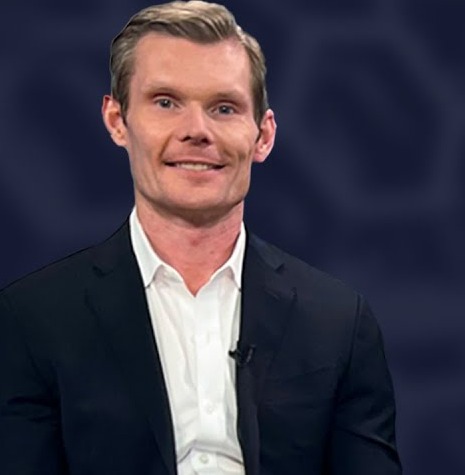
He points neural networks at the documents the rest of finance dreads. In private markets, that is the whole game.
Most data chiefs guard a cost center. Huntsman runs a profit one.
Right now, Robert Huntsman is the Chief Data Officer at iCapital, the platform that quietly powers a large slice of the world's alternative-investment marketplace. His mandate is unglamorous and enormous: build the teams, technology, and rules that let the firm ingest, protect, and analyze data across private equity, hedge funds, and private credit. When a wealth manager wants to put a client into a fund that exists mostly as a stack of bespoke PDFs, the machinery that makes that possible runs through his org chart.
The thing he keeps coming back to is documents. Private markets have always moved slower than public ones for a boring reason: the information lives in unstructured paper. Capital calls, subscription agreements, performance statements, each one formatted by whoever drafted it. Huntsman's bet is that large language models finally crack this, reading the dense, irregular text and turning it into structured data a system can actually use. He calls it the biggest innovation his field has seen in years, and he is staking iCapital's reporting speed on it.
What separates his version of the pitch from the usual AI evangelism is the second half of the sentence. He does not want to fire the humans. He wants AI to find the patterns so a team can scale without hand-building a fresh data model for every new fund structure, and then keep human expertise in the loop where judgment still beats prediction.
I am beyond excited to join the exceptional team at iCapital, known for its leading Alternatives platform worldwide.
Early roles at a bulge-bracket bank and a quant-driven shop put him next to markets, models, and the messy reality of financial data well before "data scientist" was a job title everyone wanted.
A stint at the financial-technology and consulting firm, where the problem set shifts from one desk to dozens of institutions, each convinced their data is uniquely difficult.
As Chief Data Scientist he ran a team of more than 150, and turned AI from an R&D line item into roughly $100 million a year. The work that proved a data team can pay for itself many times over.
Public markets are clean, tagged, and machine-readable. Private markets are not. Huntsman's whole thesis is that the gap between the two is closing, and that language models are the thing closing it. The bars below sketch the contrast he is working against.
Illustrative. Reflects Huntsman's stated view that LLMs convert unstructured fund documents into usable, structured data.
Cuts his teeth at the intersection of finance and technology, close to markets and the data that drives them.
Works inside a financial-technology and consulting firm, broadening from a single institution to many.
Directs 150+ data scientists and delivers roughly $100M in annual profit through AI innovation over a five-year run.
"Tomorrow marks the beginning of my journey," he writes, trading insurance giant for the alternatives platform.
Talks AI in investment management on iCapital's Beyond 60/40 and Advisorpedia's Power Your Advice, spotlighting the Architect portfolio tool.
After an incredible five years at Prudential, I am thrilled to announce that tomorrow marks the beginning of my journey as the Chief Data Officer at iCapital.
On where the real leverage hides.
Ask Huntsman what changed and he points at the same place twice. First, the arrival of large language models, which he frames as the single biggest recent innovation in his world precisely because they read the unstructured documents that bottlenecked everything. A neural network trained to predict the next word turns out to be very good at pulling numbers out of a subscription agreement.
Second, the discipline of using AI to find patterns rather than to replace people. The trap in alternatives is bespoke structure: every fund a little different, every document a little off. The lazy fix is to hand-build a new data model each time. His fix is to let the models generalize, so the team scales operations instead of headcount, and humans spend their judgment where it counts.
The third leg is the one nobody puts on a conference poster: privacy and governance. Encryption, strict controls, and systems that bend with shifting regulation, especially around personally identifiable information. It is the part that keeps a data-rich platform out of trouble, and he treats it as a feature, not a chore.