A water-treatment dealer can explain what a filtration system does. Explaining how a family will pay for it is another conversation. Robert Chadwell knew both sides of that problem: he had worked in banking and sold water-treatment equipment. Aqua Finance grew out of the space between a useful product and a customer’s available cash. The interesting part is where he put the lender: beside the person making the sale.
- Aqua finances purchases through dealers, contractors and retailers.
- Its territory runs from household water systems to boats and RVs.
- The business depends on making applications, verification and payment work together.
A lender at the kitchen table
Think of a furnace replacement or a bathroom renovation. The customer has already found someone to do the work. Now the price arrives. Aqua gives the contractor a financing option to offer at that moment. The contractor gets a path toward completing the sale; the customer gets a way to spread the purchase over time. Aqua originates and services the financing.
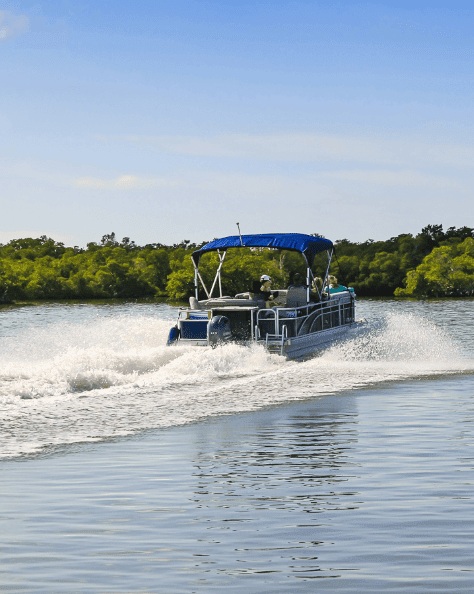
This is indirect consumer lending. Dealers supply the route to the borrower. The product list explains why that route matters: water softeners, roofing, windows, air conditioners, hot tubs, boats, motorhomes. Each purchase involves a seller with specialized knowledge. Aqua’s bet is that the seller should also have a financing process that fits the purchase.
That is a specific position in a crowded market. Service Finance finances contractor projects. Synchrony offers home-project financing too. Banks and credit unions remain alternatives for relevant purchases. Aqua competes through its mix of industries, credit coverage, dealer relationships and support. Speed alone would be a thin distinction in this company.

The customer before the customer
Aqua has two audiences with different clocks. A household may repay for years. A dealer needs to know whether today’s sale can proceed. A good lending relationship must accommodate both. Aqua’s October 2026 announcement describes more than 6,000 dealer relationships, giving it thousands of places where that conversation can begin.
“It’s easier to work with one finance company than multiple vendors, which would be a nightmare.”John Capone, Culligan Waterco · Aqua-hosted testimonial
Read that as a remark about administration. A dealer operating across markets wants fewer processes to remember and fewer organizations to chase. Aqua’s support proposition includes people who understand the dealer’s business. Its own lending commentary also describes assessing income, debt obligations and financial history alongside a credit score. Serving different credit profiles requires that underwriting work behind the convenient application.
The delay was part of the product
Aqua’s account of its Aqua+ redesign starts with dealer complaints: applications needed to be simpler and credit decisions faster. The response included prefilled information, soft-inquiry preapprovals and digital funding verification. The company says standard application decisions arrive within seconds. That describes a decision, with conditions still to satisfy before money moves.
The frustration is easy to understand. In a December 2024 article, Aqua argued that even a day or two of waiting could send a prospective customer elsewhere. Its answer was to reduce the work surrounding the loan. The lesson for other businesses is practical: examine the interval between a customer’s intention and the completed transaction. Repeated information and unnecessary handoffs belong on the same improvement list as the product itself.
- 01ApplyCustomer and purchase information
- 02DecideCredit assessment and an offer
- 03Verify + fundCompletion and required documents
Follow the money carefully
Dealer enrollment is free, with no monthly membership charge or minimum volume. Individual home-related transactions can carry risk discounts and promotional fees; recreation dealers face a different fee structure. Financing therefore has to make sense at the deal level. A contractor cannot infer the margin on a job from the price of joining the program.
At the ownership level, another distinction matters. In November 2021, Athene and Apollo announced a controlling-stake acquisition at an approximately $1 billion company valuation. That figure describes what the business was valued at in the deal. It does not establish that Aqua raised a billion dollars. Athene subsequently reported closing the transaction on July 22, 2022.
- ~$1B
- Company valuation
2021 acquisition announcement - $2.8B
- Loan portfolio
2022 company milestone - >$9B
- Cumulative contracts financed
2026 company milestone
Apollo’s announcement also explains the attraction from the investor’s side: recurring consumer loan origination. Dealers bring purchase opportunities; the lending platform turns qualifying purchases into financial assets. Aqua occupies the meeting point between distribution, credit judgment and capital. A financing company needs all three to keep making loans.
Moving upstream from the showroom
The recent partnerships follow the same logic. Brunswick announced Aqua as the retail financing partner for Brunswick Finance in October 2023. In May 2025, Rollick and Aqua announced an integration putting prequalification inside RollickEngage, with Winnebago and E-Z-GO among the initial manufacturers using it. A shopper could begin exploring financing before arriving at the dealership.
Then, in August 2025, Aqua and Wells Fargo Inventory Finance announced a program connecting retail financing with dealer inventory financing. These are different loans: one supports the buyer’s purchase, the other supports stock sitting at the dealership. Connecting their processes promises dealers a less awkward transition from holding inventory to selling it.
The next detail is wonderfully concrete: photographs of finished work. In February 2026, Aqua announced its implementation of Truepic Vision for project-completion verification. The technology checks image authenticity, capture time and location. Financing a home project requires confidence that the thing being financed actually exists. Convenience creates its own verification work.
What survives the sales pitch
On October 19, 2026, Aqua named Michelle Gill CEO, succeeding Kurt Grossheim. Gill arrived from PayPal after earlier roles at SoFi and Goldman Sachs. The announcement emphasized technology adoption and growth. She inherits a distribution system built around merchants who already have something a consumer lender needs: a customer considering a specific purchase.
The boundary is equally specific. Financing still requires qualification, workable terms and proper completion. It cannot make an unsuitable purchase suitable. Aqua’s useful idea is the placement: bring the payment conversation into the purchase, then make the steps around it easier to complete. For a dealer staring at an unsigned order, that is a consequential piece of the product.