Consider the least glamorous part of buying a sofa: the last payment. The cushions have settled. The delivery excitement has evaporated. Somewhere, a balance remains. Affirm’s proposition is to bring that distant moment into the checkout screen. Here is the schedule. Here is the interest. Here is when you are done. The furniture is optional; the ending is the product.
Founded in 2012, Affirm offers credit for individual purchases, with repayment divided into installments. Shoppers get a timetable; merchants get another way to close a sale. The company’s central promise is unusually easy to test: no late fees or hidden fees. It can charge interest, sometimes substantial interest. But the agreed cost is disclosed before the borrower accepts.
- Credit for a purchase, with a repayment schedule and disclosed total cost.
- Merchants pay for a chance to turn more browsers into buyers.
- No late fees does not mean every loan is interest-free.
02Four payments. Or a much longer conversation.
In the United States, Pay in 4 divides an eligible purchase into four interest-free payments, typically two weeks apart. Monthly plans stretch repayment over longer periods. Published U.S. rates range from 0% to 36% APR, depending on credit and the offer. Approval is required, terms vary, and some purchases need a down payment. The inviting checkout button opens a loan agreement.
The practical appeal is timing. A shopper can match a purchase to future paydays rather than pay everything immediately. The danger is timing, too: several tidy schedules can add up to an untidy month. A clear loan remains a financial obligation. The smaller payment deserves attention only after the total cost and existing commitments have been counted.
Affirm’s own example makes the distinction concrete. A $400 purchase can mean four payments of $100 at 0% APR. Another illustrated option requires $80 upfront, then twelve monthly payments of $28.88 at 15% APR. That second path totals $426.56. The monthly number gets smaller; the final bill gets bigger. Both numbers belong in the decision.
03The store pays for the yes
Affirm sits between consumer lending and merchant payments. Its revenue includes merchant network fees, interest income, card network revenue, gains on loan sales, and servicing income. Banks originate many of the loans; Affirm’s funding system includes loan sales, warehouse facilities, and securitizations. Behind the friendly checkout lives the machinery of credit markets.
Why would a retailer pay? Because hesitation is expensive. In 2021, Affirm said early users of Adaptive Checkout saw an average 26% conversion increase compared with offering its monthly plans alone. That was a company-reported result for a particular comparison, not a promise to every shop. Still, it explains the bargain: financing can be a sales tool, and the merchant helps pay for it.
Klarna, Afterpay, PayPal’s installment products, and credit cards compete for the same decision. Affirm’s pitch combines short and longer repayment plans, transaction-level underwriting, and its fee policy. Its expertise is assessing a particular purchase quickly enough for checkout, then finding capital to fund it. A polished button without those abilities would be an expensive decoration.
04Then money became expensive
The premise had a stress test. In February 2023, Max Levchin announced a 19% workforce reduction, approximately 500 people. Affirm had hired ahead of the revenue needed to support those employees. Interest-rate increases beginning in 2022 raised its borrowing costs while weighing on consumer spending. The growth assumptions and the cost base had drifted apart.
Levchin’s explanation was direct: “I acted too slowly.” The announced restructuring was expected to cost $35 million to $39 million. The company also shut down its crypto initiative. This was a narrowing of ambition under pressure: fewer side projects, fewer employees, and a more demanding calculation of what each transaction could earn.
There is a lesson here for anyone copying the model. Removing penalty fees does not remove funding costs or defaults. Revenue growth cannot rescue a loan whose economics are wrong. The useful habit to copy is making the price understandable; the harder habit is matching expansion to the money available to support it.
“I acted too slowly.”
MAX LEVCHIN / FEBRUARY 2023
05The checkout button leaves the checkout
Affirm was founded by Levchin, Nathan Gettings, Jeffrey Kaditz, and Alex Rampell. Levchin brought experience as PayPal’s co-founder and former technology chief. The new company’s stated mission was to deliver honest financial products that improve lives. Translating that sentiment into a distribution strategy took it well beyond a single merchant’s website.
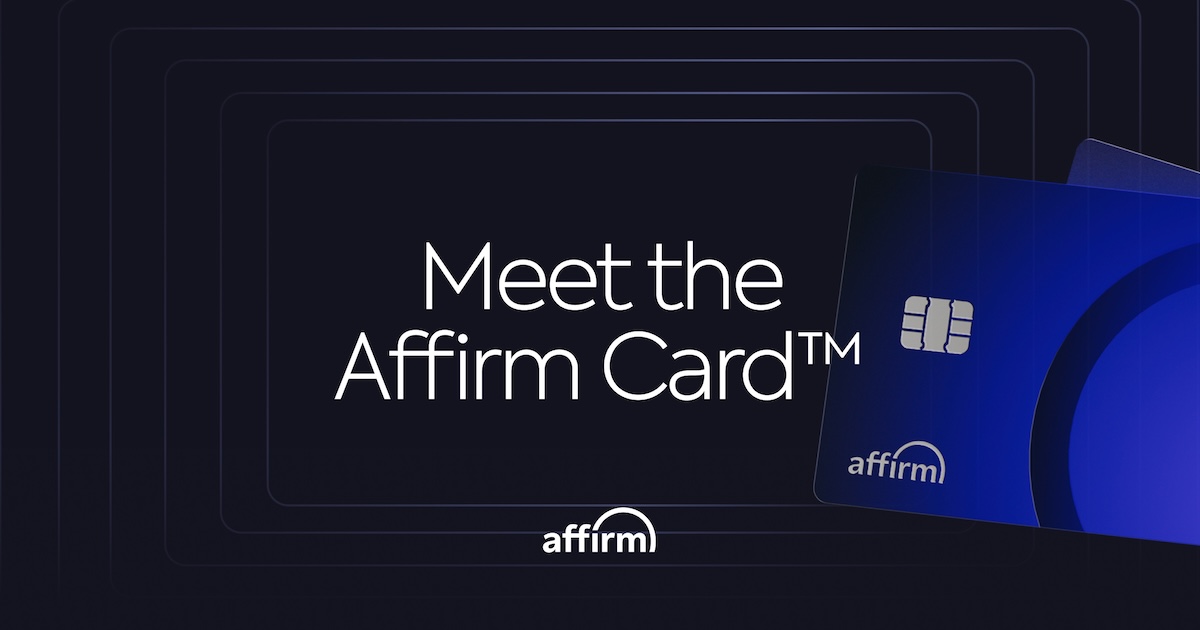
The Affirm Card lets eligible customers pay in full or request installment plans through the app. It is a Visa debit card, with financing attached to eligible purchases. Apple Pay added Affirm for U.S. online and in-app checkout in September 2024. Shopify’s Shop Pay Installments, powered by Affirm, launched in Australia in August 2026. Amazon added Affirm installment options in the UK the following month.
These relationships solve a different problem from underwriting: finding the customer. A retailer, shopping platform, card, or digital wallet can put Affirm where a purchase already happens. In October 2026, Antom announced it would offer Affirm to its U.S. merchants. Each integration adds another entrance to the same lending system.
06A bigger network, one decision at a time
By June 2026, Affirm reported 27.8 million active consumers, meaning people who had transacted at least once in the preceding twelve months. Fiscal 2026 purchase volume reached $50.2 billion, versus $36.7 billion a year earlier. Revenue was $4.26 billion; operating income was $417 million. Purchase volume measures shopping financed through the platform. It is not company revenue.
The company is still changing the decision beneath the button. In September 2026, it introduced a transformer-based underwriting model that reads the sequence and timing of credit-history events. Affirm reported 3.4% more completed purchases in an initial controlled deployment. That is a measured company claim about one rollout, not proof that every borrower or merchant will benefit.
For a shopper, the useful question is smaller than the company’s ambition: does this specific schedule fit? For a merchant, it is whether extra sales justify the financing cost. For Affirm, it is whether enough people repay while capital remains available. Its proposition survives only when those three calculations work together. The test is easy to describe and difficult to repeat at scale: approve a purchase quickly, price the risk correctly, and collect the scheduled payments. Each new country adds another set of rules and another group of customers whose circumstances can change. The last payment is still the one that matters.