A motorcycle can be chosen long before it can be bought. The buyer knows the model, perhaps the color, perhaps even the road for the first ride. Then comes the less photogenic question: how to pay. Octane has spent its existence working on that interval between wanting something and being able to leave the dealership with it.
- For buyers: check personalized financing offers through soft-pull prequalification.
- For dealers: handle applications, deal adjustments and digital contracts in one platform.
- For brands: offer a finance program powered by Octane’s lending infrastructure.
The marketplace left a job unfinished
Octane began in 2014 as a technology-enabled lender marketplace. It connected dealers with financing providers in powersports, a category covering machines such as motorcycles, ATVs and personal watercraft. Co-founder and CEO Jason Guss had worked at Capital One. The problem was familiar financial work, attached to purchases that conventional technology businesses could easily overlook.
Co-founder Mark Davidson now leads growth. The customers sit on both sides of the transaction: people seeking a vehicle, and businesses trying to sell one. Manufacturers add a third constituency, with their own interest in dealer sales and repeat purchases. Octane’s expertise lies in making credit decisions and coordinating those interests through software.
There was an appealing proposition here: enter the customer’s information once and reach multiple lenders. But connecting the parties left other work to be done. Dreamit, an early investor, described the team identifying a need to serve near-prime and subprime buyers. In 2016, Octane launched Roadrunner Financial, its in-house lender.
That change enlarged the assignment. A marketplace can introduce a buyer to someone willing to lend. A lender must decide whether the loan makes sense. Octane added responsibility for credit, then built servicing through Roadrunner Account Services. Its history records an expansion of the original idea, rather than evidence that the marketplace simply collapsed.

Put the answer before the showroom
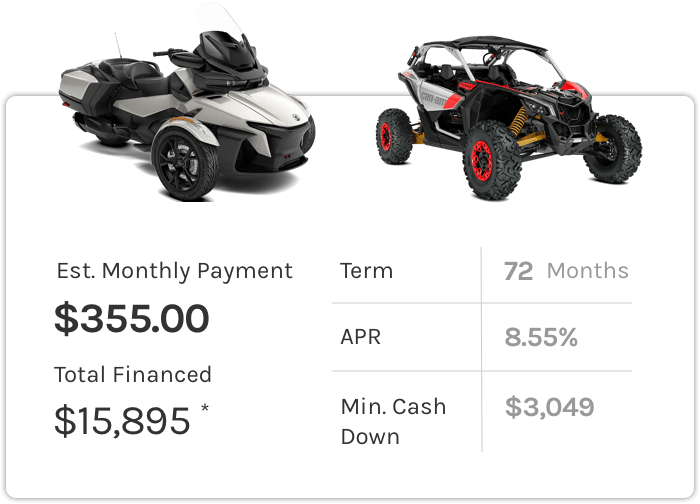
The consumer product starts with a useful reduction in uncertainty. Octane lets shoppers select a vehicle and check personalized offers without affecting their credit score at prequalification. Its website describes programs for prime borrowers, credit builders and first-time buyers. An offer helps someone shop with a budget, instead of discovering the budget after falling for a machine.
The dealer gets a different set of conveniences. A digital application leads into credit decisions, adjustable down payments and accessories, automatically generated contracts and online signing. Dealer signup is advertised as free. SafeCheck, also offered free within the dealer platform, provides authorized access to credit reports without a credit-score impact.
Prequal Flex moves that process into the dealer’s marketing. Links and personalized QR codes can travel through advertisements, inventory pages, stickers and hang tags. A customer need not begin at the finance desk. The application can begin wherever the shopping begins.
“Prequal Flex has made it easier to market our dealership.”
Ben Hoffman, Offroad Motorsports & Cycle Sales, 2023
The detail worth copying is the placement. Octane attaches a useful next action to the moment a buyer is considering a product. For another business, the equivalent might be an eligibility check or a delivery estimate. The principle works when uncertainty is preventing the next step and the answer can be supplied credibly.
That connection to the category appears inside the company, too. Its careers page offers employees up to $500 a year for powersports safety equipment, alongside continuing-education support. It is an unusually specific benefit for a financial technology company. Helmets and protective gear make the customer’s world a little less abstract for the people building the financing tools.
Your badge. Their finance department.
The next development turns the lender into infrastructure for other companies. Octane calls it Captive-as-a-Service. A manufacturer or dealer group can put its own brand on a financing program while Octane supplies technology, underwriting, processing, servicing, compliance and capital-markets execution. Partners can participate in loan economics and keep marketing to customers through the relationship.
This is a substantial extension of dealer software. Financing can become part of the manufacturer’s identity, continuing after the vehicle sale. Octane announced Good Sam powered by Octane with Camping World in December 2025, then entered automotive through its captive offering for dealer groups in January 2026.
BRP Financial Services followed in August 2026, building on a ten-year relationship. Forest River Finance powered by Octane launched October 1. Both announcements put recognizable vehicle brands in front of infrastructure supplied by Roadrunner. The name on the financing experience and the company underwriting the credit need not be the same.
The money behind the instant decision
There is a reason this took more than a tidy application form. Octane raised $50 million in its 2024 Series E. Its December 2025 Series F was $100 million, including money for secondary share transfers as well as growth. Those figures describe equity transactions, not the cost of building a particular product.
Loan funding has its own machinery. Octane sells loans, arranges commitments for future purchases and issues securities backed by loans. In October 2026, it announced a facility under which institutional investors agreed to purchase up to $1.4 billion of eligible powersports and outdoor-equipment loans. Roadrunner Account Services would continue servicing them.
Annual loan originations, up 29% from 2024.
The business reported nearly $400 million in 2025 revenue and a third consecutive year of GAAP net income profitability, based on unaudited financial statements. By its October 2026 announcement, cumulative originations had exceeded $9 billion. These are measures of a lending operation with considerable financial plumbing behind its consumer interface.
Competition remains close to the purchase. BRP’s payment-options page presents Roadrunner-powered financing alongside Sheffield Financial and Synchrony. Speed and digital applications appear across those alternatives. Octane’s distinctive proposition is the combination of dealer workflow, lending, servicing and a finance brand that partners can call their own.
Convenience also has boundaries. Prequalification does not guarantee final approval; program terms and dealer participation matter. Faster forms cannot make an unaffordable purchase affordable, and institutional buyers still have to want the loans. Octane’s central wager is that coordinating those dependencies can make buying simpler. The rider sees fewer steps because the company has taken on more of them.