The machine begins with another machine: a 1967 Corvette roadster, a 427-cubic-inch engine under its hood, and an owner who could not find the performance parts he wanted at a price he liked. Paul Sergi, a young engineer in northeast Ohio, found a source. Then his drag-racing friends wanted the same deal. The Corvette became a delivery vehicle, a spare bedroom became inventory space, and in 1968 Summit Racing Equipment started taking shape around an ordinary but durable question: can you get me the right part?
It is a more interesting question than it sounds. A brake rotor is not merely a brake rotor when it must fit a specific model year, wheel, hub, driving style and budget. An engine build is a chain of dependencies. One wrong link can leave a car on stands through another sunny weekend. Summit's business is selling components, but its practical job is reducing the anxiety between ambition and fitment.
The catalog was a product
A small storefront followed in 1969. Magazine advertisements brought orders from outside Ohio. By 1976, Summit had its own mail-order catalog and customer-service staff. The catalog did more than display merchandise. It classified a messy aftermarket, compressed technical information into something a person could use at a kitchen table, and gave a national audience one place to plan a build. In modern software language, it was an interface sitting on top of inventory, supplier relationships and hard-won product knowledge.
That matters because Summit did not have to invent a new customer behavior when SummitRacing.com arrived in 1996. People already searched its pages, compared specifications, called with questions and assembled large baskets over time. The web made those actions faster and measurable. It did not replace the operating idea. This is why the company's arc feels less like a retailer belatedly going digital and more like a direct-commerce system gradually changing screens.
The channel stack
Each new route kept the old promise: discover the part, check the fit, get help, receive the box.
A warehouse disguised as a clubhouse
Today Summit sells millions of products from thousands of brands. The recognizable core remains engines, exhaust, fuel systems, cooling, driveline, suspension, brakes, electronics, wheels, tires, safety gear and the hardware that joins everything together. But the edges reveal how the company sees its customer: tools and welders for the garage, restoration paint and trim, parts for trucks and off-road rigs, powersports and marine equipment, overlanding supplies, clothing, furniture, collectibles and camping gear. The unifying category is not “car part.” It is the next thing an enthusiast wants to build, repair, drive or put beside the workbench.
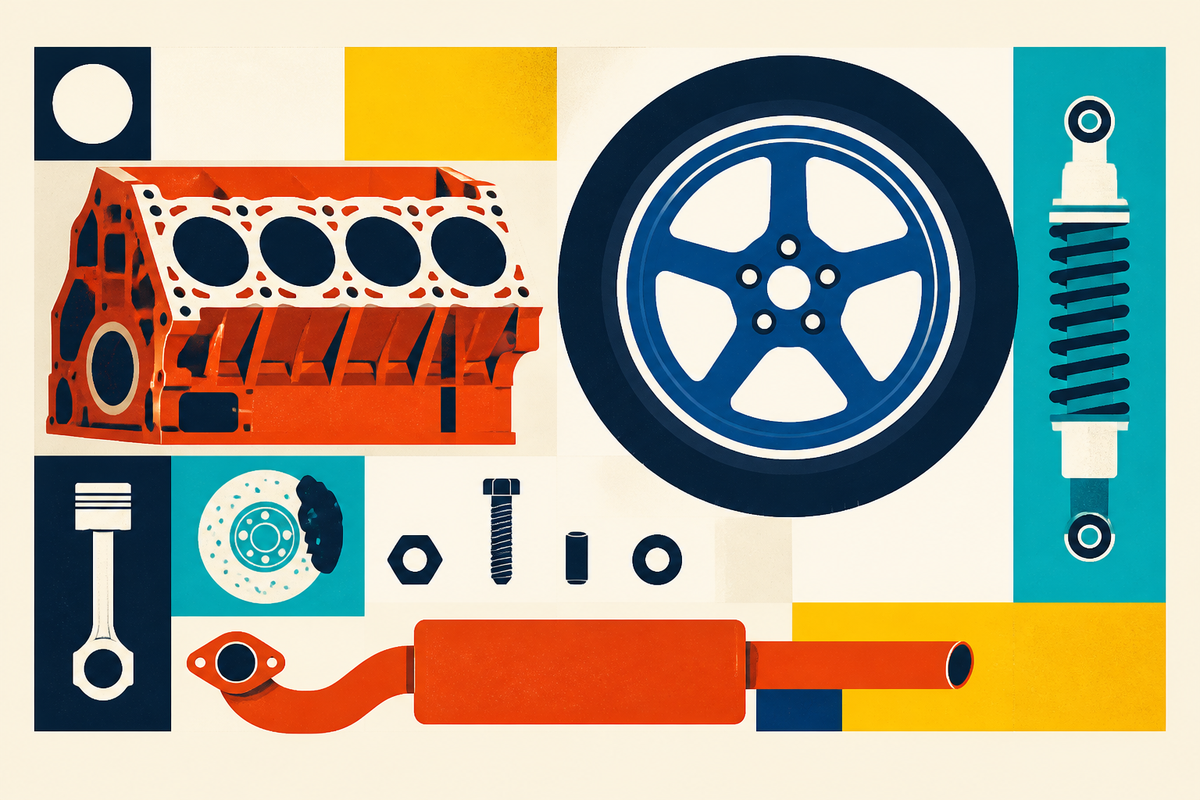
The customer base stretches accordingly. There are competitive drag racers and road racers, but also restorers chasing discontinued details, off-road drivers preparing for abuse, professional builders balancing time and margin, and home mechanics keeping a work truck alive. A shopper may know the exact part number or only the symptom. Summit serves both by pairing vehicle-aware search and product data with phone, online and in-store support. In a category where choice can become paralysis, a knowledgeable human is still a conversion feature.
Four major facilities make the physical promise credible. Tallmadge, Ohio anchors headquarters and the original market. Sparks, Nevada reaches the West. McDonough, Georgia covers the Southeast. Arlington, Texas - the largest of the four when it opened in 2017 - adds central reach. Each combines a retail destination with order fulfillment and customer support. The stores let a buyer touch the object; the warehouses let the rest of the country behave as if the counter were nearby.
Two margins, one promise
The business model is conventional retail with an unusually technical basket. Summit buys from outside manufacturers, holds and distributes inventory, and earns a margin when it sells through the website, phone, catalogs or stores. Promotions, free-shipping thresholds, fast fulfillment and repeat projects help move the cart. Because one upgrade frequently exposes the need for another, the garage creates its own retention loop.
Project shopping also changes the economics of service. A hurried answer may move one part today and create a return tomorrow; a careful answer can preserve an entire order and the next one. That makes technical support more than overhead. It protects margin from incompatible purchases while teaching customers to begin the next build at Summit. The same logic applies to content. OnAllCylinders, the company's automotive publication, turns installation advice, product explainers and project stories into useful paths back to the shelf. Education and commerce occupy adjacent bays.
Then there is the Summit Racing label. Its name appears on engine components, exhaust pieces, paint, tools, wheels and replacement parts produced with manufacturing partners and tested by in-house experts. The private label gives budget-conscious customers another option and gives Summit more control over value, specification and margin. It also turns retail knowledge into product strategy: the company sees the gaps, the price sensitivities and the questions before deciding what deserves its own badge.
The company remains privately held, so it is measured more naturally in operating evidence than quarterly theater: stocked shelves, parcels leaving four buildings, renewed racing relationships and a catalog that keeps widening. That patience fits the category. Vehicle platforms last for decades, restoration demand arrives in cycles, and credibility accumulates one correctly packed order at a time.
That hybrid places Summit between a marketplace and a manufacturer. Amazon and eBay offer enormous breadth, but little sense of a coherent build. AutoZone, O'Reilly and Advance Auto Parts are convenient for common maintenance, but performance projects are not their center of gravity. JEGS is the closest mirror, while Speedway Motors, AmericanMuscle, CJ Pony Parts and 4 Wheel Parts compete in heritage or specialty lanes. Summit's difference is not exclusivity. It is the bundle of range, fitment, inventory, private-label value, quick distribution and staff who understand why the customer is asking.
Marketing where the parts get tested
Summit's red-and-blue mark is embedded in motorsports, from NHRA drag racing and junior programs to the United States Racing Association, road racing, vintage competition and track signage. The company acquired naming rights to the former Norwalk Raceway Park in 2007, the same year the Ohio drag strip began hosting an NHRA national event. In 2025 it returned for a ninth season as title sponsor of USRA competition. In 2026 it renewed its place as official performance-parts supplier to the Trans Am Series and Sportscar Vintage Racing Association, and continued backing Daniel Wilkerson's NHRA Funny Car effort.
This is advertising with useful proximity. Racers are customers, demonstrators and demanding product testers. Events put Summit beside the breakdown, the frantic repair and the victory photo. Grassroots programs matter especially because they reach the participant who buys parts, not only the spectator who recognizes a logo. Sponsorship becomes a loop between community, category intelligence and demand.
A discounted-parts workaround for one Corvette becomes a business.
The first Summit catalog packages selection, information and ordering.
SummitRacing.com puts the catalog logic online.
Summit's name goes on the former Norwalk Raceway Park.
Founder Paul Sergi receives an International Drag Racing Hall of Fame honor.
The company still thinks in projects
Summit describes its internal culture as people-first, collaborative and “Powered by Enthusiasts.” The phrase risks sounding like ordinary employer copy until it meets the actual work. Product pages need judgment. Customer calls can turn into diagnostics. Warehouse accuracy has mechanical consequences. Employees who race, restore and off-road carry a vocabulary and empathy that a general retailer has to manufacture through scripts.
The restored founding Corvette makes the culture concrete. After years as a daily driver, test car and witness to the company's early growth, it was put away for the rebuild that busy project owners always postpone. Decades later, longtime employees completed the restoration. It is a pleasingly circular corporate artifact: the object that revealed the problem eventually became another customer project, only this time the parts source had four warehouses.
The automotive aftermarket is crowded, price-transparent and increasingly shaped by marketplaces, direct-to-consumer brands and complicated vehicle data. Summit fits in as a specialist generalist - broad enough to fill most of a build sheet, focused enough to understand why the sheet exists. Its challenge is to keep that hard-earned human confidence visible as search becomes more automated and the assortment keeps expanding. Its advantage is that it has been organizing this confusion since the interface was paper.
A useful lesson sits underneath all the horsepower. A durable retailer does not merely aggregate supply. It gives a community a better way to make a consequential choice. Summit did that first for a small circle of racers around a Corvette. The circle is now worldwide, the catalog holds millions of items, and somewhere the essential scene is unchanged: a person in a garage, one missing part, and a weekend waiting.