The number to watch at Southwest Gas is a meter. A new one means a house, restaurant or business has joined the network. In 2025, the utility recorded 37,000 first-time meter sets. It is an unglamorous unit of progress, which makes it a useful place to begin a story about a company that spent several years making its business more complicated, then several more undoing the work.
- Delivers natural gas across Arizona, Nevada and parts of California.
- Sold MountainWest in 2023 and finished exiting Centuri in 2025.
- Makes its case through regulated infrastructure investment.
- Now proposes a Great Basin expansion estimated at $2.3 billion.
Southwest Gas Holdings owns the utility Southwest Gas Corporation. The holding company dates to 2016; the operating business goes back to Barstow in 1931. Today, the interesting question is how a company with such a familiar job decides which unfamiliar jobs to stop doing.
The meter is the business
Customers need heat for rooms, hot water and cooking. Businesses need gas for commercial kitchens and industrial processes. Southwest Gas buys fuel and moves it through its network; it also transports gas for customers who buy their own supply. At year-end 2025, it served approximately 2.281 million accounts. Residential and commercial customers represented more than 99% of them.
The economics contain a small surprise. Purchased gas costs pass through to customers without a markup. A bigger commodity bill therefore does not automatically mean a better delivery business. The network earns its opportunity for a return through regulated rates and approved investment. Decoupled rate structures help separate authorized recovery from the number of units sold, allowing conservation without the same direct penalty to delivery revenue.
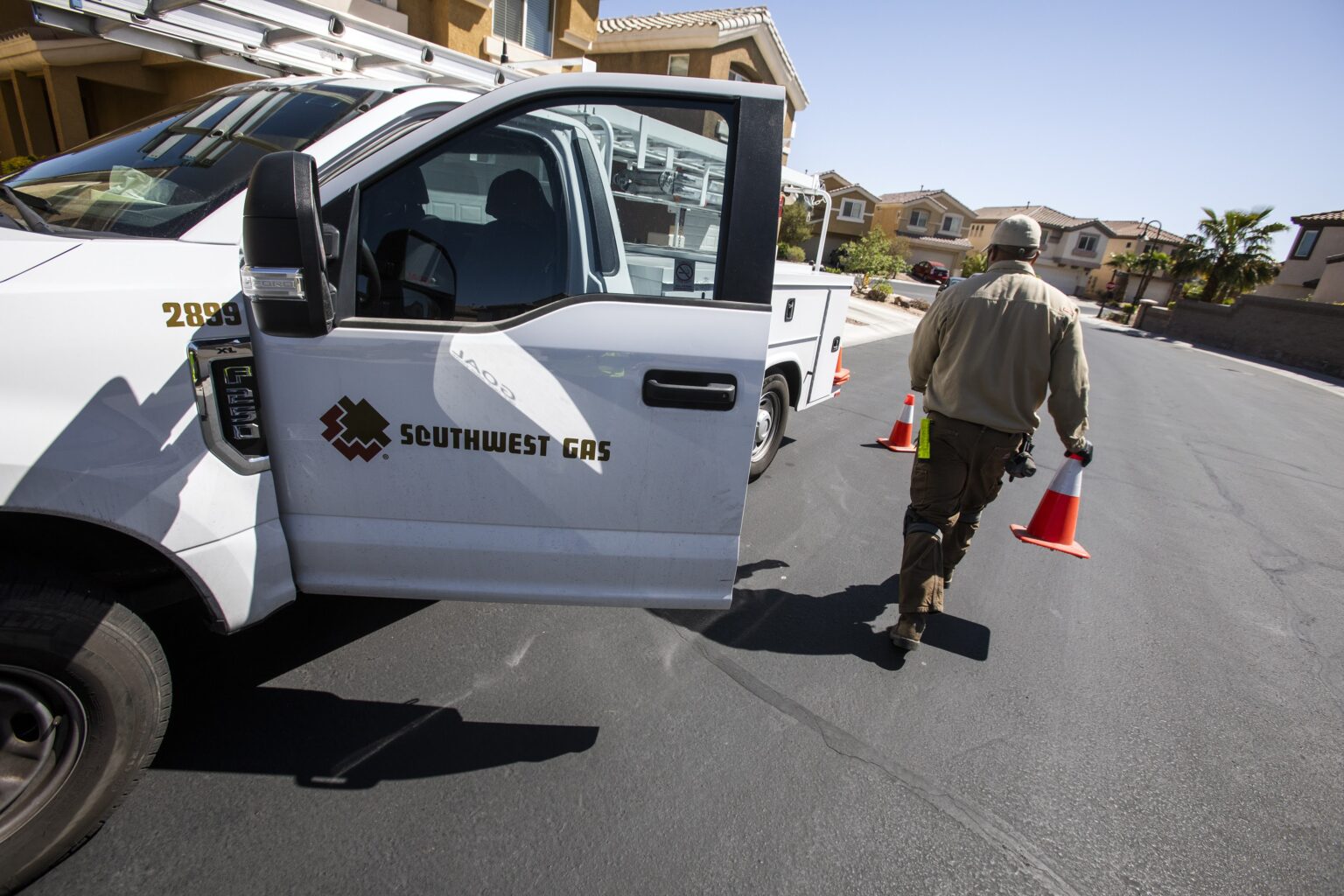
For a customer, the useful entry point is the utility website: start or transfer service, manage payments, check efficiency offers. Rebates vary by territory. The Equal Payment Plan uses estimated annual consumption to spread payments across the year. It is a budgeting tool, with no promise that the underlying energy becomes cheaper.
An expensive change of direction
In December 2021, Southwest Gas closed its purchase of Questar Pipelines from Dominion Energy. The announced transaction value was $1.975 billion, including $430 million of assumed debt. Renamed MountainWest, the business brought interstate pipelines and storage in the Rocky Mountain region. The original pitch was diversification, stronger cash generation and a broader regulated business.
By December 2022, the board had agreed to sell MountainWest to Williams for $1.5 billion in enterprise value. The sale closed in February 2023. Southwest Gas recorded a $449.6 million goodwill impairment in 2022 associated with the lower sale valuation. That is an accounting charge, distinct from simply subtracting the two headline deal values.
The first visible break in the diversification argument was financial: the acquired business could not command its carrying value in the agreed sale. Nothing here establishes that the pipes stopped working. The failure was in the price and the portfolio logic.
The reversal also followed investor pressure. A May 2022 settlement with Carl Icahn brought board changes and coincided with Karen Haller succeeding John Hester as CEO. In December, the board chose to simplify. Those public decisions explain the change in direction; they cannot tell us what any executive privately thought.
Selling the construction company
Centuri was the next piece to go. Its crews built and maintained utility infrastructure, a different proposition from owning a regulated distribution network. An April 2024 initial public offering began the separation. Successive share sales ended on September 5, 2025, when Southwest Gas sold its remaining stake.
“We’ve successfully completed our exit from Centuri”Karen Haller · September 2025
The separation generated approximately $1.35 billion in net proceeds. The company used part of the money to repay holding-company borrowings, including a $550 million term loan. Construction services now belong outside the group. Describing Southwest Gas as a sprawling infrastructure contractor misses the business it has deliberately become.
Growth comes with a trench
A local gas network also changes the meaning of competition. Households usually cannot swap the pipes beneath their street for another utility’s pipes. Their alternatives are more likely to involve equipment: an electric water heater, heat pump or induction range. Southwest Gas therefore has to defend the usefulness and cost of the connection itself.
Focus has not made the investment decisions small. In August 2026, Southwest Gas estimated that Great Basin’s proposed 2028 expansion would require approximately $2.3 billion. Binding customer commitments totaled roughly one billion cubic feet per day. Management projected annual incremental margin of $270 million to $300 million once the project enters service. These are expectations, with construction and regulatory work still ahead.
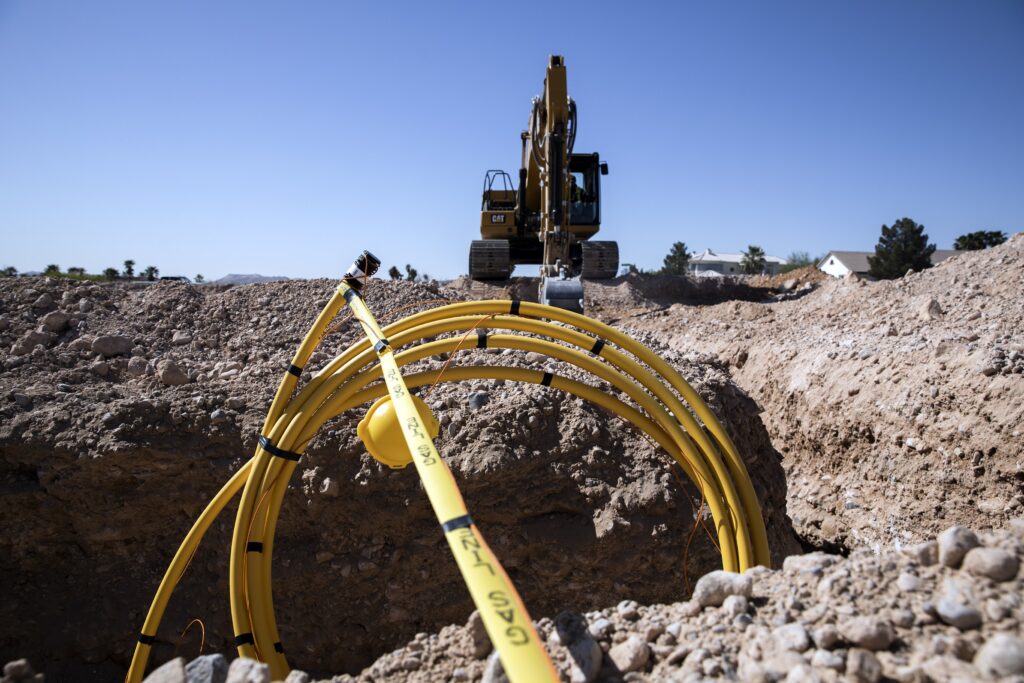
Justin Brown, CEO since May 8, 2026, inherits this narrower business. His experience includes accounting, law, pricing and regulatory affairs. That combination fits a utility whose investment decisions must survive scrutiny from customers, commissions and capital providers. Engineering gets the project designed; the other disciplines help determine whether it can be paid for.
The work that earns permission
The company’s 2025 sustainability report supplies measures closer to the customer. It reported responding to 79.2% of emergencies within 30 minutes and a sixth consecutive first-place J.D. Power ranking for residential natural gas satisfaction in the West among large utilities. Those are specific service indicators, more useful than a broad claim of caring.
Environmental progress needs equally specific boundaries. Southwest Gas reported a 33.7% reduction in fleet and building emissions against 2015. That does not measure all the gas customers burn. Electrification remains a competitive alternative, and long-lived pipes can become difficult to finance if demand weakens or regulators reject recovery.
The copyable lesson is to examine what each investment actually earns and who bears its risk. Southwest Gas’s retreat makes that question unusually visible. Its next expansion must answer it before today’s customer commitments become tomorrow’s buried costs.