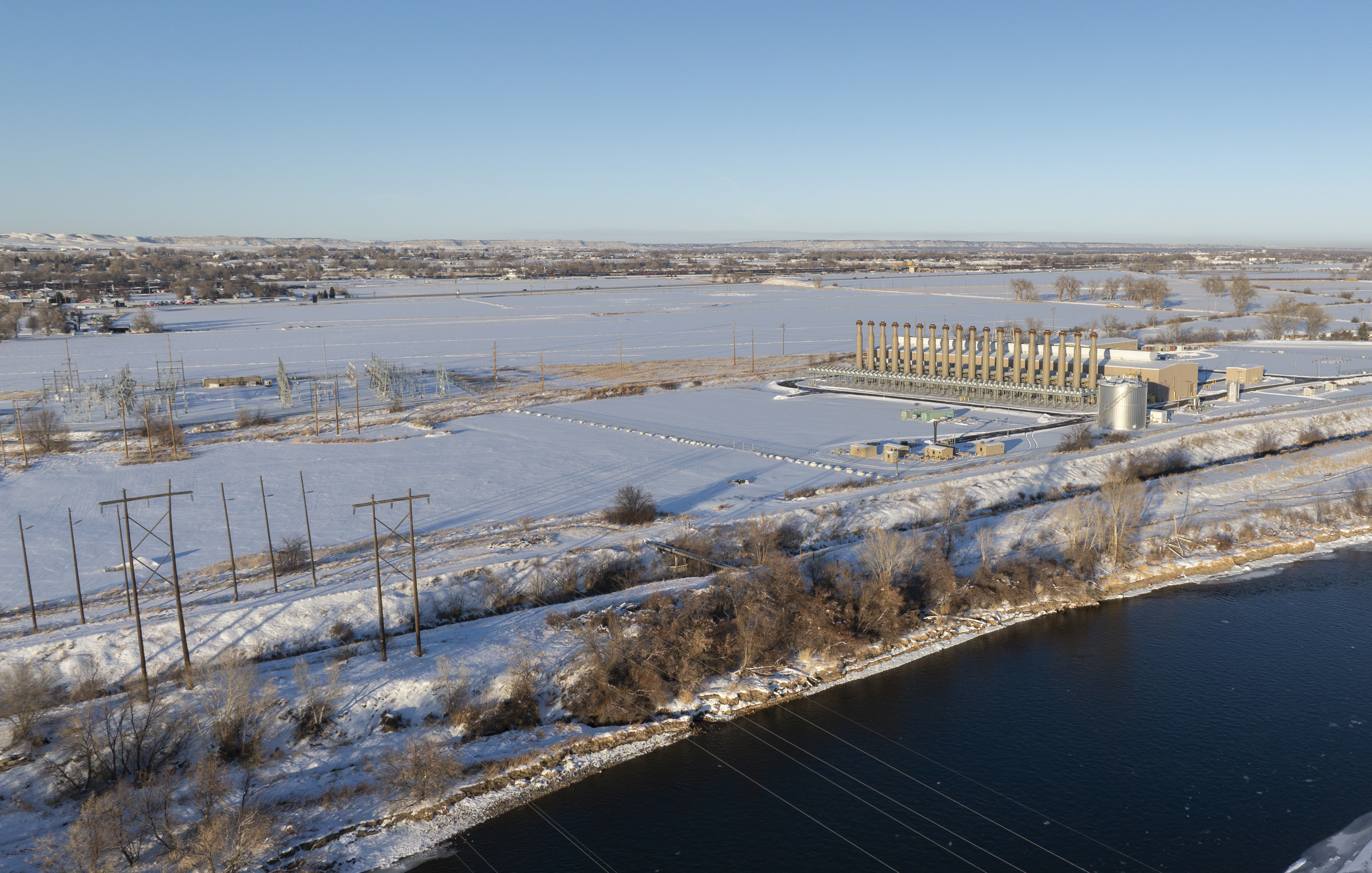
At Laurel, Montana, eighteen exhaust stacks stand in a tidy row beside a river and snow-covered fields. They belong to NorthWestern Energy’s Yellowstone County Generating Station. The scene looks quiet. Quiet, however, is a misleading way to judge a power plant. Its value depends on what happens when everyone else needs electricity at precisely the same time.
- NorthWestern sells electricity and natural gas, with about 850,300 customer accounts reported at year-end 2025.
- It has bought hydro plants and expanded coal ownership to reduce dependence on purchased power.
- Regulators decide how much of those investments customers should pay for.
That problem runs through NorthWestern’s history. This is a regulated utility serving Montana, South Dakota, Nebraska and Yellowstone National Park. Its customers include households, shops, manufacturers and public institutions. Its everyday product is an unremarkable evening: lights working, buildings warm, nobody thinking about the machinery behind the meter.
The hour that changes the calculation
Electricity has an awkward habit: the moment a customer needs it can matter as much as the quantity. Wind and solar supply vary. Demand rises during extreme temperatures. Buying the missing electricity exposes a utility to whatever the market is charging at that moment. Owning generation changes that exposure, although it brings construction, maintenance and financing bills of its own.
NorthWestern’s expertise sits in that balancing act, alongside the less glamorous work of running wires, substations, pipelines and gas storage. Its market position comes from regional infrastructure and regulated service territories. Nearby utilities and cooperatives serve other territories; they generally are not interchangeable providers a household can select with a click. Competition shows up differently, through wholesale power, generation proposals and the economics of producing electricity yourself.
A $904 million insurance policy
In November 2014, NorthWestern completed a purchase of eleven Montana hydroelectric facilities and a storage reservoir for approximately $904 million. The acquisition included roughly 633 megawatts of capacity. The logic was explicit: own more supply, buy less from third parties and reduce exposure to fuel-price volatility.
The transaction needed substantial financing. NorthWestern issued about 7.77 million shares at $51.50 each and $450 million of mortgage bonds. Those numbers explain something a photograph of a dam cannot: dependable electricity is also a capital-allocation business. The customer ultimately encounters that business through an approved rate.
Ownership changed the company’s supply options. It did not abolish weather or expense. Hydro depends on water, and assets need upkeep. The useful lesson for another organization is to identify the exposure worth owning, then price the obligations attached to it. Buying a supplier’s assets makes sense only when those obligations are manageable.
The bill meets its editor
Yellowstone County adds another kind of flexibility. NorthWestern markets the gas-fired station as a 175-megawatt resource with engines that can respond quickly. Its 2026 resource plan dates commercial operation to October 25, 2024. Here, the purpose is to help cover demand and swings in variable generation.
Then came the accounting argument. In November 2025, Montana’s Public Service Commission approved $246 million of additional rate base for the plant, approximately $43 million below NorthWestern’s $289 million request. The commission said portions lacked sufficient supporting data, documentation or technical justification.
Permission to build is only half the story.
Approximately $43m excluded. Rate base is the investment used to calculate a utility’s permitted return, not the plant’s total lifetime cost.
This is the utility bargain in plain sight. Investors supply capital; regulators scrutinize recovery from customers. NorthWestern’s revenue comes chiefly from electricity and gas delivered under tariffs, with returns on approved investment. The company reported $1.61 billion in 2025 revenue and $181.1 million in net income, down from $224.1 million in 2024. The plant disallowance was among the reasons earnings fell.
A free purchase with a long receipt
On January 1, 2026, NorthWestern acquired Puget Sound Energy’s 370-megawatt and Avista’s 222-megawatt Colstrip interests without a purchase payment. Its ownership rose to 55 percent. The sellers retained specified environmental and decommissioning obligations; NorthWestern took on the operating and capital responsibilities attached to the acquired interests.
A $0 purchase price leaves the operating bill very much alive.
Colstrip’s central distinction
The company argues that existing coal capacity offers dependable supply while equivalent alternatives take time to develop. That is its case, rather than proof of an inevitable outcome. Aging equipment, future fuel costs and environmental requirements can change the economics. A strategy built around existing generation depends on that generation remaining available and affordable.
The first failure was financial
NorthWestern’s lineage begins with four utilities combined in 1923. Its subsequent expansion was hardly a straight line. It moved into businesses including telecommunications and HVAC, bought Montana Power’s transmission and distribution system in 2002, and filed for Chapter 11 in 2003. It emerged in November 2004. The failure was corporate finance; utility service continued during reorganization.
The record shows a company concentrating on regulated energy infrastructure after restructuring. Its stated values spell SERVICE, beginning with safety and ending with environment. In this business, culture has to survive contact with physical equipment and public oversight.
“Working together to deliver safe, reliable and affordable energy.”
NorthWestern Energy’s stated mission
The next negotiation is already here
NorthWestern and Black Hills agreed to an all-stock merger in August 2025. Shareholders approved it in April 2026. As of October 24, Montana’s decision remained outstanding, with commissioners scheduled to consider it October 27. The proposed parent, Bright Horizon Energy, would serve approximately 2.1 million customers across eight states. That scale remains prospective.
For a homeowner, the useful starting point is the service address: it determines what the utility supplies and which programs apply. For a business planning a new site, construction services and historical usage information can make the utility part of the planning process before a meter starts recording demand.
Meanwhile, customers have smaller, immediate tools: account management, outage reporting, payment arrangements and efficiency programs. Montana’s virtual Home EnergyCheck has eligibility rules; rebates vary by jurisdiction. In September 2026, NorthWestern and Missoula-area and Bozeman governments also filed a proposed Green Power Program. It would support a new renewable resource through voluntary subscriptions, subject to approval and sufficient commitments. For customers, the practical question remains wonderfully concrete: what service do I need, and what will my share cost?